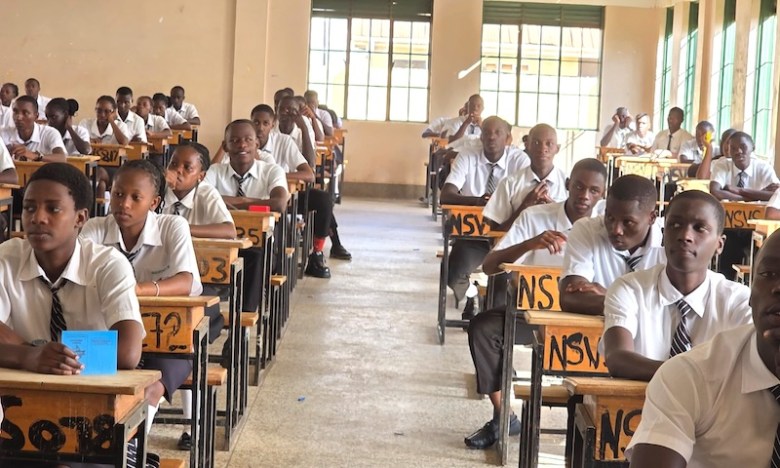

Ministry of Education and Sports has directed schools to allow all candidates registered with the Uganda National Examinations Board (UNEB) to sit their end-of-cycle examinations, even when they have outstanding school fees or other charges.
The directive, issued on October 13 by the Acting Minister of Education and Sports and communicated by ministry spokesperson Dr Dennis K. Mugimba, prohibits schools from blocking registered candidates from taking national examinations over unpaid school bills.
Under the new measures, however, schools may ask UNEB to withhold the results of candidates who sit examinations before clearing their outstanding balances. Headteachers must formally notify the examinations body of the affected candidates and subsequently communicate when their debts have been settled so that their results can be released.
The directive also prohibits schools from imposing additional penalties or fees on candidates who are permitted to sit examinations before paying their outstanding balances.
The ministry said the directive was intended to address reports that some schools were denying registered candidates the opportunity to take their examinations because of unpaid fees and charges.
Government cites Education Act
The ministry based its directive on Section 3 of the Education (Pre-Primary, Primary and Post-Primary) Act, 2008, which outlines the education minister’s responsibilities in implementing national education policies and initiating reforms when necessary.
The intervention comes as Uganda conducts its 2026 national examinations, which include the Primary Leaving Examination (PLE), Uganda Certificate of Education (UCE) and Uganda Advanced Certificate of Education (UACE).
According to figures released by UNEB in September, provisional registration for the three examination categories reached 1,627,885 candidates in 2026, an increase of 14.9 per cent from the 1,416,448 registered in 2025. Government-sponsored candidates account for about 52 per cent of the total. .
The scale of participation highlights the importance of ensuring that administrative or financial disputes between schools and families do not prevent registered learners from completing nationally recognised examinations.
Sitting exams does not guarantee immediate results
The directive draws a distinction between a candidate’s right to sit an examination and the release of the resulting grades.
Under the arrangement, headteachers must identify candidates who have sat their examinations with outstanding school fees and formally notify UNEB. Once the outstanding balances are cleared, the headteachers are expected to inform the board so that withheld results can be released.
The Uganda National Examinations Board Act, 2021, gives UNEB powers to delay, withhold or cancel examination results for reasonable cause. Section 5(4) specifically provides for withholding or delaying results for reasonable cause. .
The new ministerial directive therefore sets out a specific administrative process for dealing with candidates whose school debts remain unpaid when they sit their examinations.
However, the directive does not cancel outstanding school debts or prevent schools from pursuing legitimate unpaid fees through appropriate channels. Instead, it seeks to ensure that fee disputes do not automatically deny registered candidates access to the examination room.
Implications for schools and parents
The directive places clear responsibilities on school administrators, who must allow eligible candidates to sit their examinations, maintain accurate records and communicate with UNEB about any results to be withheld or subsequently released.
It also gives parents and guardians additional time to settle outstanding balances without the risk of their children being barred from sitting their final examinations or being charged extra penalties under the directive.
For schools, the measures introduce an administrative process for handling unpaid fees while preserving their ability to recover outstanding debts. Their implementation will depend on headteachers complying with the reporting requirements and UNEB processing the relevant information.
The ministry has circulated the directive to the media, school proprietors, foundation bodies, chairpersons of school management committees and boards of governors, headteachers, education administrators at all levels of government, and the executive director of UNEB.
The directive’s central requirement is clear: a registered candidate must be allowed to sit their end-of-cycle examinations regardless of outstanding school fees, while the recovery of unpaid balances is handled separately from access to the examination room.