
The 1917 argument that ordinary citizens can learn to govern offers a provocative lens for examining Uganda’s competing political generations.
When Vladimir Lenin argued in revolutionary Russia that ordinary people could be trained to participate in running the State, he was challenging a political system in which government was largely regarded as the preserve of a professional and privileged class.
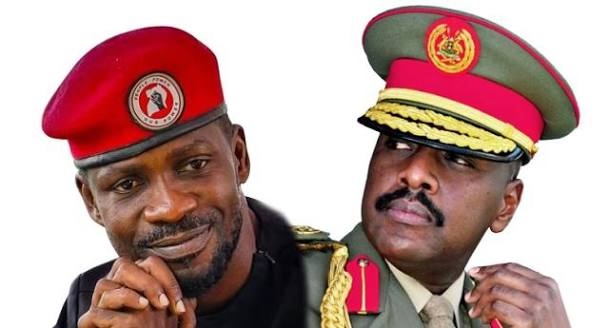
More than a Century later, that argument offers an interesting — if imperfect — lens through which to consider Uganda’s increasingly contested political future, particularly the contrasting trajectories of opposition leader Robert Kyagulanyi Ssentamu, a.ka. Bobi Wine; and Gen. Muhoozi Kainerugaba.
The comparison should not be mistaken for a claim that Lenin endorsed either Ugandan politician. He could not have. Rather, his argument raises a broader question that remains relevant to Uganda: what makes someone capable of governing — a conventional political career, professional qualifications, military experience, popular support or the ability to learn and exercise political responsibility?
Lenin’s famous “Cook” argument is frequently reduced to the phrase that “any cook can govern the State.” That formulation is misleading if taken literally. His broader argument was that working people should be brought into the administration of the State and given opportunities to acquire the skills required to govern.
That distinction matters. Being an ordinary citizen does not automatically make someone a competent leader. Nor does holding an impressive title, military rank or political position automatically confer the ability to govern effectively.
This is where Uganda’s emerging political contest becomes particularly interesting: Bobi Wine and the politics of popular mobilization
Bobi Wine’s political rise represents one of the most dramatic challenges to Uganda’s established political order in recent decades. A musician, who became a political activist and later a presidential candidate, Kyagulanyi entered formal politics from outside Uganda’s traditional political establishment. His rise demonstrated that political influence could be built through popular culture, grassroots mobilization and an appeal to younger voters.
His supporters see that background as an advantage. They argue that his experience outside the political establishment gives him a different understanding of the frustrations of ordinary Ugandans.
Critics, however, question whether political mobilization and presidential administration require different skills. That is precisely where Lenin’s argument becomes relevant. The question is not simply whether someone comes from an un-conventional background. It is whether that person can acquire the institutional, economic, diplomatic and administrative knowledge required to run a modern State.
A president does not merely make speeches or win elections. The office requires decisions on taxation, public debt, national security, foreign policy,
infrastructure, education, healthcare, agriculture, trade and public administration.
Political popularity may win an election. It does not, by itself, guarantee competent government.
Muhoozi; the Politics of Institutional Power
Gen. Muhoozi Kainerugaba represents almost the opposite political trajectory.
He comes from Uganda’s military establishment and has risen through the Uganda People’s Defense Forces (UPDF) to become its Chief. His political profile has also grown considerably, particularly through public statements and his association with the ruling National Resistance Movement (NRM).
Unlike Bobi Wine, Muhoozi did not build his national profile through entertainment or opposition politics. His supporters can point to his military career and experience within the State institutions as evidence of exposure to leadership, discipline and organizational management.
But military leadership and civilian political leadership are not identical.
A military institution operates within a command structure. A democratic government must also contend with Parliament, courts, opposition parties, independent institutions, civil society, media, voters and competing economic interests. The ability to command soldiers is, therefore, not automatically equivalent to the ability to govern a diverse civilian population.
That distinction is crucial when evaluating Muhoozi’s political prospects.
The bigger question: Who is prepared to govern? The Bobi Wine-Muhoozi contrast therefore presents Uganda with two very different models of political emergence.
One comes from popular culture and opposition politics. The other comes from the military and the established political order. But both ultimately face the same test. Can they govern?
That question should be answered by examining policy, competence, integrity, institutional respect, and the ability to build a government capable of delivering results—not simply by looking at where either man came from.
Lenin’s argument, properly understood, was not that experience was irrelevant or that every person was automatically qualified to run a State.
It was an argument against the idea that Government should permanently belong to a narrow elite.
There is a useful lesson in that distinction for Uganda. A musician can become a serious political leader. A military officer can also become a serious political leader. Neither background guarantees success, and neither background automatically disqualifies a person.
What matters is what each candidate does with the political power. Leadership is more than winning power. Uganda’s political debate often focuses heavily on who should replace President Yoweri Museveni.
But the more consequential question is what happens after political power changes hands.
A new government would inherit enormous responsibilities: managing public finances, creating jobs for a young population, strengthening institutions, improving public services, addressing corruption, attracting investment, and maintaining national security while protecting civil liberties.
Those challenges cannot be solved by Bobi Wine’s charisma alone.
Nor can they be solved by Gen. Muhoozi’s rank. They require competent institutions and leaders willing to work through them.
That is why the Lenin analogy should be treated carefully. The lesson from his “Cook” argument is not that any cook can be president. It is that ordinary people should not be permanently excluded from Government on the assumption that political competence belongs only to an elite. Even a military general can be a good leader, likewise a musician.
Applied to Uganda, the principle leads to an uncomfortable but useful conclusion: Bobi Wine could potentially become a good leader. Gen. Muhoozi could potentially become a good leader. But neither possibility can be established merely by their backgrounds, popularity, or political ambitions.
Ultimately, leadership is tested in Government. And that test is considerably harder than winning the argument over who deserves the Chair.