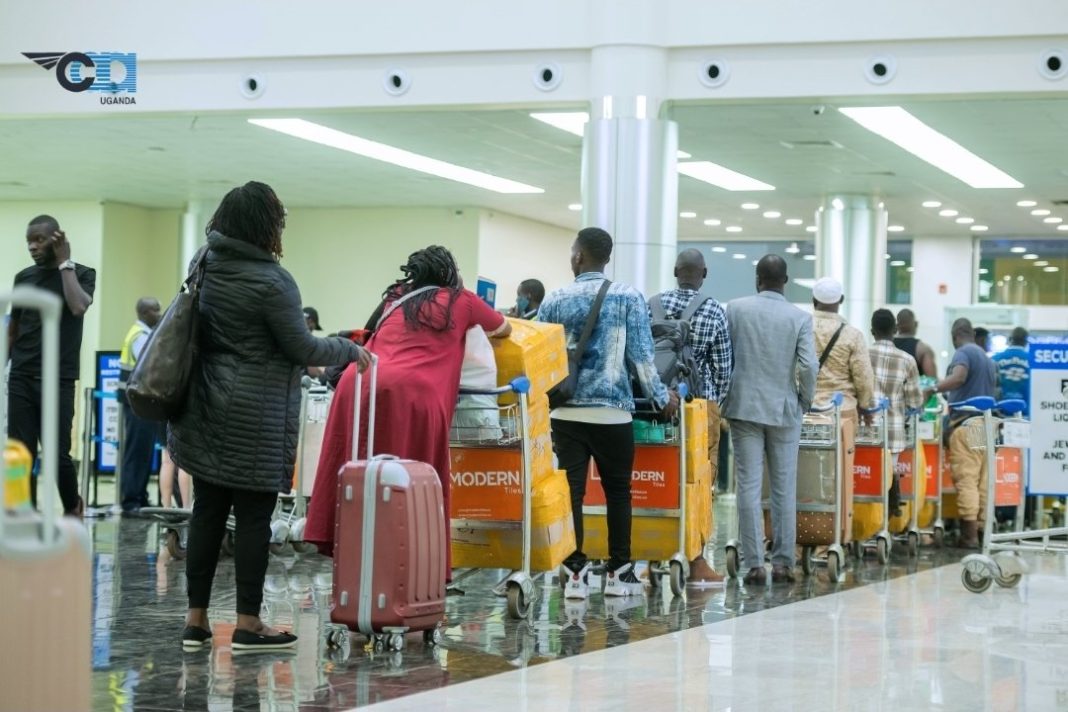

The United States has extended travel restrictions affecting certain travellers from Uganda, the Democratic Republic of Congo and South Sudan for another 30 days, citing the risk of cross-border transmission of the Bundibugyo Ebola virus.
The U.S. Centers for Disease Control and Prevention (CDC) announced the extension in an October 11 notice, saying the outbreak in eastern DRC continued to spread despite containment efforts.
Uganda declared its domestic Ebola outbreak over on July 28 after recording 20 confirmed cases and two deaths, alongside one probable case and one probable death.
The CDC said Uganda’s containment efforts had been successful but warned that continued overland travel from DRC posed a risk of reintroducing the virus, particularly in western districts and healthcare facilities receiving patients from across the border.
The restrictions cover Uganda, DRC and South Sudan. Kenya was not included in the latest list, despite reporting its first Bundibugyo Ebola case and death last week.
The CDC cited the case of an individual who travelled from DRC to Uganda before flying from Kampala to Nairobi on October 2. The person was hospitalised in Kenya and died on October 5, according to the agency.
The incident highlights the challenges of containing infectious diseases in a region where frequent cross-border movement complicates surveillance and contact tracing.
The CDC said contact tracing coverage in DRC had fallen to 80% from 87% in September, below the 95% operational threshold it said was needed to help slow transmission.
Uganda’s Ministry of Health was not immediately available to comment on the latest extension.
On October 6, Director General of Health Services Professor Charles Olaro said Uganda remained free of Ebola and had strengthened surveillance and preparedness measures.
The ministry was working with neighbouring countries and partners to intensify cross-border surveillance, improve information sharing and ensure the timely detection of potential public health threats, Olaro said.
The extension comes amid criticism from African and international health officials who argue that broad travel restrictions are ineffective and can unfairly penalise countries reporting outbreaks.
Africa Centres for Disease Control and Prevention Director General Jean Kaseya said in August that he had written to Washington seeking an end to travel restrictions on African countries.
Kaseya questioned whether countries were being treated consistently, citing an Ebola case previously reported in France.
The World Health Organisation has also questioned the scientific basis for blanket travel restrictions and border closures, arguing that surveillance, contact tracing and coordinated public health responses are more effective approaches.
The latest US decision underscores the challenge facing regional governments: preventing the virus from crossing borders while maintaining travel and economic links across East Africa.