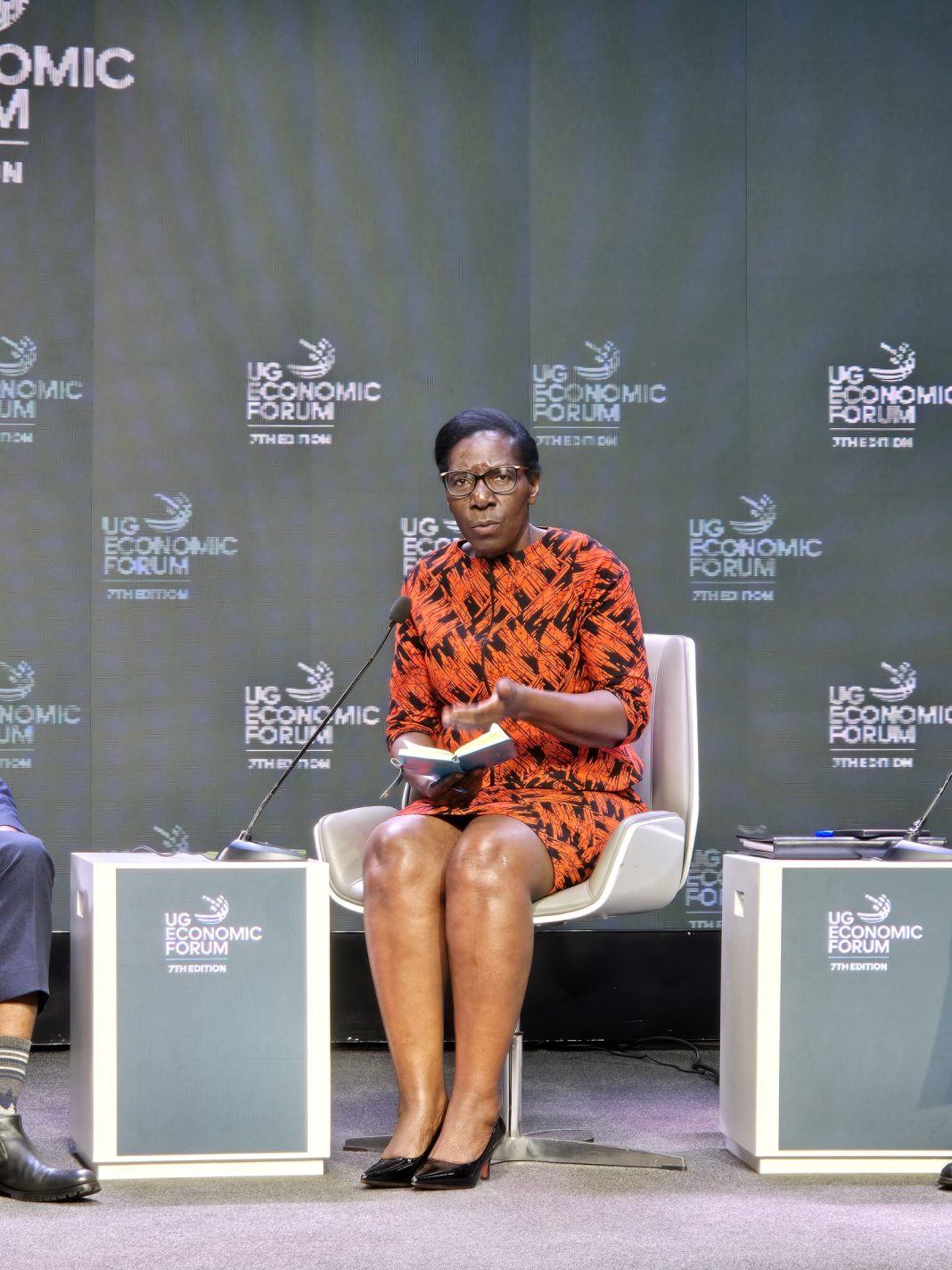

SEATINI Uganda executive director urges price stabilisation, value addition and stronger local demand to protect farmers from volatile export markets
Uganda must guarantee fairer prices for farmers, expand domestic markets and invest in value addition to ensure agricultural production translates into higher incomes, the executive director of the Southern and Eastern Africa Trade Information and Negotiations Institute (SEATINI Uganda), Jane Nalunga, has said.
Speaking at the UG Economic Forum 2026, Nalunga challenged policymakers to address structural weaknesses in agricultural trade that leave farmers with limited bargaining power, expose them to unstable prices and restrict the country’s ability to earn more from its produce.
She called for minimum guaranteed prices and price stabilisation mechanisms to protect farmers against market volatility, arguing that agriculture should be treated not only as an economic activity but also as a matter of national food security.
“Producing more does not necessarily mean earning more,” is the central challenge facing farmers, whose incomes often depend on prices they have little power to influence.
Nalunga’s remarks highlight a persistent concern for Uganda’s agricultural economy: increasing production alone may not improve rural livelihoods unless farmers receive a fairer share of the value generated along the supply chain.
Trade barriers limit value addition
Uganda’s dependence on exporting agricultural commodities in raw form is another obstacle to higher earnings, Nalunga argued.
International trade policies can make it more expensive to export processed agricultural products than unprocessed commodities. Under tariff escalation, importing countries impose higher duties on goods that have undergone processing, discouraging exporters in producing countries from developing more sophisticated products.
For Uganda, which relies on agricultural exports to generate foreign exchange and support rural livelihoods, such barriers can limit investment in processing, manufacturing and other activities that would allow the country to capture more value from its produce.
Expanding domestic processing capacity and negotiating fairer access to international markets could help Uganda move beyond exporting raw commodities towards selling higher-value products.
Nalunga calls for stronger domestic markets
In her closing remarks at the forum, Nalunga also urged Uganda to rethink where and how it sells its agricultural produce, warning against excessive dependence on external buyers.
Although export markets remain important, changing trade requirements, market volatility and emerging carbon-related measures are creating additional uncertainties for agricultural producers and exporters.
She cited products such as coffee as examples of commodities for which Uganda needs a long-term market strategy, including deliberate efforts to stimulate domestic consumption.
Developing stronger local markets would give producers additional outlets for their goods and reduce their exposure to disruptions in international trade. A more diversified market base could also create opportunities for domestic processors, traders and other businesses involved in agricultural value chains.
However, expanding domestic demand would require sustained investment in processing, distribution, product development and consumer markets, alongside policies that make locally produced goods competitive.
Balancing farmers’ incomes and food security
Nalunga’s proposals place farmers’ earnings at the centre of Uganda’s wider agricultural development agenda, raising questions about how government can balance affordable food for consumers with sustainable incomes for producers.
Minimum guaranteed prices and stabilisation mechanisms could offer farmers greater certainty, but their effectiveness would depend on how prices are determined, how such schemes are financed and whether they can be implemented without creating excessive fiscal costs or distorting markets.
Stronger cooperatives, better access to market information, improved storage and more transparent trading arrangements could also help farmers negotiate better prices and reduce losses associated with being forced to sell immediately after harvest.
At the same time, expanding agro-processing and domestic demand could help create more reliable markets for agricultural products while supporting job creation and industrial development.
Nalunga’s message at the UG Economic Forum 2026 was that Uganda’s agricultural success should not be measured by production volumes alone, but also by the income farmers retain and the value the country captures from its exports.
Achieving that goal will require a coordinated approach to price protection, domestic market development, value addition and international trade policy, ensuring that increased agricultural output delivers more sustainable returns for farmers and the wider economy.