
Uganda’s government will advance Shs175 billion to road contractor Abubaker Technical Services to accelerate work on the Hoima–Busunju road, as authorities race to improve transport infrastructure ahead of the 2027 Africa Cup of Nations (AFCON).
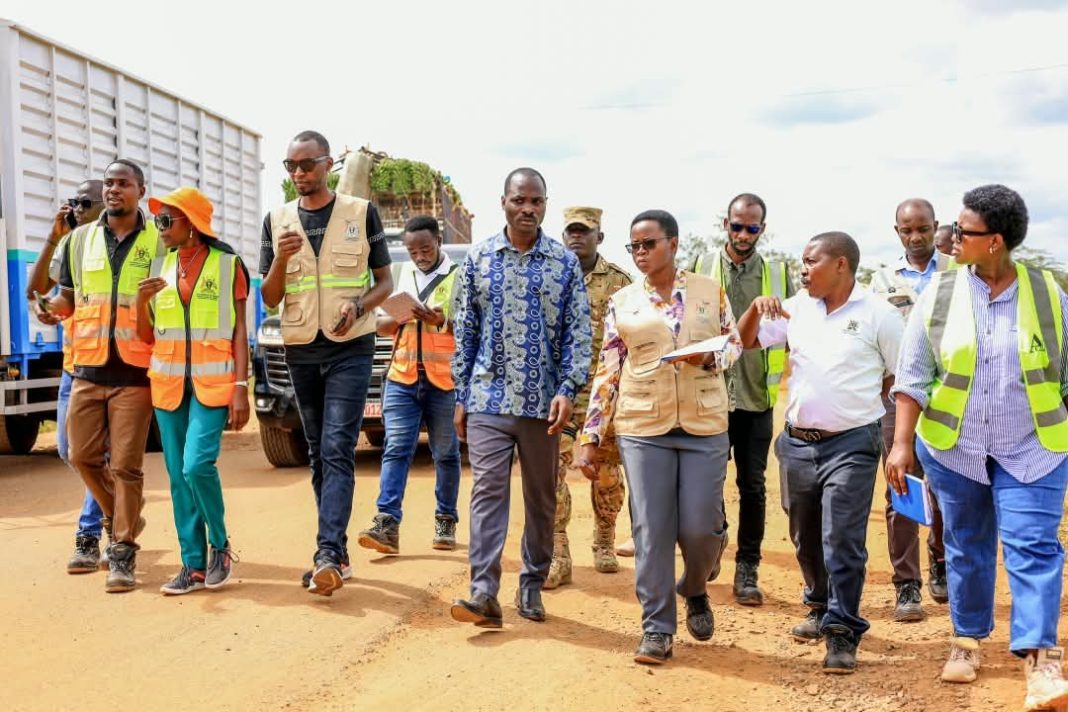
Works Minister Fred Byamukama announced the funding during an inspection of the 145-kilometre project, which is valued at Shs309 billion and is approximately 40% complete. Construction is now targeted for completion in February 2027, according to the Ministry of Works and Transport.
The government advance is intended to ease funding constraints and speed up construction on a route considered important for connecting central Uganda to the oil-producing Bunyoro sub-region and supporting the movement of football teams, officials, supporters and commercial traffic during the tournament.
Of the Shs175 billion, Shs65 billion is earmarked for construction of the Kafu Bridge across River Kafu, where flooding has posed challenges to transport reliability. The bridge is expected to improve the safety and dependability of the route, according to the Uganda Broadcasting Corporation’s report on the minister’s inspection.
Byamukama urged the contractor to meet its contractual obligations and accelerate implementation to deliver the road within the revised timeframe.
A critical test for Uganda’s infrastructure programme
The funding injection comes as Uganda steps up preparations to co-host AFCON 2027 with Kenya and Tanzania in June and July next year. Uganda plans to host matches at Mandela National Stadium in Kampala and Hoima City Stadium in western Uganda, making reliable road connections particularly important for the movement of visitors and tournament personnel.
Parliament reported in April that the government had committed Shs905 billion in the 2026/27 financial year budget towards AFCON preparations, including Shs213 billion for upgrading selected roads around Hoima City Stadium and Mandela National Stadium.
The Hoima–Busunju project also has significance beyond football. It connects communities across the districts of Mityana, Kiboga, Kyankwanzi and Hoima, linking the capital’s western transport corridor with a region increasingly important to Uganda’s oil and gas ambitions.
The road’s condition has been a longstanding concern. A government infrastructure monitoring report for the financial year ending June 2025 recorded cumulative construction progress of about 20.5%, against a planned 83.6% at that stage. The report also cited delayed payments to the contractor, which had slowed the pace of work.
The latest government advance therefore represents an attempt to address a project that has fallen behind schedule. However, with completion targeted for February 2027, the remaining work will need to progress substantially faster if the road is to be ready before the tournament.
Delivery remains the key challenge
The government’s funding commitment is a significant step, but its impact will depend on how quickly the money reaches construction activities, whether outstanding implementation challenges are resolved and whether the contractor can sustain an accelerated pace of work.
The project’s progress will also matter to residents and businesses along the route, for whom the road is a transport link for agricultural produce, local trade and access to services, regardless of the AFCON deadline.
With the tournament approaching, the Hoima–Busunju road has become a test of whether Uganda can convert its infrastructure spending commitments into completed projects on time. Failure to meet the February 2027 target could complicate transport planning for AFCON while prolonging the disruption associated with construction.
For now, the government is betting that the Shs175 billion advance will help close the gap between the project’s current progress and its increasingly tight completion deadline.