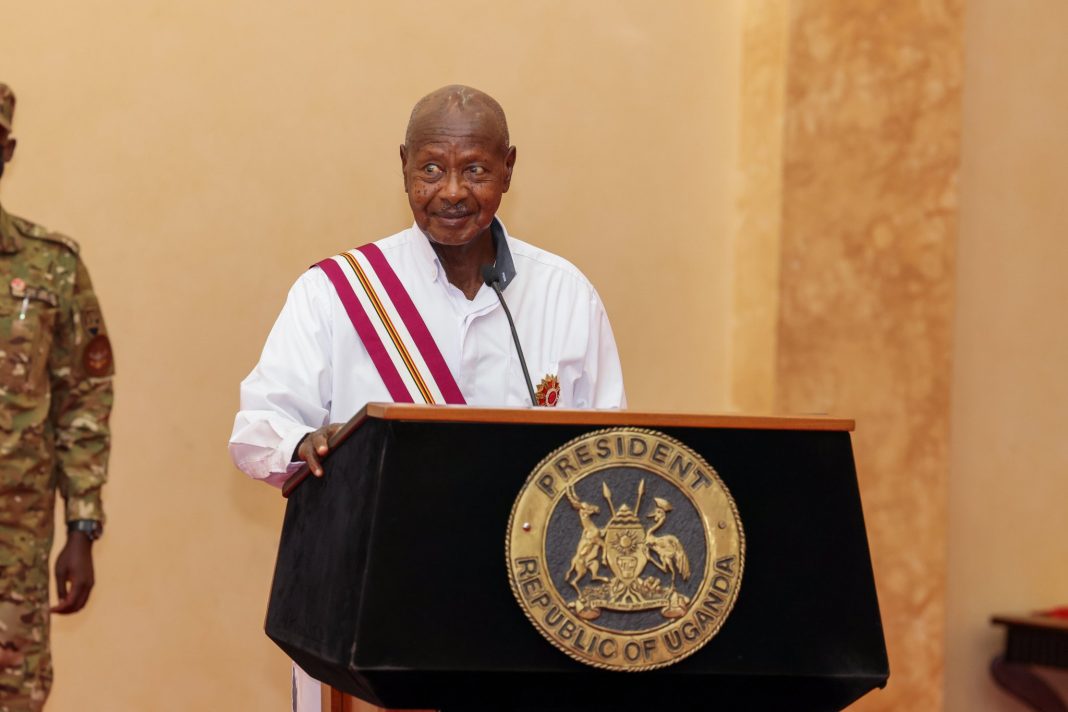

President Yoweri Museveni has called for faster economic transformation, urging Ugandans to address persistent challenges including household poverty, transport congestion, drought and vulnerability to global fuel price shocks as the country marks 64 years of independence.
In his Independence Day message, Museveni said Uganda had progressed from post-conflict recovery and economic decline to expansion, diversification and the development of knowledge-based industries since 1986.
He cited emerging sectors such as electric vehicle manufacturing and pharmaceuticals as part of the country’s transition towards higher-value production, while acknowledging that significant challenges remain.
“Our task is not yet complete,” Museveni said, outlining priorities he believes are critical to sustaining economic growth and improving household livelihoods.
Museveni calls for investment in alternative transport
The President identified congestion and the movement of heavy cargo on roads as challenges that require greater investment in alternative transport infrastructure.
He called for the expansion of railway networks, pipelines and lake transport to ease pressure on roads and improve the movement of goods across the country.
A shift towards these transport options could help reduce road congestion and support more efficient freight movement, although the pace of progress will depend on infrastructure investment, implementation and coordination across sectors.
Poverty reduction remains a priority
Museveni also urged the government to intensify efforts to bring more households into the money economy through wealth creation and livelihood improvement programmes, including the Parish Development Model (PDM).
He called on political, religious and cultural leaders to support efforts to ensure that households engage in productive economic activities.
“I urge our political, religious and cultural leaders to join the effort to ensure that every household creates wealth and improves its livelihood,” he said.
The appeal places household-level wealth creation at the centre of the government’s economic transformation agenda. However, the impact of such programmes will depend on whether households can access productive financing, markets, skills and reliable infrastructure.
Value addition and irrigation among key priorities
The President further emphasised the need to add value to Uganda’s agricultural products and minerals instead of relying primarily on the export of unprocessed commodities.
Value addition can help expand domestic industrial activity, create jobs and increase the earnings generated from agricultural and mineral resources.
Museveni also identified drought as a challenge requiring expanded irrigation, which could reduce dependence on rainfall and help farmers maintain production during dry periods.
Expanding irrigation, however, will require investment in water infrastructure, affordable equipment and systems that enable farmers to use water efficiently.
Fuel price shocks highlight need for resilience
Museveni said Uganda must also strengthen its domestic fuel distribution systems and promote exports to address the effects of fuel price shocks.
His remarks point to the importance of improving the country’s ability to manage external market disruptions while strengthening domestic economic activity.
Fuel prices can affect transport, production and the cost of goods and services, making energy supply and distribution important factors in the broader economic outlook.
President acknowledges unfinished economic agenda
Reflecting on Uganda’s development since 1986, Museveni said the country had made progress but needed to work harder to secure its economic transformation.
The message combines a defence of the government’s economic record with an acknowledgement of continuing structural challenges in transport, agriculture, industrial production and household incomes.
As Uganda marks 64 years since independence, the priorities outlined by the President place renewed emphasis on translating economic growth and industrial development into broader household prosperity.
“Yes, we have made progress, but we must work harder to secure Uganda’s economic transformation,” Museveni said.