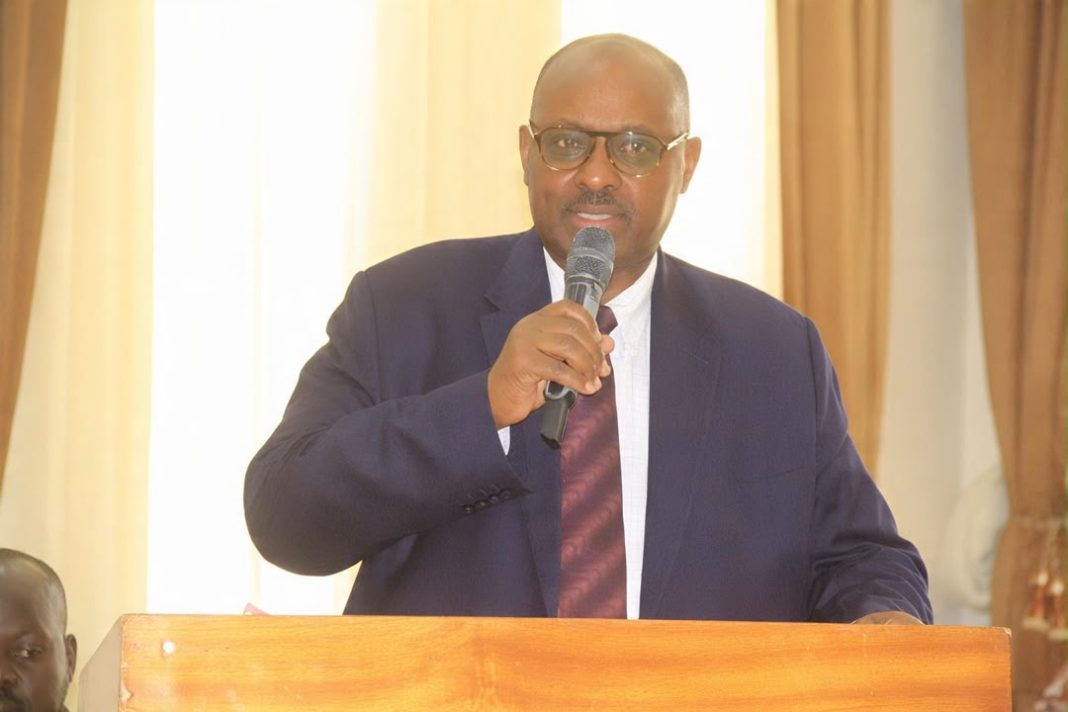

The Permanent Secretary in the Ministry of Local Government, Ben Kumumanya, has urged trainers preparing newly elected local government leaders to move beyond theoretical instruction and equip councils with practical skills for managing communities, resolving disputes and delivering public services.
Kumumanya, who was speaking during a Training of Trainers exercise in Masaka, drew on more than three decades of experience in Uganda’s decentralisation system to guide facilitators on how to prepare local government leaders for the challenges they will face in office.
He said his long involvement with local government councils had provided him with practical lessons that could help trainers make the induction process more relevant to the realities of local governance.
“Training should not end in the classroom,” Kumumanya told the trainers, emphasising the need for participatory approaches that allow council leaders to engage with issues they are likely to encounter in their communities.
He noted that newly elected leaders come from different professional, social and political backgrounds and have varying levels of understanding of local government systems. Trainers, he said, must therefore be prepared to facilitate meaningful discussions rather than rely solely on conventional presentations.
Drawing from his experience working with local government councils, Kumumanya highlighted conflict management, constructive dialogue and consensus-building as essential skills for effective councils.
He urged trainers to help leaders understand the importance of democratic principles, including respect for majority decisions while protecting minority views and seeking consensus where possible.
Accountability at the centre of local governance
Kumumanya also instructed trainers to place accountability and responsible management of public resources at the centre of the induction programme.
He cited Article 164 of Uganda’s Constitution, which provides for personal accountability of public officers for financial losses arising from their actions or omissions, stressing that public officials can be required to make good losses caused through misuse of public resources or failure to comply with established procedures.
The message, he said, should reach council leaders clearly from the beginning of their tenure: holding public office carries a responsibility to citizens and does not shield officials from accountability for decisions taken in office.
The emphasis comes as local governments remain central to the delivery of essential public services, including health, education, roads, water and community development.
Councils urged to drive household transformation
Kumumanya further tasked trainers with ensuring that local government leaders understand their role in supporting Government programmes designed to raise household incomes and reduce poverty.
Among the programmes he cited were the Parish Development Model (PDM) and Emyooga, alongside other socioeconomic transformation initiatives.
He said councils should not merely observe the implementation of such programmes but should mobilise communities, provide effective oversight and monitor whether public interventions are translating into tangible improvements in people’s livelihoods.
The Permanent Secretary said effective decentralisation depends not only on transferring responsibilities to local governments but also on ensuring that elected leaders understand their mandates and work collectively to deliver results.
In his closing remarks, Kumumanya urged the trainers to act as ambassadors of Government when they begin working with councils across the country.
He challenged them to promote cooperation among council members, respect for institutional roles and constructive engagement, saying these principles would be critical to strengthening local democracy and improving service delivery.
The Training of Trainers exercise is intended to prepare facilitators who will subsequently support the induction of newly elected Local Government Council leaders, giving them the knowledge and practical tools required to execute their constitutional and statutory responsibilities.