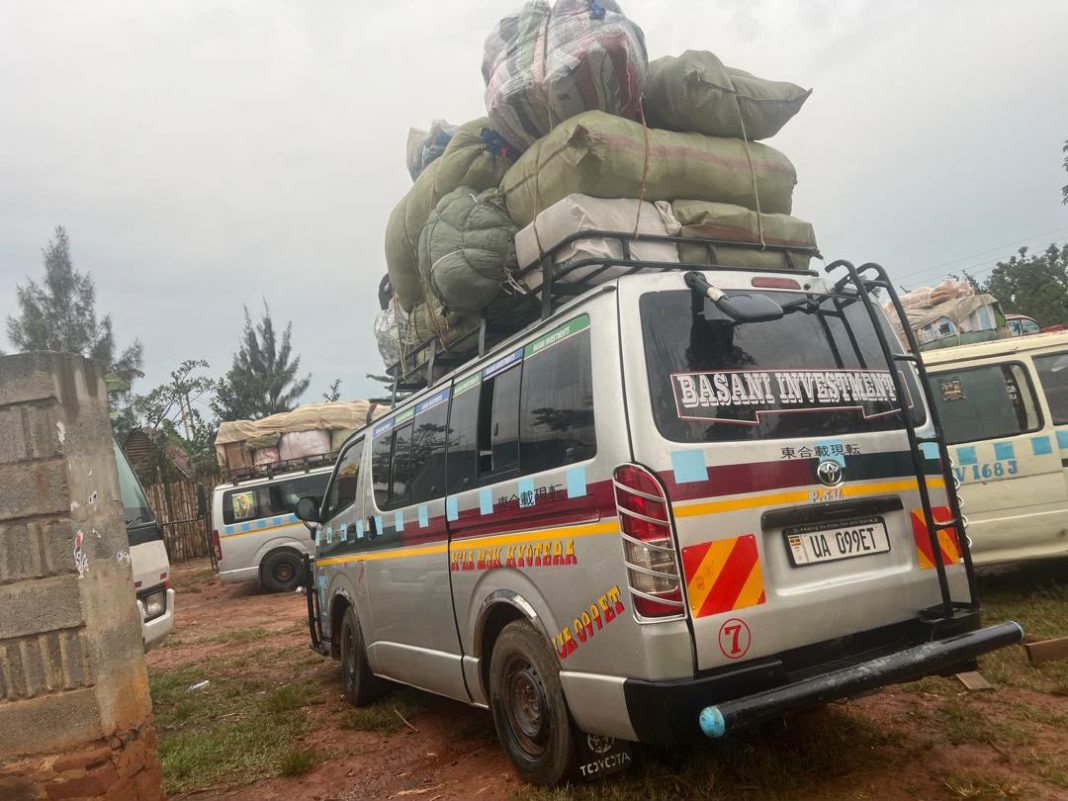

Eleven commuter taxi drivers have been arrested during a night enforcement operation at the Maya checkpoint on the Masaka Highway as Traffic Police step up efforts to eliminate dangerous loading, a practice authorities say continues to fuel serious road crashes across Uganda.
The arrests followed an intelligence-led operation targeting drivers who allegedly overload passenger vehicles under the cover of darkness in an attempt to evade routine traffic checks.
Traffic Police spokesperson SP Michael Kananura said the suspects were intercepted, detained and will be presented before court to answer charges under the Road Safety Act, Cap. 347.
According to police, dangerous loading remains one of the most persistent traffic offences, particularly at night when some transport operators assume law enforcement presence is limited. Authorities warned that the latest operation marks the beginning of a sustained crackdown on motorists who disregard passenger safety by carrying more people than their vehicles are licensed to accommodate.
“A vehicle is engineered and licensed to carry a specific number of passengers. Exceeding that capacity compromises its stability and significantly increases the likelihood of crashes,” Kananura said.
Traffic Police explained that overloaded vehicles experience changes in their centre of gravity, making them more vulnerable to tyre bursts, loss of control and rollovers, especially at high speeds or during emergency braking. Such crashes often result in severe injuries or fatalities.
Police urged drivers, vehicle owners and transport operators to comply with vehicle capacity limits and avoid placing profit ahead of passenger safety.
The renewed enforcement campaign comes amid continued efforts by authorities to reduce preventable road crashes by targeting high-risk traffic offences. Police maintain that dangerous loading, alongside speeding and reckless driving, remains among the leading causes of fatal accidents on Uganda’s highways.
Officials have warned that similar intelligence-led operations will continue across the country, especially during night hours when traffic offenders are most likely to attempt to evade detection.