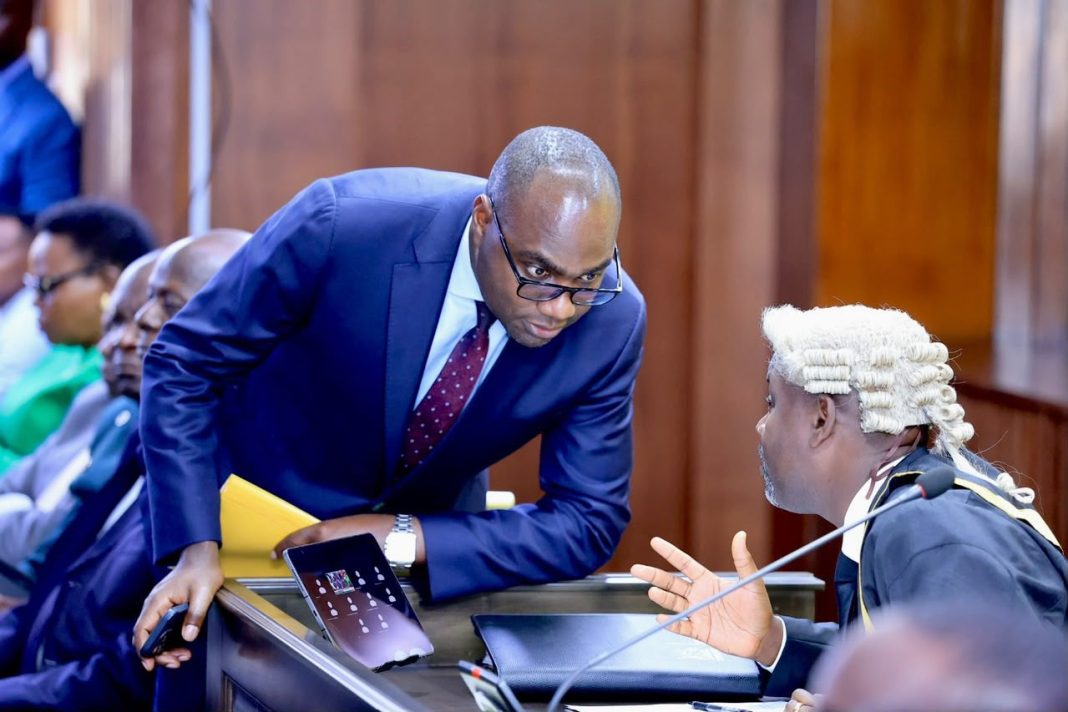

Parliament has approved the President’s proposed changes to the Income Tax (Amendment) Bill, 2026 and the Excise Duty (Amendment) Bill, 2026, endorsing measures aimed at strengthening tax administration while avoiding additional costs that government argues could discourage investment.
The two Bills were passed on Monday, August 4, during the 12th Sitting of the First Meeting of the First Session of the 12th Parliament after being returned by President Yoweri Museveni for reconsideration under Article 91(3)(b) of the Constitution.
Finance Minister Henry Musasizi moved the motion for reconsideration, arguing that the President’s proposals offered a more balanced approach to taxation and reflected government’s evolving assessment of the economy.
The sitting, chaired by Deputy Speaker Thomas Tayebwa, considered a report presented by the Chairperson of Parliament’s Committee on Finance, Planning and Economic Development, Maximus Ochai, before adopting the committee’s majority recommendations.
One of the most closely watched decisions concerned the taxation of single-use plastics.
Parliament agreed to retain the excise duty at 2.5 per cent or US$70 per tonne, whichever is higher, instead of the significantly higher rate of 25 per cent or US$1,500 per tonne that had previously been passed by legislators. The House rejected the minority report, which had opposed the President’s proposal.
Lawmakers also approved amendments to the Income Tax Bill removing the withholding tax exemption for winnings from land-based casinos. The decision means winnings from casinos will now attract withholding tax in the same way as other betting and gaming activities, while winnings under the national lottery will continue to enjoy an exemption.
Defending the proposals, Musasizi told Parliament that government believes the President’s recommendations are in the country’s best economic interest, adding that tax policy remains dynamic and may be adjusted as new economic information emerges.
Despite objections from some legislators, Parliament ultimately adopted the committee’s majority report and passed both Bills with the President’s recommendations.
The latest amendments reflect government’s attempt to strike a balance between increasing domestic revenue and preserving Uganda’s investment climate.
By retaining the lower excise duty on single-use plastics, policymakers appear to have prioritised industrial competitiveness over aggressive taxation. Manufacturers had argued that the higher tax rate would substantially increase production costs, potentially leading to higher consumer prices, reduced investment and job losses. Government appears to have accepted that a gradual tax approach may be more effective than imposing a steep levy that businesses could struggle to absorb.
At the same time, extending withholding tax to winnings from land-based casinos closes a gap in Uganda’s tax regime. Previously, casino winnings benefited from an exemption that did not apply to other forms of betting. The amendment is expected to improve fairness across the gaming industry and broaden the tax base without introducing entirely new taxes.
The decisions also highlight a broader policy direction under Uganda’s domestic revenue mobilisation strategy. As government seeks additional resources to finance infrastructure, social services and debt obligations, it is increasingly focusing on expanding compliance and removing tax exemptions rather than raising tax rates across the economy.
The reconsideration process further illustrates the constitutional role of the President in shaping fiscal legislation. While Parliament has the power to pass tax laws, the President can return Bills for reconsideration, allowing government to refine policies before they become law.
Tax experts are likely to watch how the new measures affect both revenue collections and business activity, particularly in the plastics manufacturing and gaming sectors, where the amendments directly alter tax obligations.