
Uganda must turn lessons from repeated Ebola and Marburg outbreaks into lasting improvements in its health system, rather than relying on measures introduced only after an emergency begins, public health experts said on Tuesday.
A study by Makerere University School of Public Health and FHI 360 found that Uganda had strengthened its ability to respond rapidly once Ebola or Marburg cases were confirmed, but continued to face gaps in early detection, health-worker safety, emergency financing and implementation of lessons from previous outbreaks.
The study examined Uganda’s experience with recurrent Ebola virus disease and Marburg virus disease outbreaks between 2000 and 2026.
“The real value lies in ensuring that what we learn changes what we do,” said Dr. Andrew Acero, director of the Meeting Targets and Maintaining Epidemic Control (EpiC) project at FHI 360 Uganda.

“Our findings should inform policy, shape guidelines and training, strengthen systems, and ultimately improve practice,” he said.
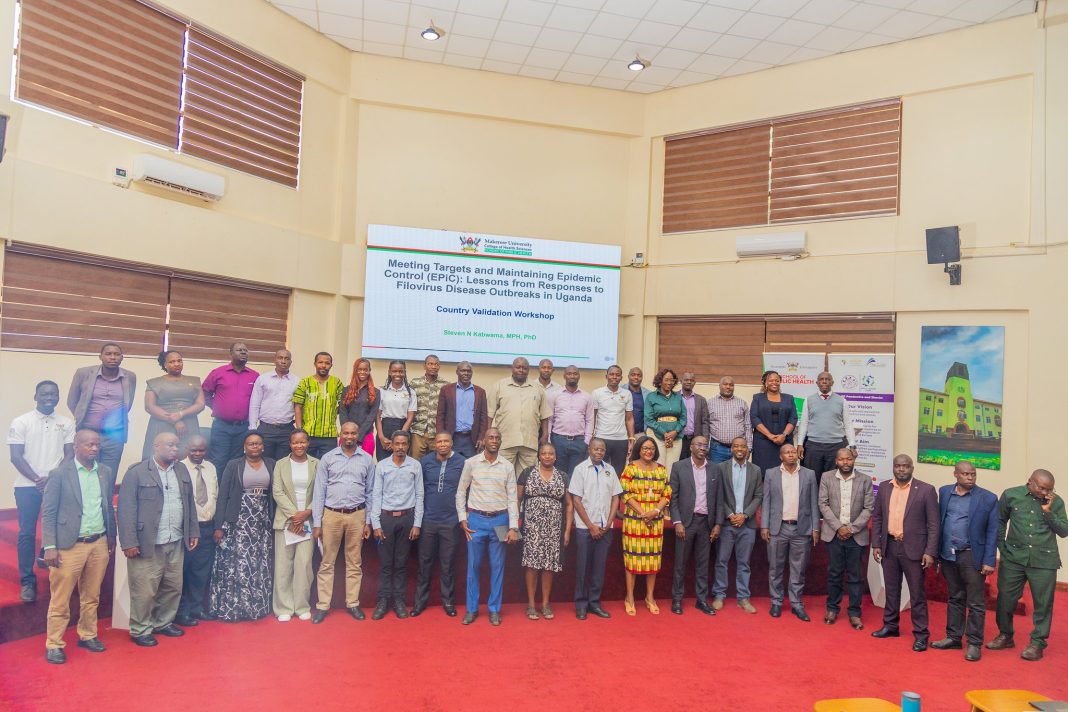
Acero was speaking at a national stakeholder engagement and validation workshop on Uganda’s Ebola and Marburg responses held in Kampala.
He said preparedness should begin before an emergency is declared through sustained investment in relationships, systems and capacity.
Prof. Rhoda Wanyenze, who also spoke at the meeting, said Uganda needed to identify specific weaknesses within its health system rather than rely on broad descriptions of preparedness gaps.
“Outbreak preparedness is not only about identifying broad challenges; it is about understanding the small gaps within our systems that create those challenges,” she said.
Wanyenze said authorities should identify where delays occur and what is needed to address them.

“We often say delayed detection is a challenge. But what exactly does delayed detection mean?” she said.
The study identified delays in frontline detection among the factors that continue to undermine Uganda’s preparedness. It also pointed to health-worker exposure, bottlenecks in emergency financing and incomplete implementation of lessons from previous outbreaks.
Dr. Steven Kabwama said the study’s synthesis covered Uganda’s experience with Ebola and Marburg outbreaks over more than two decades.
The findings highlight the need to strengthen routine health systems between outbreaks so that improvements made during emergencies are retained and incorporated into everyday practice.
Uganda has experienced several Ebola outbreaks, including outbreaks caused by different Ebola virus species, as well as Marburg outbreaks. The country’s experience has led to the development of surveillance, laboratory, infection-prevention and outbreak-response capacity.
But the study suggests that gaps in detecting cases early and translating lessons from previous outbreaks into routine systems remain a challenge.
For Uganda, the researchers said, preparedness should therefore be treated as a continuous process rather than an activity that begins when an outbreak is declared.