
Uganda’s HIV prevalence among adults remained unchanged at 5.9% in 2025, with an estimated 1.496 million people aged 15 and above living with the virus, preliminary findings from a government survey showed on Thursday.
The survey found that 85.3% of adults living with HIV knew their status, while 99.1% of those diagnosed were receiving antiretroviral treatment (ART). Of those on treatment, 96.5% had achieved viral suppression.
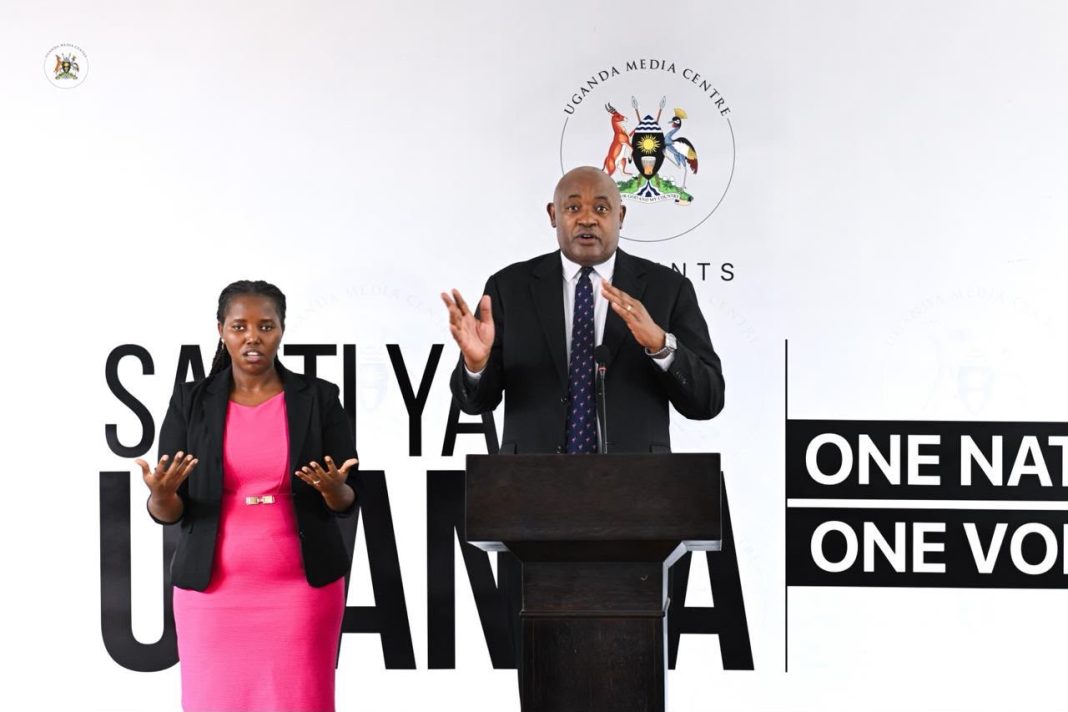
“Almost everyone who knows they are living with HIV is on treatment, and almost everyone on treatment has suppressed the virus,” Health Minister Chris Baryomunsi said while presenting the findings at the Uganda Media Centre in Kampala.
“Our biggest remaining gap is at the very start: about one in seven people living with HIV do not know their status,” he said.
HIV prevalence was higher among women, at 7.3%, than men, at 4.1%, the 2025 Uganda Population-based HIV Impact Assessment (UPHIA) found.
Among people aged 15 to 49, prevalence stood at 5.5%, with women accounting for 7.1% and men 3.5%.
The survey identified significant regional differences, with South Western Uganda recording the highest prevalence at 8.0%, followed by Central 1 at 7.3% and Central 2 at 7.2%.
The North East (Karamoja) region recorded the lowest prevalence at 1.3%, followed by West Nile at 1.4%.
The findings also highlighted concerns about HIV infections among young adults. Prevalence among people aged 15 to 24 stood at 1.5%, but was twice as high among women, at 2.0%, as among men, at 1.0%.
Among women aged 20 to 24, prevalence reached 2.8%, compared with 1.3% among those aged 15 to 19.
Viral suppression among women living with HIV aged 15 to 24 was 64.1%, significantly below the levels recorded among older adults. The survey could not establish a reliable estimate for men in the same age group because of small sample numbers.
Baryomunsi said the findings underscored the need to strengthen prevention and testing programmes targeting adolescents, particularly girls and young women.
The proportion of all adults living with HIV who had suppressed viral loads rose to 86% in 2025, from 75.4% in the 2020 assessment, the survey showed.
Regional viral suppression rates ranged from 78% in Mid Eastern Uganda to 92.3% in the South Western region.
The assessment also measured selected non-communicable disease indicators, finding elevated blood pressure in 15.5% of participants aged 15 and above, elevated blood glucose in 0.9%, and overweight or obesity in 24.8%.
Baryomunsi said the government would use the findings to direct resources towards communities with the greatest healthcare needs and strengthen the integration of HIV services with treatment for chronic conditions.
“UPHIA 2025 is more than a survey report. It is a national accountability instrument and a timely evidence base for the next phase of Uganda’s health reforms,” he said.
The survey was conducted between July and September 2025 across all regions of Uganda. It was led by the Ministry of Health in collaboration with Makerere University School of Public Health, the Uganda Bureau of Statistics and the Uganda Virus Research Institute.
It was funded by the United States President’s Emergency Plan for AIDS Relief (PEPFAR) through the US Centers for Disease Control and Prevention.
Uganda is working towards the global 95-95-95 targets, which seek to ensure that 95% of people living with HIV know their status, 95% of those diagnosed receive treatment and 95% of those on treatment achieve viral suppression.
Further findings, including data on new HIV infections, programme coverage and behavioural indicators, will be released in the final report, the ministry said.