
The East African Community (EAC) is strengthening regional health security as Partner States move to improve their ability to prevent, detect and respond rapidly to Ebola outbreaks and other emerging and re-emerging infectious diseases.
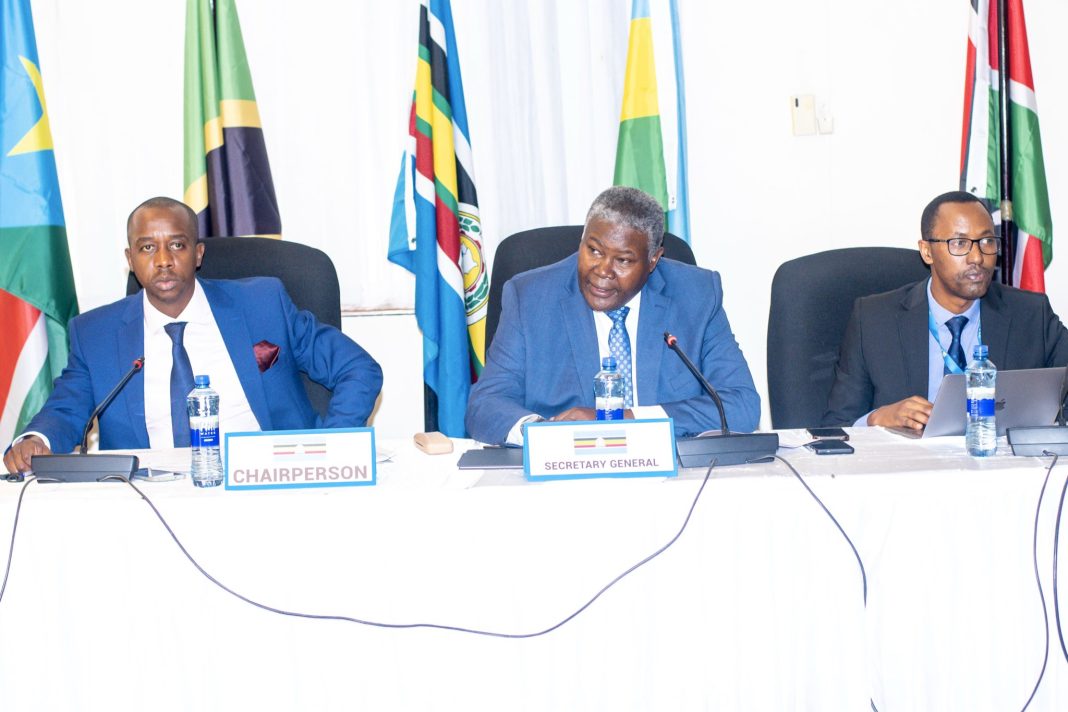
The measures were advanced during the 26th Ordinary Meeting of the EAC Sectoral Council of Ministers of Health in Arusha, where ministers reviewed mechanisms for improving coordination, information sharing and access to essential medical supplies across the region.
The renewed focus comes as East African countries seek to strengthen preparedness against health emergencies that can spread rapidly across borders through the movement of people, goods and services.
EAC strengthens accountability on health decisions
Ministers agreed to strengthen the Health Decisions and Directives Tracking Mechanism, including more regular monitoring and reviews of decisions adopted at the regional level.
A Decision Implementation Dashboard is being used to improve accountability and enable Partner States to track progress in implementing regional health commitments.
The mechanism is intended to move EAC health decisions beyond policy commitments and towards measurable implementation, particularly during public health emergencies when delays in coordination can increase the risk of disease transmission.
All eight Partner States join pooled procurement system
The EAC also advanced its Pooled Procurement Mechanism, with all eight Partner States now onboarded and trained on the digital platform.
The system is designed to improve access to essential medicines, vaccines, diagnostics and other health products by allowing countries to coordinate procurement and leverage regional demand.
The mechanism is also expected to support the development of regional pharmaceutical and health-product manufacturing capacity while reducing the bloc’s dependence on external supply chains.
For countries such as Uganda, Kenya, Tanzania, Rwanda, Burundi, South Sudan, the Democratic Republic of Congo and Somalia, stronger regional procurement could be particularly important during outbreaks, when global demand for vaccines, diagnostics and other medical supplies can rise sharply.
Digital platform to improve epidemic intelligence
Ministers further backed efforts to strengthen the Regional Information Sharing Platform for Pandemic and Epidemic Intelligence, aimed at enabling faster exchange of information among Partner States.
The platform is expected to strengthen epidemic intelligence, surveillance and evidence-based decision-making by allowing health authorities to share information more efficiently as disease threats emerge.
Ministers also stressed the importance of timely cross-border sharing of health information, recognising that effective outbreak response depends on countries acting on information before diseases spread widely.
The increased use of digital systems is expected to improve surveillance, preparedness and accountability while giving national health authorities a stronger regional picture of emerging threats.
Cross-border cooperation key to containing outbreaks
The EAC’s renewed health-security measures reflect the reality that infectious diseases do not respect national borders.
An outbreak detected in one Partner State can quickly become a regional concern as people move across borders for trade, work, tourism and other activities.
By strengthening surveillance, information sharing, procurement and implementation monitoring, the EAC is seeking to build a more coordinated regional response capable of detecting threats earlier and mobilising resources faster.
The measures also place greater emphasis on turning regional health commitments into practical action, particularly as East Africa continues to face the threat of Ebola and other emerging and re-emerging diseases.