
Uganda’s Parliament has approved a five-year fiscal policy framework aimed at reducing public debt, curbing expensive commercial borrowing and strengthening domestic revenue mobilisation as the Government pursues its ambition of growing the economy to US$500 billion by 2040.
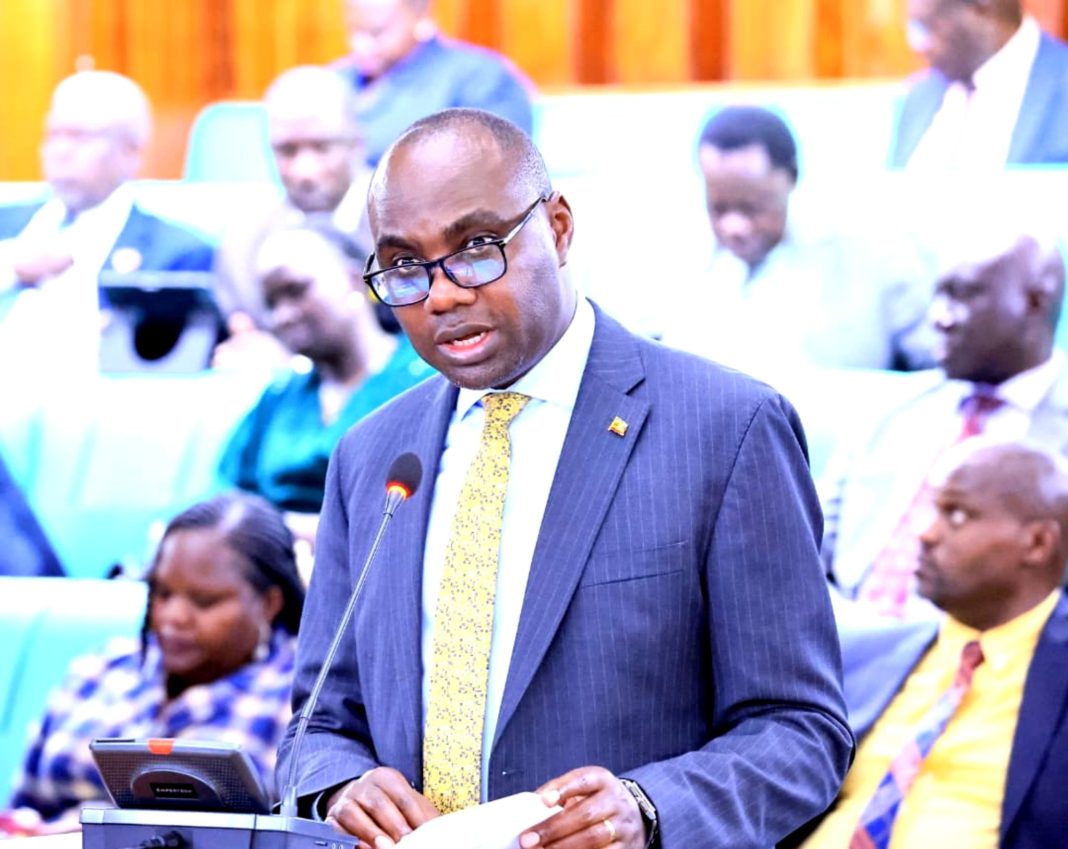
The Charter for Fiscal Responsibility and the Economic and Fiscal Update for FY2026/27–FY2030/31 were approved during Wednesday’s plenary sitting chaired by Speaker Jacob Markson Oboth.
The motion was moved by Finance Minister Henry Musasizi, while the report of the Parliamentary Committee on the Budget was presented by its chairperson, Amos Kakunda, the Rwampara County MP.
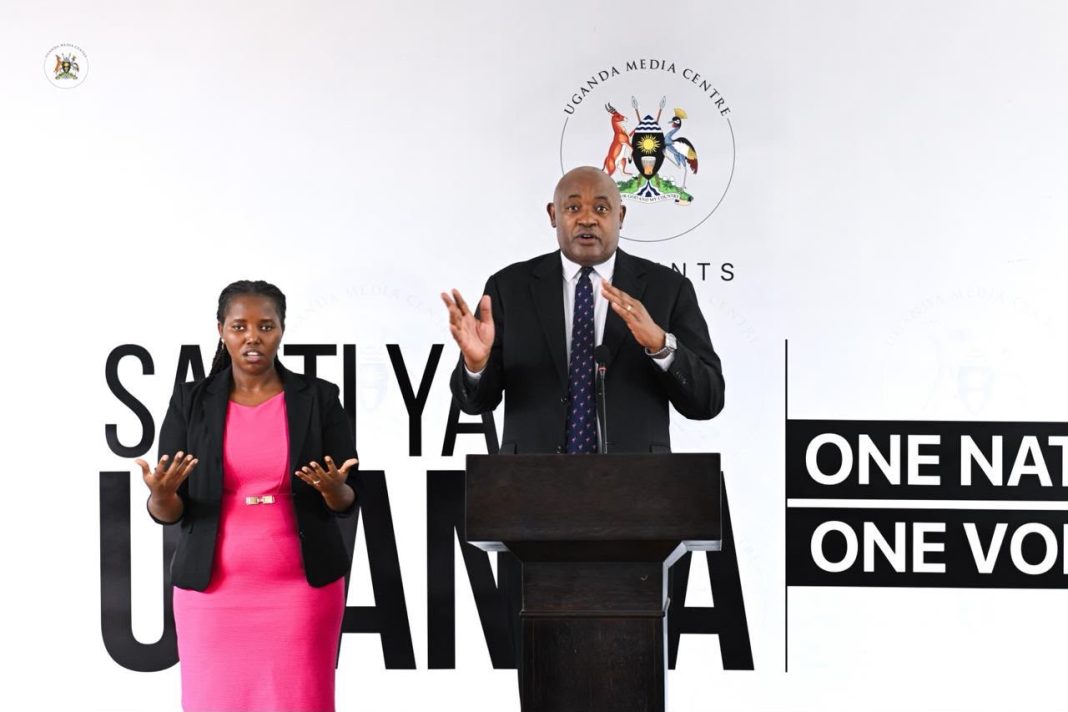
Musasizi described the Charter as the Government’s fiscal policy strategy for the next five years, designed to maintain macroeconomic stability while creating room for strategic public investment and private-sector-led economic growth.
“The Charter establishes legally binding fiscal anchors to ensure fiscal discipline, accelerate domestic revenue mobilization, reduce expensive non-concessional borrowing, and maintain debt sustainability,” Musasizi said.
The framework will guide the implementation of the Fourth National Development Plan (NDP IV) and the Ten-Fold Growth Strategy, which seeks to expand Uganda’s economy to US$500 billion by 2040.
Government targets lower debt and borrowing
Under the approved framework, public debt is projected to reach 54.7 per cent of non-oil GDP in FY2026/27 before peaking at 55.1 per cent in FY2027/28 and declining to 50 per cent by FY2030/31.
The Government also intends to reduce its reliance on commercial borrowing, with such borrowing as a proportion of domestic non-oil revenue projected to decline from 33.7 per cent to 19.3 per cent over the five-year period.
The fiscal deficit, excluding petroleum revenues, is similarly expected to narrow from 6.6 per cent of non-oil GDP to 1.5 per cent by the end of the Charter period.
These targets form part of a broader strategy to strengthen public finances, contain debt vulnerabilities and reduce the cost of financing Government operations.
The Charter prioritises accelerated economic growth in high-impact sectors, revenue-led fiscal consolidation, improved public expenditure efficiency and sustainable management of petroleum revenues.
Petroleum revenues face tighter controls
The framework also introduces restrictions on how petroleum revenues can be used, as Uganda prepares for increased oil-related revenues.
It limits transfers of petroleum revenue to the Consolidated Fund to a maximum equivalent of 0.8 per cent of the preceding year’s estimated non-oil GDP outturn.
The remaining petroleum revenues are expected to be channelled into the Petroleum Revenue Investment Reserve, in line with the framework’s emphasis on sustainable management of oil wealth.
The approach is intended to strengthen fiscal discipline and limit the risk of excessive dependence on volatile petroleum revenues to finance recurrent Government expenditure.
Budget committee proposes additional safeguards
Presenting the committee’s findings, Kakunda said lawmakers examined the Charter alongside the Economic and Fiscal Update and submissions from key stakeholders.
The committee proposed additional safeguards to strengthen accountability and ensure that the Government adheres to the fiscal commitments outlined in the document.
Among the recommendations is a requirement that nominal publicly guaranteed debt remains below 5 per cent of non-oil GDP throughout the Charter period.
On domestic revenue mobilisation, the committee proposed that non-oil revenue as a share of non-oil GDP increase by at least 0.5 percentage points annually, reaching a minimum of 16.4 per cent by FY2030/31.
The committee also called for stricter enforcement of the Commitment Control System, which is intended to prevent Government entities from undertaking financial obligations without confirmed resources.
It recommended sanctions against Accounting Officers who repeatedly commit Government expenditure without adequate funding.
Parliament warns against undermining development priorities
While supporting fiscal consolidation, the Budget Committee cautioned against implementing spending cuts in ways that could undermine essential public services and productive investment.
In its conclusion, the committee stated that “fiscal consolidation must not be pursued at the expense of the social and productive foundations of growth.”
It further emphasised that fiscal rules would only deliver their intended results if supported by effective enforcement, regular monitoring and accountability.
The approval comes as Uganda seeks to balance ambitious infrastructure and development spending with rising debt obligations and the need to mobilise more domestic resources.
Over the next five years, the implementation of the Charter will be central to determining how the Government finances its development priorities, manages borrowing and allocates resources across the economy.