
Uganda and Denmark are exploring a government-to-government partnership to strengthen firefighting, fire prevention and emergency rescue services as Uganda expands its industrial and petroleum sectors.
The initiative is being coordinated by the Uganda Embassy in Copenhagen under Ambassador Margaret M. Otteskov, following a technical fact-finding visit by Ugandan officials to Danish firefighting and emergency-response institutions.
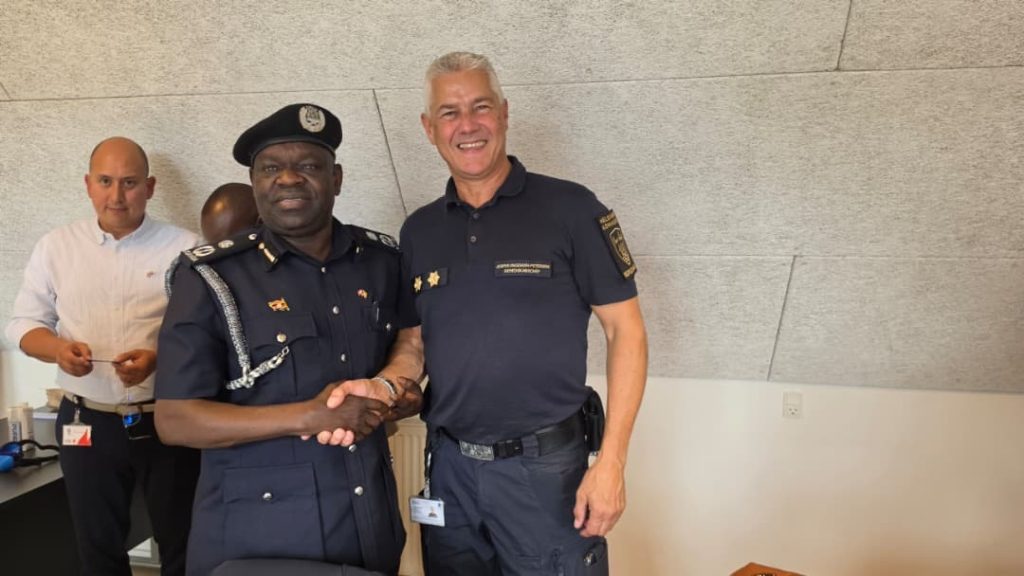
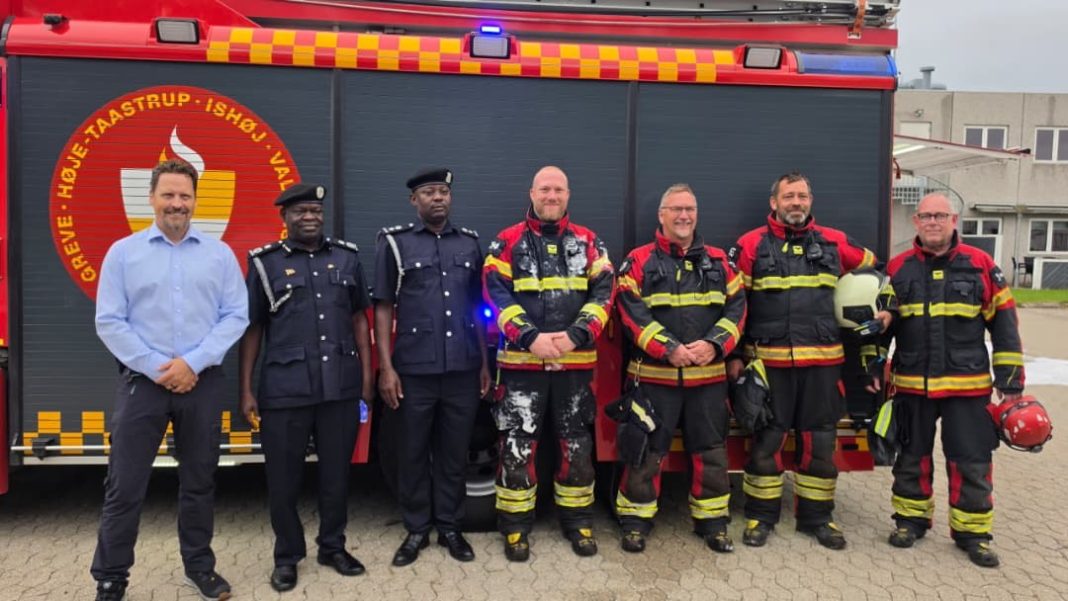
The delegation visited Falck Fire Denmark for demonstrations and technical sessions on firefighting, rescue operations, emergency preparedness, specialised equipment, training and institutional organisation. It also visited the Franck Fire Training School in North Zealand.
The embassy said the engagement is intended to move beyond a study visit and identify practical areas for long-term cooperation.
Potential areas include modernising Uganda’s fire and rescue services, strengthening fire-prevention and risk-management systems, training firefighters, improving emergency command and coordination, and acquiring and maintaining specialised equipment.
The discussions also cover preparedness for petroleum and industrial fires, urban fire safety, high-rise rescue, hazardous-material incidents, emergency planning, technology transfer and institutional partnerships.
Falck has more than a century of experience in firefighting and public emergency services in Denmark.
Oil production increases need for specialised response
The initiative comes as Uganda prepares for commercial oil production through the Tilenga and Kingfisher projects and the East African Crude Oil Pipeline (EACOP).
The development of oil facilities, pipelines, storage installations and related infrastructure will require emergency-response capabilities covering industrial fires, hazardous materials and other risks, the embassy said.
Uganda is also expanding manufacturing, transport infrastructure and urban development, increasing demand for specialised fire-prevention and rescue services.
Government petroleum plans include fire prevention, health and safety, oil-spill preparedness and emergency response as part of the sector’s development framework.
Possible investment cooperation
The firefighting discussions are part of broader Uganda-Denmark engagements on infrastructure, emergency response, health, environmental protection, agro-industrialisation and investment.
The embassy said Denmark has expressed interest in exploring selected investments through government-to-government cooperation. Recent discussions included an indicative investment framework of 50 million to 70 million euros, subject to feasibility studies and prioritisation.
Ambassador Otteskov said the embassy wants the relationship to produce practical partnerships that strengthen Uganda’s institutions and support investment.
“As Uganda enters a new phase of industrial and petroleum development, modern emergency-response systems are an essential part of national preparedness,” she said.
Ugandan institutions involved in the technical engagements include the Office of the Prime Minister, Ministry of Finance, Planning and Economic Development, Ministry of Works and Transport, Ministry of Local Government, Ministry of Internal Affairs, Ministry of Energy and Mineral Development, Uganda Police Force, Public-Private Partnerships Unit, Uganda Investment Authority and Stratus Medical Supplies Ltd.
The embassy said follow-up discussions will assess Uganda’s fire and rescue capacity gaps, Danish technical solutions, training needs, equipment and infrastructure requirements, financing options and possible pilot projects.
The aim is to develop proposals that could form the basis of a structured Uganda-Denmark government-to-government cooperation framework.