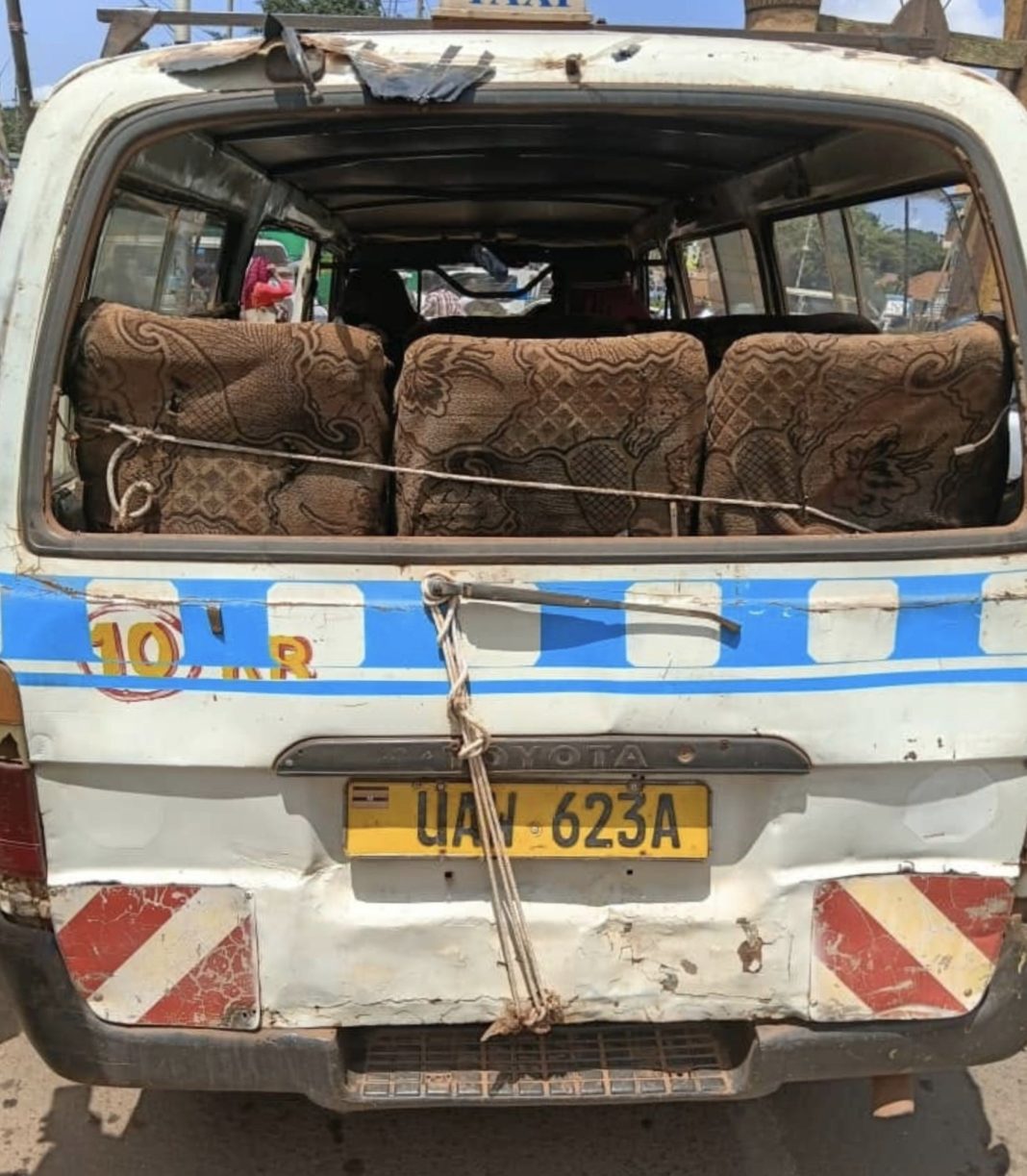

Government has ordered a 100-day crackdown on dangerously maintained commuter taxis in the Greater Kampala Metropolitan Area, in a move aimed at removing unsafe public transport vehicles from the roads.
The operation, directed by Minister of Works and Transport Fred Byamukama, will begin on Monday 24 August, with the Uganda Police Force instructed to target taxis classified as being in Dangerous Mechanical Condition (DMC).
The campaign will place particular attention on ageing 14-seater commuter taxis commonly known as “Ganyegenya”, which remain a familiar feature of Kampala’s public transport system.
“Starting Monday, 24th August, no DMC taxis will be allowed within the Greater Kampala Metropolitan Area,” Byamukama said.
“I have directed Police to launch a 100-day operation in the Greater Kampala Metropolitan Area targeting commuter taxis found to be in a Dangerous Mechanical Condition.”
The minister said the government could not allow poor vehicle maintenance to put passengers and other road users at risk.
“Our roads must not become death traps because of poorly maintained vehicles,” he said.
The announcement puts renewed attention on the condition of Uganda’s commuter taxi fleet and the effectiveness of systems designed to ensure that public-service vehicles remain roadworthy.
A familiar problem in Kampala
For years, Kampala’s taxi industry has depended heavily on used 14-seater vans. Many provide an affordable alternative for commuters, but concerns over vehicle maintenance, congestion and road safety have repeatedly accompanied their dominance of the city’s transport network.
The government’s challenge will be to distinguish between vehicles that are simply old and those that are genuinely unsafe.
Age alone does not necessarily make a vehicle dangerous. Brakes, tyres, steering, suspension, lights, structural integrity and other mechanical components are more meaningful indicators of roadworthiness.
That makes transparent inspection criteria crucial to the success of the operation.
Uganda follows a wider regional push
Uganda’s move also comes against a broader East African effort to strengthen vehicle inspection and road-safety enforcement.
Rwanda, for example, requires public transport and cargo vehicles to undergo inspection twice a year, while private vehicles are generally inspected annually. Vehicles that fail inspection must address identified defects before they can return to the road.
Kenya also operates a formal vehicle-inspection and licensing system through the National Transport and Safety Authority, with public-service vehicles subject to safety and inspection requirements.
Tanzania, meanwhile, operates mandatory motor-vehicle inspection arrangements intended to ensure vehicles are roadworthy before they are certified for use.
The regional comparison points to a central issue for Uganda: road safety cannot depend entirely on periodic police operations.
A vehicle that is removed from the road during a 100-day campaign can become unsafe again once enforcement eases unless inspection and maintenance are continuous.
The test after 100 days
The operation could nevertheless provide a significant opportunity for Uganda to strengthen enforcement in Kampala, particularly if vehicles found to be unsafe are systematically recorded and prevented from returning to passenger service without repairs.
But there is also a practical question over what happens to commuters if large numbers of taxis are taken off the road.
Kampala relies heavily on taxis and buses for daily mobility. Removing unsafe vehicles without expanding safe alternatives could create shortages and increase pressure on the remaining public transport fleet.
The government therefore faces a balancing act: enforcing safety standards while ensuring that commuters retain affordable and reliable transport.
The longer-term answer is likely to require more than a crackdown. Regular inspections, stronger maintenance requirements, effective licensing, better enforcement and investment in alternative public transport would provide a more durable road-safety framework.
For now, Byamukama’s directive sends a clear message to operators of unsafe vehicles.
“Public transport must be safe, roadworthy and fit for purpose,” he said. “We owe Ugandans nothing less.”