
The Uganda Wildlife Authority (UWA) has begun a phased operation to translocate 200 Uganda Kobs from Murchison Falls National Park to Pian Upe Wildlife Reserve, in a conservation intervention designed to rebuild wildlife populations, restore ecological balance and strengthen the reserve’s tourism potential.
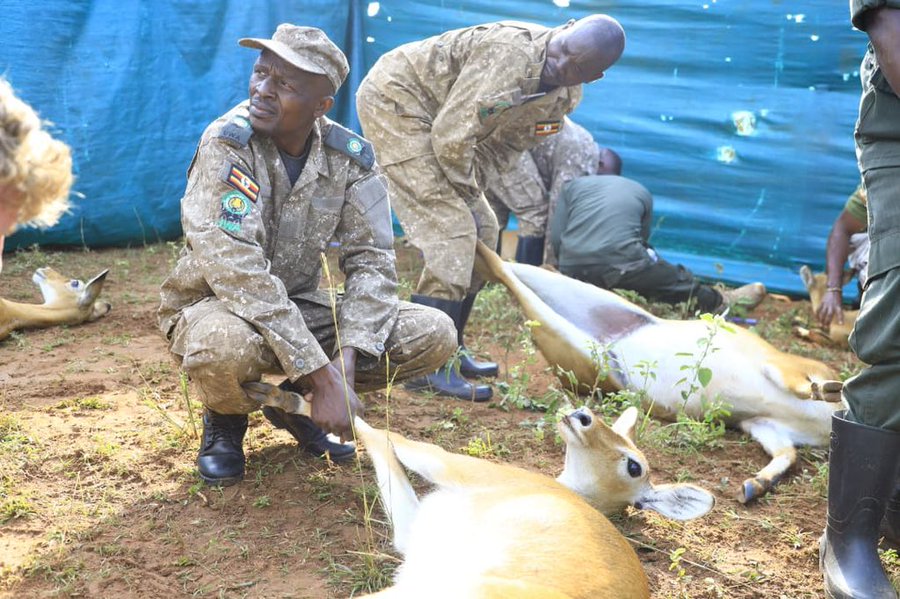
The operation, which started Thursday, brings together UWA’s wildlife capture, veterinary and law enforcement teams to safely capture, handle, transport and release the animals into their new habitat.
The exercise is being conducted in successive phases, with animal welfare and personnel safety placed at the centre of the operation.
Dr. Patrick Atimnedi, Assistant Commissioner for Veterinary Services and team leader of the translocation exercise, said the operation would prioritise the safe movement and eventual establishment of the animals in Pian Upe.
“Our priority is the safety of personnel, the animals and equipment, while ensuring that the animals are delivered safely, acclimatize and eventually establish themselves in their new habitat in Pian.”
Atimnedi said the operation follows internationally recognised conservation standards, including International Union for Conservation of Nature (IUCN) guidelines on conservation translocation, as well as species-specific procedures developed from UWA’s previous wildlife relocation exercises.
“This translocation exercise, like the previous ones, is in strict adherence to IUCN guidelines for conservation translocation and follows the species-specific protocols that we have developed through experience over the years.”
Restoring Pian Upe’s wildlife base
The introduction of Uganda Kobs is expected to expand the species’ range while increasing wildlife diversity within Pian Upe Wildlife Reserve, one of Uganda’s important protected areas in the Karamoja sub-region.
Afande Bwire Isaih, Chief Warden of Pian Upe Wildlife Reserve, described the operation as a major step in wildlife population restoration and ecological recovery.
He said the new population could improve population viability and demographic stability while strengthening the reserve’s founder population and increasing the genetic representation of Uganda Kobs in Pian Upe.
The intervention also forms part of UWA’s wider effort to restore protected areas that have experienced prolonged human pressure and habitat degradation.
“As the Pian Upe Conservation Area family, we are very proud of UWA and all our partners for this thoughtful exercise,” Bwire said.
For Pian Upe, the significance extends beyond the number of animals being introduced. A stronger and more diverse wildlife population can improve the reserve’s ecological functionality while creating a stronger foundation for wildlife-based tourism.
Tourism opportunity for Karamoja
Pian Upe’s tourism proposition has historically been built around its expansive landscapes, wildlife and relatively undeveloped wilderness character. Increasing the abundance and diversity of wildlife could make the reserve more attractive to visitors seeking game-viewing experiences outside Uganda’s better-established tourism circuits.
UWA expects the intervention to generate opportunities for communities living around the reserve through tourism-related employment, enterprises and other activities along the tourism value chain.
Conservation and tourism partners have also welcomed the operation. Kobs Safaris in Pian Upe is among the partners supporting and witnessing the exercise on the ground.
The translocation comes as Uganda continues to use wildlife population management as a tool for strengthening protected areas and improving the long-term sustainability of nature-based tourism.
Rather than simply increasing animal numbers, conservation translocations are intended to address specific ecological and population-management objectives, including restoring species to suitable habitats, improving genetic representation and establishing viable populations where conditions allow.
For Pian Upe, the arrival of the 200 Uganda Kobs therefore represents both a conservation investment and a tourism bet: that restoring wildlife populations can help rebuild an ecosystem while giving surrounding communities a greater economic stake in protecting it.
UWA says the operation is part of its broader strategy to restore and strengthen wildlife populations across Uganda’s protected-area network, enhance ecosystem resilience and ensure that conservation produces lasting ecological, tourism and socio-economic benefits.