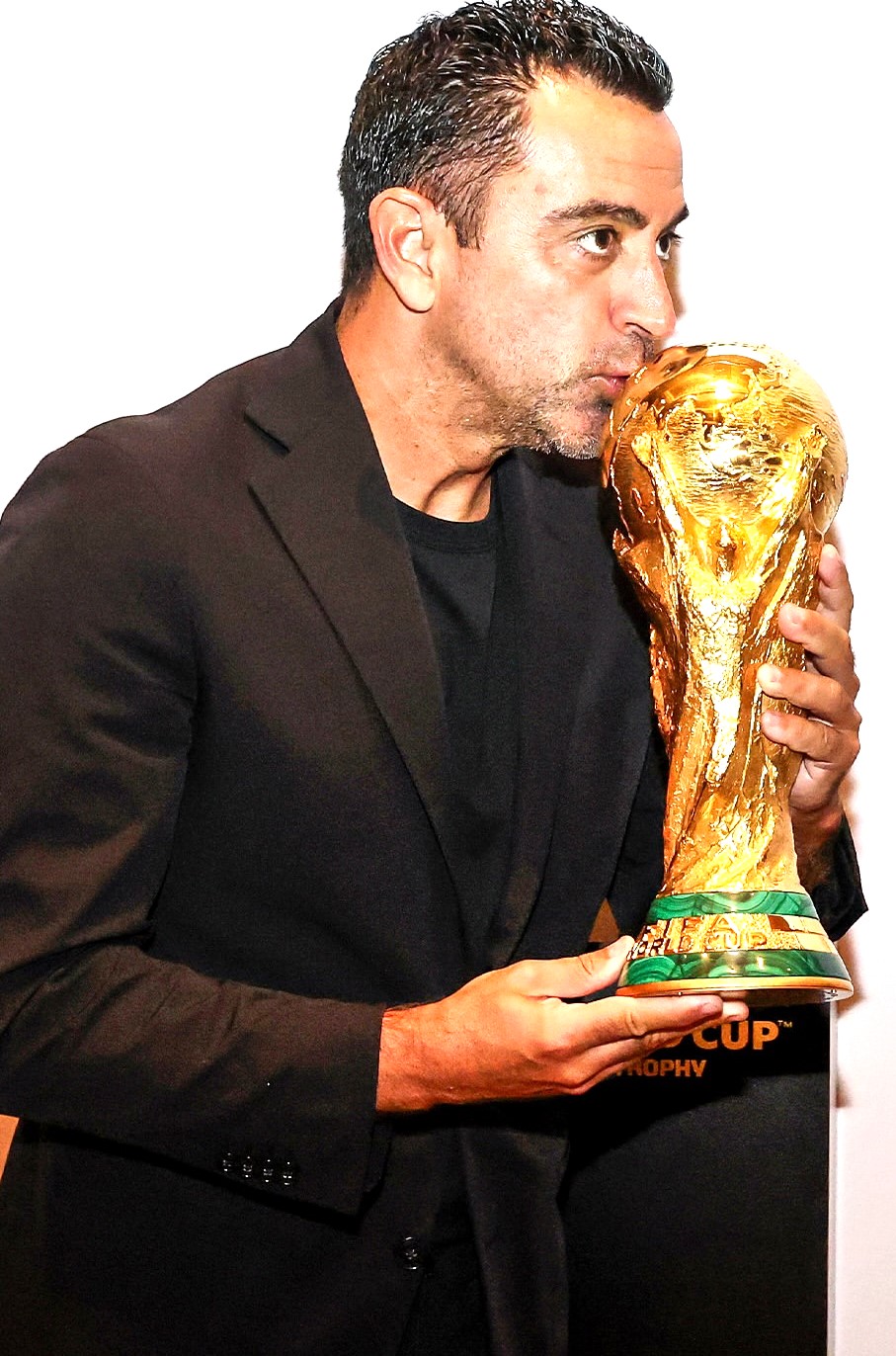

Former Barcelona manager Xavi Hernández begins his new chapter with the Netherlands facing a challenge that goes beyond tactics.
The 46-year-old has been handed a four-year contract to lead the Dutch national team, becoming the first non-Dutch coach to take charge since Austrian Ernst Happel left the position in 1978.
For Xavi, the appointment appears logical on paper. His football education at Barcelona was heavily influenced by Dutch football philosophy, particularly the ideas of Johan Cruyff and Rinus Michels.
But that connection will not make the job easy.
A different coaching environment
One of Xavi’s biggest challenges will be adapting from club football to the international game.
At Barcelona and Al-Sadd, he had players working with him regularly and could spend weeks developing tactical systems. With the Netherlands, that luxury disappears.
International coaches have limited time with their squads, often meeting players only shortly before competitive matches.
Xavi will therefore need to communicate his ideas quickly and keep his tactical approach simple enough for players to understand and execute in a short period.
Expectations will be high
The Netherlands is not a team that can afford a long rebuilding process.
The country has a rich football history and regularly expects its national team to compete at major European and global tournaments. Xavi will consequently be judged on results almost immediately.
His first major tests will come against Germany in the Nations League, with the opening fixture scheduled for September 24.
A poor start could create pressure before he has had enough time to fully establish his methods.
Can Xavi adapt his philosophy?
Xavi’s football identity is closely associated with possession, movement and control, ideas that have deep roots in Barcelona’s football culture.
However, international football can punish coaches who are too rigid.
The Netherlands will face opponents with different tactical approaches, and Xavi will have to demonstrate that he can adjust his strategy depending on the opposition and the players available.
The key question will be whether he can maintain his possession-based philosophy while giving the team enough tactical flexibility to win difficult matches.
A foreign coach in a footballing nation
Xavi will also have to deal with the unusual status of being a foreign manager.
The Netherlands has traditionally produced some of football’s most influential coaches, including Cruyff, Michels, Louis van Gaal and Ronald Koeman.
Although Xavi has strong Dutch football influences, he remains a Spanish coach taking charge of a national team with a distinct football identity.
That could place additional scrutiny on his decisions, particularly if his team struggles.
Managing players rather than developing them
Another major difference from club management is the limited influence Xavi will have over player development.
At a club, a manager works with players throughout the season and can correct weaknesses through daily training. With the national team, Xavi will inherit players at different levels of form and fitness.
Injuries, suspensions and club commitments could also force him to change plans.
His ability to build strong relationships with players and create a clear team culture will therefore be crucial.
The Koeman comparison
Xavi will also inevitably be compared with his predecessor Ronald Koeman.
Koeman had extensive experience with Dutch football and understood the national team’s environment. Xavi must now convince supporters that his different background can produce better results.
That pressure will be particularly strong following the Netherlands’ last-32 World Cup defeat by Morocco, which preceded Koeman’s resignation.
A chance to rewrite the narrative
Despite the challenges, Xavi arrives with significant advantages.
He understands the possession-based football associated with the Netherlands and has experience playing at the highest level. His career with Barcelona and Spain exposed him to elite international and club competition.
He also knows what it means to play against the Netherlands at the biggest stage. Xavi was part of Spain’s team that defeated the Dutch in the 2010 World Cup final.
Now he will be responsible for rebuilding the team he once helped defeat.
His coaching career has already produced success. At Barcelona, he won La Liga in his first full season after taking charge in November 2021, while his earlier work at Al-Sadd gave him valuable experience outside Spain.
The real test
Ultimately, Xavi’s biggest challenge will be turning a shared football philosophy into consistent international results.
The Netherlands may understand his football ideas, but understanding them and successfully executing them in major matches are two different things.
With less training time, high expectations and a squad he cannot work with every day, Xavi will need to be flexible, decisive and results-oriented.
His first months will therefore be less about reproducing Barcelona at international level and more about finding the right balance between his philosophy and the realities of international football.
The Germany fixture on September 24 will offer an early glimpse of whether Xavi can make that transition successfully.