
Uganda’s Deputy Speaker of Parliament, Thomas Tayebwa, has called for greater participation of women in parliamentary committees and other strategic decision-making structures, saying increased representation must translate into meaningful influence over legislation, national budgets and development priorities.
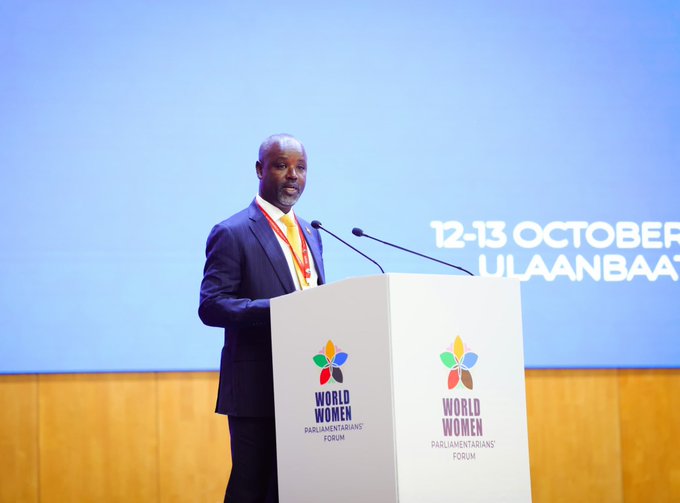
Tayebwa made the call while leading Uganda’s parliamentary delegation to the World Women Parliamentarians’ Forum in Ulaanbaatar, Mongolia, where lawmakers are sharing experiences and strategies for advancing women’s participation in political leadership.
He said Uganda had made progress in promoting women’s representation through constitutional provisions, affirmative action and gender-responsive planning and budgeting, measures he attributed to four decades of deliberate action under the National Resistance Movement (NRM) government.
“These efforts have enabled more women to take up senior leadership positions in parliament and government,” Tayebwa said.
However, he cautioned that numerical representation alone was insufficient, arguing that women must also have a substantive role in shaping laws, allocating public resources and influencing institutional decisions that affect citizens’ lives.
“The progress we have registered over the past 40 years under the NRM Government demonstrates the value of deliberate action,” he said, adding that the next stage of progress should focus on strengthening women’s influence in decision-making.
Tayebwa outlined four priorities for advancing gender equality in parliamentary institutions: increasing women’s participation in parliamentary committees and other strategic structures; investing in leadership development, mentorship and capacity-building; eliminating discrimination, intimidation, violence and harassment, both online and offline; and engaging men as partners in promoting gender equality.
The priorities highlight the distinction between securing seats in elected institutions and ensuring that women can exercise authority within them. Parliamentary committees, in particular, play a significant role in scrutinising legislation, examining government expenditure and holding public institutions accountable.
Leadership training and mentorship can also help strengthen women’s capacity to compete for senior parliamentary positions, while measures against harassment and intimidation are important to ensuring that women can participate in political debate without fear of abuse.
Tayebwa said the forum offered an opportunity for Uganda to share its experience while learning from other countries about approaches to expanding women’s participation and influence in public affairs.
Uganda’s affirmative-action framework has helped increase women’s presence in Parliament and public institutions. However, the challenge of translating representation into substantive influence remains an important measure of progress towards gender equality.
The discussions in Mongolia come amid wider efforts by countries to strengthen women’s leadership, address barriers to political participation and ensure that public institutions reflect the interests and experiences of the populations they serve.