
Uganda has opened the first African Chiefs of Defence Forces Conference on Military Operations Other Than War, bringing together defence leaders, regional security organisations and commanders of African and United Nations peace missions to consider how militaries should respond to increasingly complex threats beyond conventional warfare.
The four-day conference, running from October 5 to 8 at Speke Resort Munyonyo, brings together participants from more than 18 countries, according to the Uganda Peoples’ Defence Forces.
The meeting comes as African security agencies face a widening range of threats, including terrorism, organised crime, cyberattacks, public health emergencies, climate-related disasters and other crises that often cross national borders.
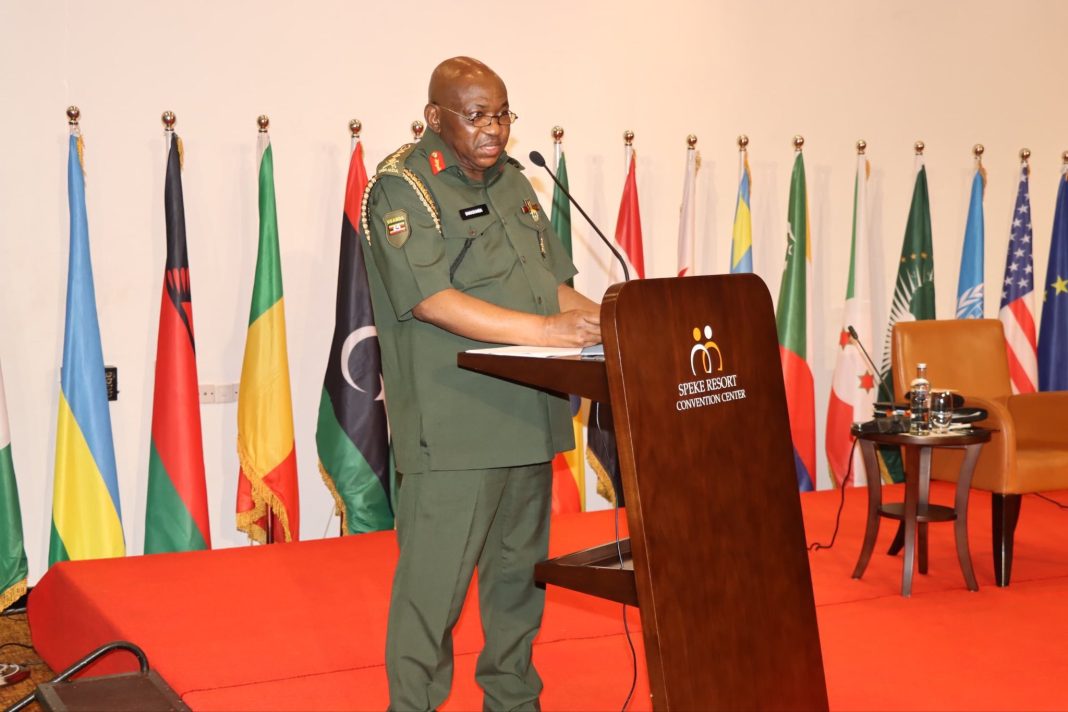
Opening the conference, Uganda’s Chief of Joint Staff, Lt Gen Jack Bakasumba, said the continent’s security environment had moved beyond the traditional focus on interstate warfare.
“The security landscape has evolved away from interstate warfare, shifting instead toward a challenging matrix of interstate conflict and complex non-traditional threats,” Bakasumba said.
He said African militaries needed to develop practical systems that allow them to respond quickly and collectively when such threats emerge.
Bakasumba called for greater regional cooperation, standardised standard operating procedures, improved training and equipment procurement, as well as stronger information-sharing and joint communications.
“We must establish mechanisms that extend beyond discussions and conferences and can be translated into concrete standard operating procedures, training, early-warning systems, joint communications, information sharing and deployable capabilities,” he said.
A broader role for African militaries
Military Operations Other Than War, or MOOTW, cover a wide range of activities in which armed forces operate outside conventional battlefield combat. They can include peace-support operations, disaster response, humanitarian assistance, counterterrorism, protection of critical infrastructure and support to civilian authorities.
The Kampala conference is also examining cybersecurity and artificial intelligence, unmanned aerial systems, climate change, disease pandemics, maritime and border security, natural-resource management and legal and ethical accountability.
The agenda reflects the increasingly blurred boundary between military, civilian and humanitarian security challenges. A cyberattack, pandemic or climate-related disaster, for example, can quickly develop into a national or regional security concern without constituting a conventional armed conflict.
Participants include representatives of the African Union, East African Community, East African Standby Force, Intergovernmental Authority on Development, North African Regional Capability and the Economic Community of West African States Commission. Commanders from African Union and UN peace missions, including those operating in Somalia, the Democratic Republic of Congo, Abyei and South Sudan, are also expected to participate.
Uganda is seeking to use the meeting to promote what it describes as an African-led, preventive and coordinated approach to emerging security threats. The UPDF says its position draws on Uganda’s experience in peace-support operations, counterterrorism, border security, disaster response and civil-military cooperation.
The conference is being hosted by Uganda’s Chief of Defence Forces, Gen Muhoozi Kainerugaba, and is organised by the Ministry of Defence and Veteran Affairs and the UPDF.
The stated theme of the conference is “Strengthening Adaptive Noncombatant Military Response to Emerging Complex Security Threats in Africa.”
Bakasumba said the objective was to turn continental cooperation into practical capabilities rather than leave it at the level of policy discussions.
“We gather here today with a shared belief that Africa must strengthen its African-led, practical and coordinated responses to these emerging threats,” he said.
The discussions are expected to continue through October 8, with participating defence establishments considering ways to improve preparedness, coordination and joint responses to security emergencies across the continent.