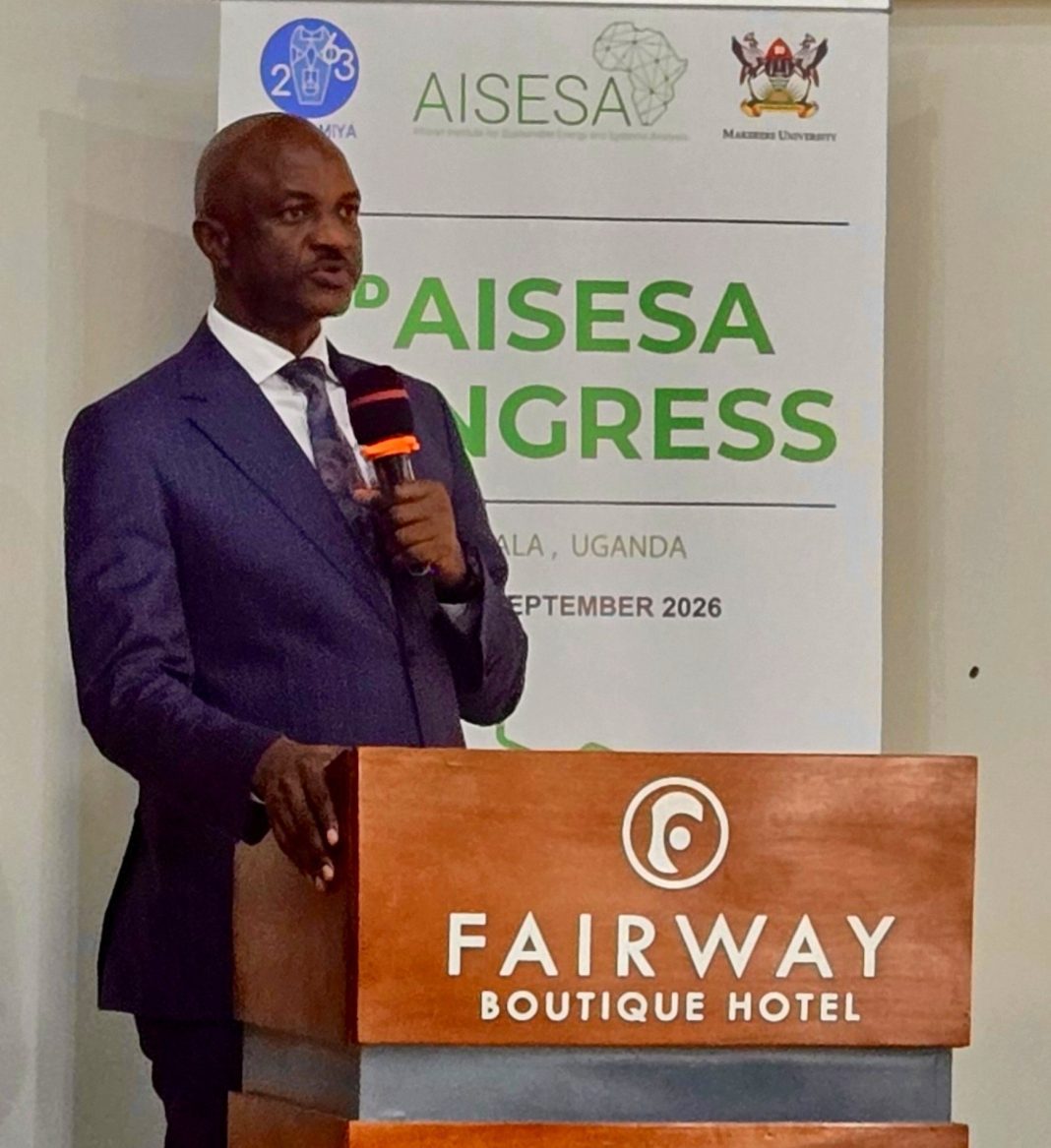

Uganda’s ambition to grow its economy to $500 billion by 2040 will depend on reliable and affordable energy to power industry, investment and productivity, Permanent Secretary and Secretary to the Treasury Ramathan Ggoobi said.
Ggoobi made the remarks at the Uganda National Dialogue on Energy, Climate and Development, convened last week by the African Institute for Sustainable Energy and Systems Analysis (AISESA).

The dialogue brought together government officials, researchers, energy practitioners, financiers, private-sector representatives and development partners to discuss practical solutions for Uganda’s energy future.
Ggoobi said energy policy must be closely aligned with Uganda’s Tenfold Growth Strategy, which seeks to expand the economy from about $50 billion to $500 billion by 2040. The strategy identifies agro-industrialisation, tourism, mineral-based development including oil and gas, and science, technology and innovation as key growth areas.
“Ggoobi said achieving the target will require adequate, reliable and affordable energy to support these sectors and enable Uganda to expand production, value addition and exports.
He said the country’s energy transition should therefore be judged by its contribution to economic transformation, including lower production costs, more competitive industries, higher household incomes and improved livelihoods.
Ggoobi also called for energy projects to be properly prepared and made bankable, with greater emphasis on value for money and measurable development outcomes.
Financing the energy transition
Ggoobi said Uganda would need to use a wider range of financing instruments to mobilise the capital required for its energy ambitions while limiting pressure on public finances.
He cited blended finance, green and sustainability-linked instruments, carbon markets and public-private partnerships as potential tools for lowering the cost of capital and attracting additional private investment.
The Tenfold Growth Strategy itself identifies access to patient, low-cost capital and uninterrupted, affordable electricity as important enablers of economic expansion.
Ggoobi said the objective should not simply be to increase energy supply but to ensure that investment in the sector produces measurable economic returns.
Uganda’s official strategy projects that industrial demand for grid electricity will continue rising rapidly. Between 2013 and 2023, industrial electricity demand more than doubled, while the number of industrial consumers increased nearly eightfold, according to the Tenfold Growth Strategy.
Ggoobi said the energy transition should ultimately support Uganda’s broader structural transformation by reducing the cost of doing business, strengthening domestic industries and increasing the country’s ability to compete in export markets.
For Uganda, he said, the energy question is therefore inseparable from the country’s wider development ambitions: energy investment must translate into productive capacity, jobs, incomes and economic growth while strengthening resilience to climate change.