
Zimbabwe has given itself a new national holiday to remember an empire that disappeared centuries ago. The irony is that the holiday arrives on the birthday of a president whose government is reshaping the country’s political future.
From September 15, Zimbabweans will mark Munhumutapa Day, a new annual public holiday declared by President Emmerson Mnangagwa’s government to celebrate the country’s pre-colonial heritage.
The date is also Mnangagwa’s birthday.
The government announced the holiday through Statutory Instrument 148 of 2026, declaring September 15 a public holiday in honour of the Munhumutapa title used by rulers of the historic Mutapa Empire, a powerful Shona kingdom that flourished between the 14th and 17th centuries.
Yet the choice of date has raised an unavoidable question: why September 15?
The government has offered no explanation.
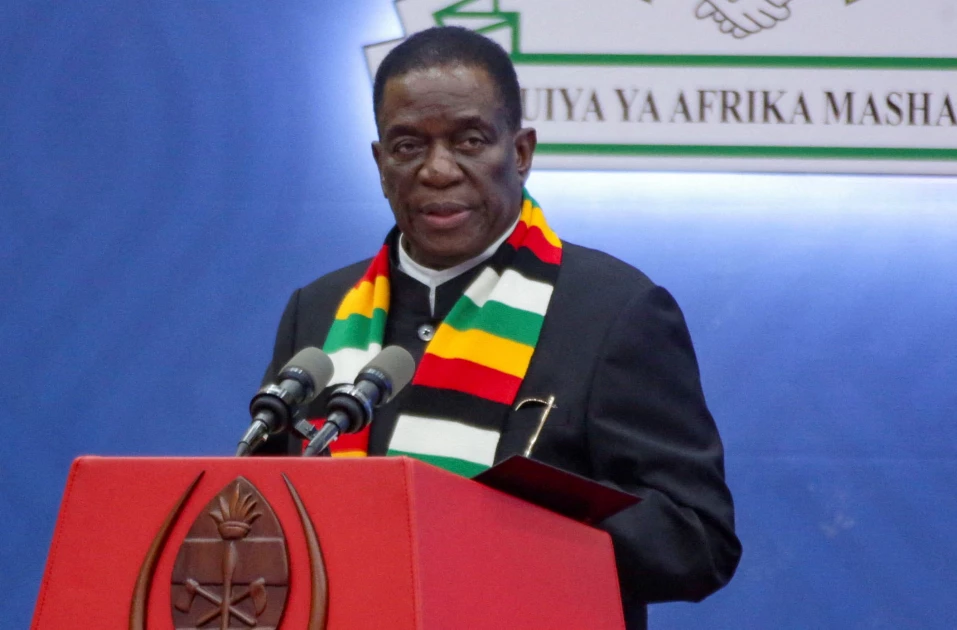
Mnangagwa, who is expected to turn 84 on the day, has ruled Zimbabwe since taking power in 2017 following the military-assisted removal of longtime president Robert Mugabe.
The holiday therefore carries a curious duality. Officially, it is about an empire that belongs to Zimbabwe’s distant past. Politically, it arrives at a moment when questions about the country’s present ruler and his future are becoming increasingly difficult to separate from the country’s institutional future.
A holiday for history, on a president’s birthday
The official notice is careful in its language.
It does not call September 15 Mnangagwa Day. It calls it Munhumutapa Day.
That distinction matters.
The Mutapa Empire predates modern Zimbabwe by centuries, and its rulers once controlled a significant trading kingdom in southeastern Africa. By naming a national holiday after that heritage, the government is placing the country’s identity in a history that existed long before colonial rule.
But the symbolism becomes more complicated because the chosen day coincides with Mnangagwa’s birthday.
A holiday intended to look backward therefore inevitably points toward the man governing Zimbabwe today.
The state has not said whether the coincidence is deliberate.
“I will still be around”
The timing became even more striking hours after the holiday was announced.
Mnangagwa suggested that he expects to remain politically relevant well beyond the constitutional timetable that currently governs his presidency.
“I will still be around; I do not know about you,” he was quoted as saying.
The remark came after Parliament approved constitutional changes that extended the presidential term from five years to seven, pushing the end of the current presidential term from 2028 to 2030.
The same reforms also altered the way Zimbabwe’s president will be chosen.
Instead of citizens directly electing the president, voters will elect members of Parliament, who will then choose the country’s leader.
Supporters say the changes will promote political stability.
Critics see something darker: a system that could strengthen the governing ZANU-PF, the party that has controlled Zimbabwe since independence in 1980.
The paradox of constitutionalism
Mnangagwa has previously presented himself as a constitutionalist and pledged to respect constitutional limits.
Yet his presidency now sits at the centre of constitutional changes that extend presidential tenure and remove direct presidential elections.
That creates a paradox at the heart of Zimbabwe’s political moment.
A government invoking ancient African sovereignty is simultaneously rewriting the modern rules by which political sovereignty is exercised.
The Mutapa rulers derived authority from a pre-colonial political order. Modern Zimbabwe derives its legitimacy from a constitutional republic in which citizens are supposed to determine who governs them.
The question now is not whether Zimbabwe should celebrate its history.
It is whether history is being used to illuminate national identity — or to provide political symbolism for the present.
From Mugabe to Mnangagwa
Mnangagwa’s own rise to power is inseparable from Zimbabwe’s long political history.
He became president in 2017 after Mugabe, who had ruled the country for 37 years, was forced from office following military intervention.
Mnangagwa subsequently won elections in 2018 and 2023, both contested by opponents.
Nearly a decade later, the political system he inherited is being altered again.
The presidency is no longer simply a five-year electoral office. Under the constitutional changes, the term stretches to seven years, while the direct presidential vote is being removed.
That means Zimbabwe’s next political contest could look fundamentally different from the elections that brought Mnangagwa to power.
And the president’s recent declaration that he will “still be around” adds another layer to an already charged debate over succession.
When the past becomes political
Munhumutapa Day may ultimately become what the government says it is: a national celebration of Zimbabwe’s ancient civilisation and African heritage.
But its first appearance on the calendar will be difficult to detach from the politics of the man whose birthday it shares.
That is the paradox.
Zimbabwe is creating a holiday to honour a kingdom that vanished centuries ago at the precise moment its modern political order is being rewritten around questions of presidential power, succession and constitutional limits.
The government says the day belongs to history.
But history, in Zimbabwe, has rarely stayed in the past.