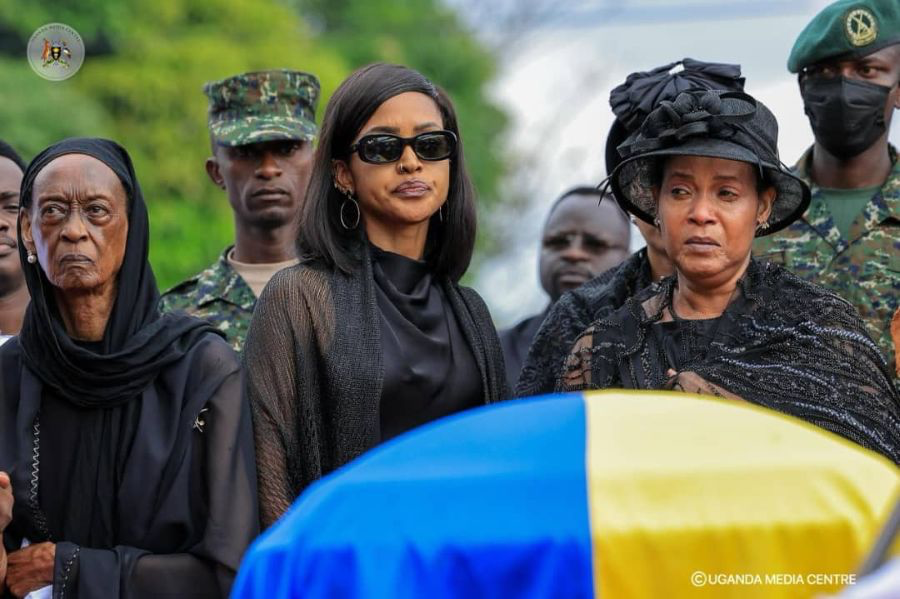

As Tooro buried its young king, Queen Mother Best Kemigisa revealed the prayer of a mother who was willing to give her own life for her son — only to watch him leave this world before her.
There are moments when a kingdom becomes quiet enough to hear the voice of a mother.
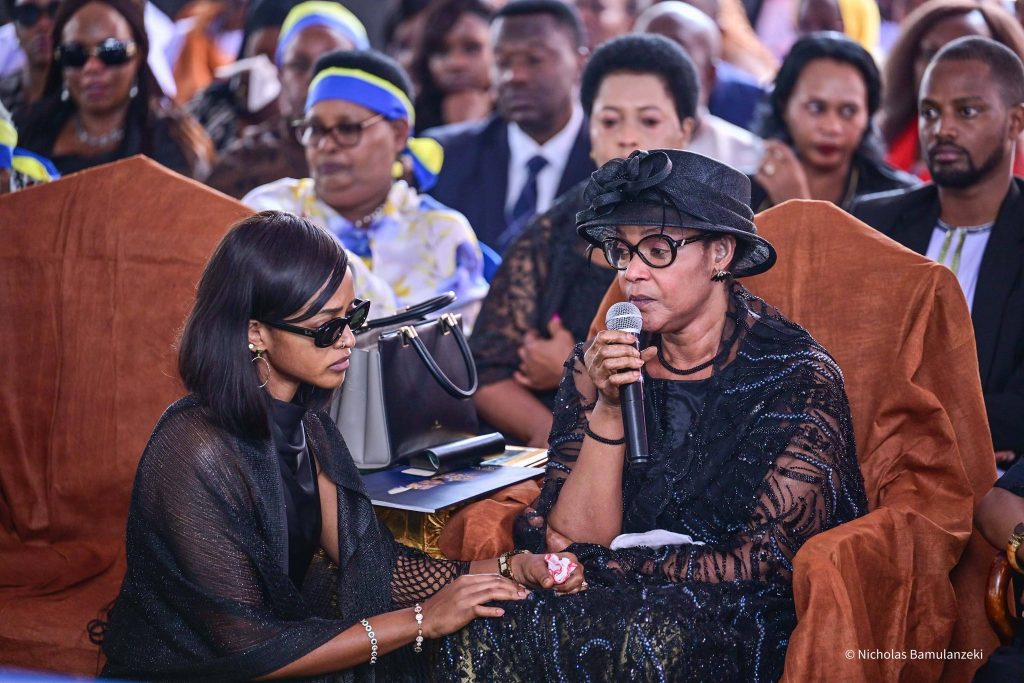
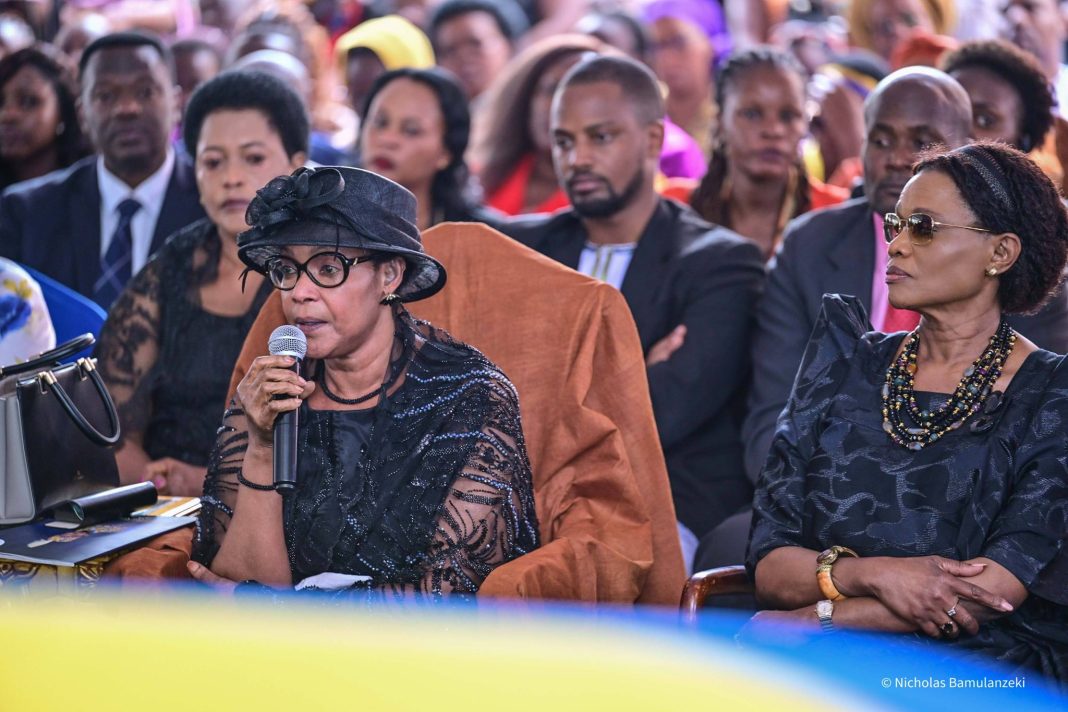
On Saturday, inside St. John’s Cathedral in Fort Portal, Queen Mother Best Kemigisa stood before mourners to say goodbye to her son, the late Omukama of Tooro, Oyo Nyimba Kabamba Iguru Rukidi IV.
But beneath the title, beneath the crown and beneath the mourning of an entire kingdom was a mother’s unbearable question:
Why him?
Kemigisa revealed that when she was in hospital, as her son’s health deteriorated, she pleaded with God to take her instead.
“When I was in the hospital, I told God to take me first. I said, ‘God, please leave my son alone; take me first,’” she said.
It was the prayer of a mother trying to bargain with heaven.
She wanted to stand between death and her child.
She wanted to trade places.
But the answer came differently.
Oyo went first.
“He decided to take him first. I said, ‘Why?’ Because he was closer to you than me?” she recalled.
For Kemigisa, the loss was not simply the death of a king.
It was the death of the boy she had raised, the son she had prayed beside, and the young man she had watched carry one of Africa’s oldest royal traditions into a new generation.
‘He was too good’
Kemigisa struggled to understand why a son she described as exceptionally good had been taken so young.
“He was too good, even better than me. I asked Jesus, ‘Why did you take me instead?’ But Jesus refused, and I asked myself, ‘What am I going to do?’” she said.
Her words exposed the grief behind the palace doors — the grief that titles cannot contain and crowns cannot soften.
Oyo had been the Omukama since childhood.
But to Kemigisa, he remained her son.
She remembered him as peaceful, joyful, merciful and deeply committed to prayer.
“He was a peaceful person, always happy and merciful. He was a good King to Tooro, but you cannot go against what God has decided,” she said.
In those words was both surrender and sorrow: the acceptance of a mother’s faith wrestling with the cruelty of loss.
The mother who taught him to pray
Perhaps the most poignant memory Kemigisa shared was not of the throne, but of bedtime.
When Oyo was young, she taught him how to pray.
The two would not go to sleep without praying together.
But time changed them.
The little boy grew into a man. The child she had guided spiritually eventually became the one guiding her.
“I taught him how to pray when he was young, and we could not sleep without praying. But when he grew up, he taught me how to pray,” Kemigisa said.
It was a reversal that seemed almost sacred.
The mother became the student.
The son became the teacher.
The child became the man who strengthened his mother’s faith.
Kemigisa recalled how Oyo would write down Bible scriptures and ask members of the family to explain them to him, sometimes laughing affectionately at their attempts.
“He would write down scriptures and ask us to interpret whatever he had written, while laughing at us lovingly,” she said.
Those memories now carry a different weight.
The scriptures that once filled their conversations have become part of the language with which she must now understand his absence.
A king remembered for peace
Beyond the palace and the family, Kemigisa said Oyo left behind a kingdom that loved him.
She thanked the people of Tooro for standing beside the royal family throughout the mourning period, saying the crowds that continued to gather reflected the affection they had for their young king.
“It has been three weeks, but the people of Tooro have continued coming here in large numbers, crying for their King,” she said.
She said the kingdom had remained peaceful despite the grief.
“The whole Kingdom has remained peaceful, and the Tooro people have mourned in peace,” she said.
For Kemigisa, maintaining that peace was not simply a matter of public order.
It was part of Oyo’s legacy.
She urged the people of Tooro not to allow grief to destroy the very values their king had represented.
“We should continue to be peaceful, just as our King always wanted, and we should not shame him,” she said.
“The whole world mourned him and is still mourning him,” she added.
The child beneath the crown
Oyo died in the United States on August 27, aged 34, after battling aggressive cancer.
His body was returned to Uganda on September 4, beginning days of mourning and traditional funeral rites before his burial at the royal tombs in Karambi.
On Saturday, the cathedral filled with members of the royal family, government officials, cultural leaders, religious leaders and mourners who had come to say goodbye.
For the world, it was the funeral of a king.
For Tooro, it was the closing chapter of a reign that began when Oyo was only a child.
But for Kemigisa, it was something far more intimate.
She was saying goodbye to the little boy she once taught to fold his hands in prayer.
She was saying goodbye to the son who grew up to become her spiritual guide.
She was saying goodbye to the man she had begged God to spare.
Her prayer had been simple:
Take me instead.
But the mother remained.
And the son went first.
Now the throne is silent, the kingdom is mourning, and a mother is left with the memories of a child who became a king — and, somehow, became her teacher too.
In the final sorrow of her farewell, Kemigisa reminded Tooro that Oyo belonged not only to the throne.
He belonged to her.
He was her son.
And long after the crown has been placed on another head, that will remain the deepest title he ever carried.