
President Museveni says Uganda’s next economic push must move millions of households from subsistence farming into a monetised economy through irrigation, industrialisation, value addition and wider market access.
President Yoweri Museveni has said Uganda has built a strong economic foundation that can now support faster transformation, while warning that persistent structural weaknesses could slow the country’s progress if left unresolved.
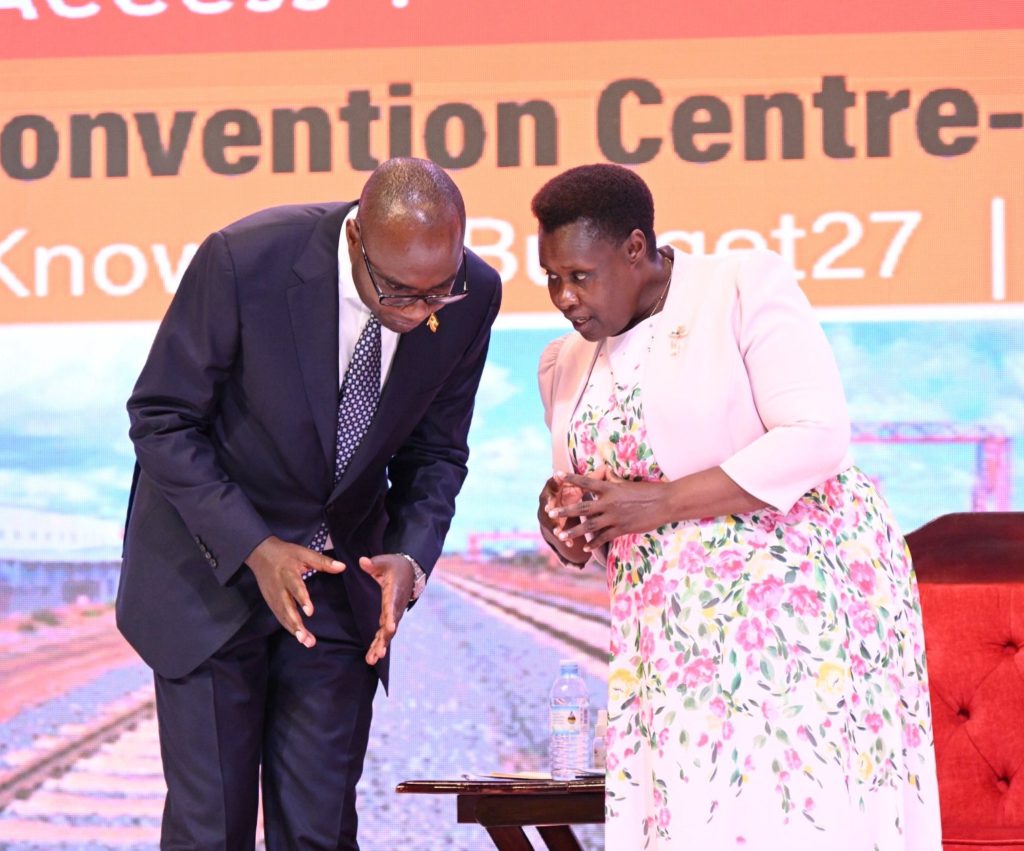
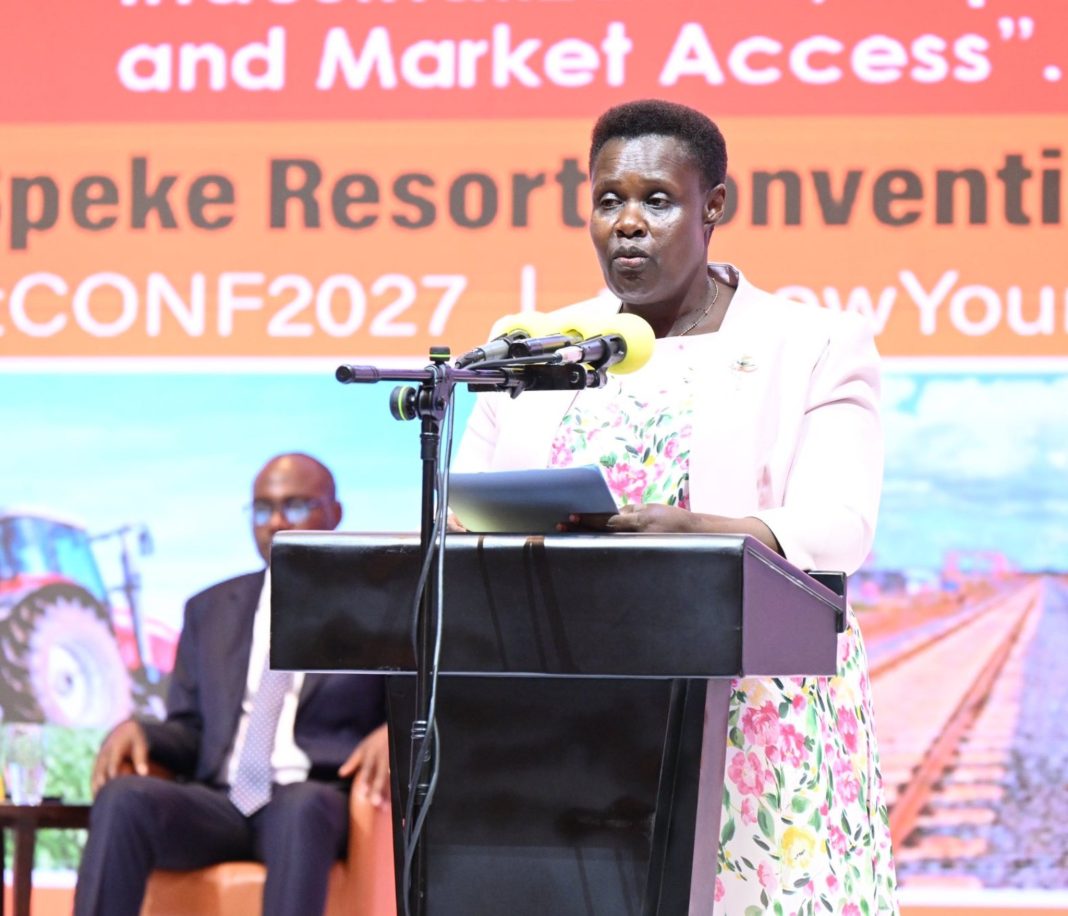
In a message delivered by Vice President Jessica Alupo at the National Budget Conference for the 2027/28 financial year, Museveni pointed to what he described as Uganda’s sustained economic resilience despite repeated global shocks.
He said the economy has maintained long-term growth of more than 5 per cent, while gross domestic product has expanded to Shs250.4 trillion, equivalent to about $69.35 billion, in nominal terms.
Uganda has also crossed the lower-middle-income threshold of $1,136, with gross national income per capita reaching $1,389, according to the President.
Museveni said these indicators demonstrate that the country has established a platform from which stronger economic transformation can be pursued.
From growth to transformation
The President cited improved exports, greater access to health, education and other social services, expanded infrastructure and stronger investment and competitiveness among the gains made under the NRM government.
He also pointed to the country’s growing industrial and manufacturing base as part of the foundation for the next phase of development.
But beneath those gains, Museveni said, remains a central challenge: ensuring that ordinary households participate directly in the formal economy.
He said about 30 per cent of Ugandans remain trapped in the subsistence economy and need to be moved into productive commercial activity.
“We have solved the problem of capital. Our people have adopted the Parish Development Model and other wealth creation programmes,” Museveni said.
The challenge now, he argued, is to ensure that these interventions translate into sustained production, incomes and household wealth.
The three obstacles
Museveni identified three major constraints that Uganda must overcome if it is to fully commercialise its economy: dependence on rainfall for agriculture, limited value addition and inadequate access to markets.
Agriculture remains particularly vulnerable because millions of farmers depend on increasingly unpredictable rainfall. The President therefore called for greater investment in irrigation to make agricultural production more reliable and commercially viable.
The second challenge is the continued export of commodities with limited processing.
Museveni said Uganda must increasingly transform its agricultural and mineral commodities into higher-value products domestically, allowing producers and the wider economy to capture more income from the value chains.
Market access, he added, remains the third major obstacle.
Producing more goods will have limited economic impact if farmers and manufacturers cannot reliably sell them at profitable prices, making regional, continental and international market access a critical component of Uganda’s transformation strategy.
Tax revenues emerge as another pressure point
The President also called for a substantial expansion of domestic revenue.
Uganda’s tax-to-GDP ratio is currently around 14 per cent, and Museveni said the country should work towards approximately 25 per cent by closing revenue leakages.
The proposed increase would give government greater fiscal space to finance infrastructure, public services and other development priorities without relying excessively on borrowing.
The message places revenue mobilisation alongside production and industrialisation as key pillars of the government’s longer-term economic strategy.
The road to a monetised economy
Museveni said Uganda’s overarching objective will remain the “full monetization” of the economy.
That vision, he said, will be driven by commercial agriculture supported by irrigation, industrialisation and value addition, expanded access to critical services and stronger market access.
The National Budget Conference for FY2027/28 therefore comes at a point when the government is seeking to shift the emphasis from simply growing the economy to ensuring that growth reaches households still operating largely outside the cash economy.
For Uganda, the challenge is no longer only how to produce economic growth, but how to turn that growth into productive jobs, commercial farming, higher-value exports and rising household incomes.
The President’s message was ultimately a call to consolidate the gains already made while confronting the weaknesses that continue to keep a significant share of Ugandans on the margins of the formal economy.