
Uganda’s long-delayed new parliamentary chamber is being designed to accommodate more than 600 Members of Parliament, as the country prepares for a larger legislature and seeks to address persistent overcrowding in the existing parliamentary building.
According to a Roko Construction Ltd engineer involved in the project, the new chamber has been designed with expanded capacity not only for legislators but also for members of the public, journalists and distinguished guests.
The development is expected to provide a major upgrade to Parliament’s working environment, with the new facility incorporating modern spaces and systems intended to support legislative proceedings and parliamentary business.
Parliament’s official planning documents indicate that the chamber is designed to accommodate 600 MPs and 700 people in the public gallery, alongside additional committee rooms, office space and facilities for a parliamentary museum.
The need for the expansion has become increasingly urgent as Parliament has grown significantly since the current building was commissioned. Parliament’s official website lists the 12th Parliament at 552 members as of August 12, 2026, compared with the 82-member capacity of the original chamber.
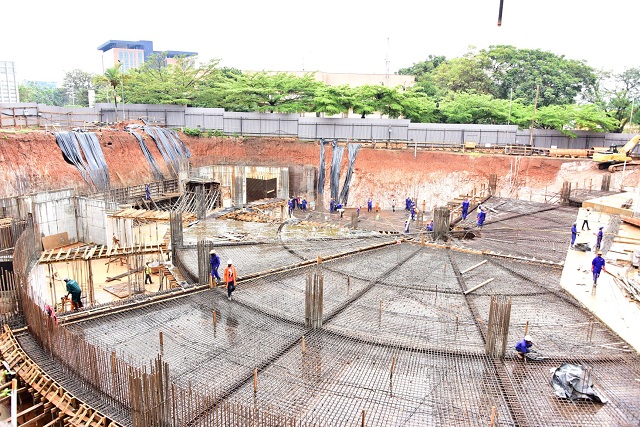
The new facility is being constructed by Roko Construction Ltd, with the project now expected to be completed by the end of 2027 following years of delays, design changes and funding challenges.
Recent inspections indicate that construction has moved into an advanced phase. In June 2026, officials said major structural steel works had been completed and roofing had commenced, with about 3,000 tonnes of structural steel installed on the eight-storey structure.
The latest completion target follows pressure from Parliament’s leadership for Roko to accelerate construction and deliver the facility after repeated extensions to the project timeline.
Parliament’s own Strategic Plan records that construction began in 2017 and that the chamber was originally scheduled for completion in July 2020. The project stood at about 44.9 percent complete as of September 2024, according to the plan.
The project’s estimated cost has also increased over time. Parliament’s current Strategic Plan puts the estimated cost at approximately Shs220.24 billion, with the Government of Uganda listed as the financier.
The expansion is intended to address not only the shortage of seating in the main chamber but also wider space constraints affecting parliamentary committees and staff.
Parliament currently has 29 committees but only 12 committee rooms, according to its Strategic Plan, meaning some committees face difficulties securing adequate space for meetings.
The project has nevertheless attracted scrutiny over its prolonged construction period and rising costs. In 2024, Leader of the Opposition Joel Ssenyonyi questioned the progress of the project and called for accountability over government’s investment in Roko Construction.
In July 2022, the government acquired preferential shares in Roko as part of a broader equity investment intended, among other objectives, to keep the construction company afloat and facilitate completion of major government projects, including the parliamentary chambers.
The new chamber therefore represents both an infrastructure upgrade and an attempt to solve a longstanding institutional problem as Uganda’s Parliament continues to expand.
If completed by the end of 2027 as currently targeted, the facility would give Parliament substantially more room for legislators, visitors and the media while providing modern infrastructure for parliamentary proceedings.
The challenge now is whether Roko and Parliament can maintain the latest construction schedule and prevent the project from facing another delay after nearly a decade of construction.