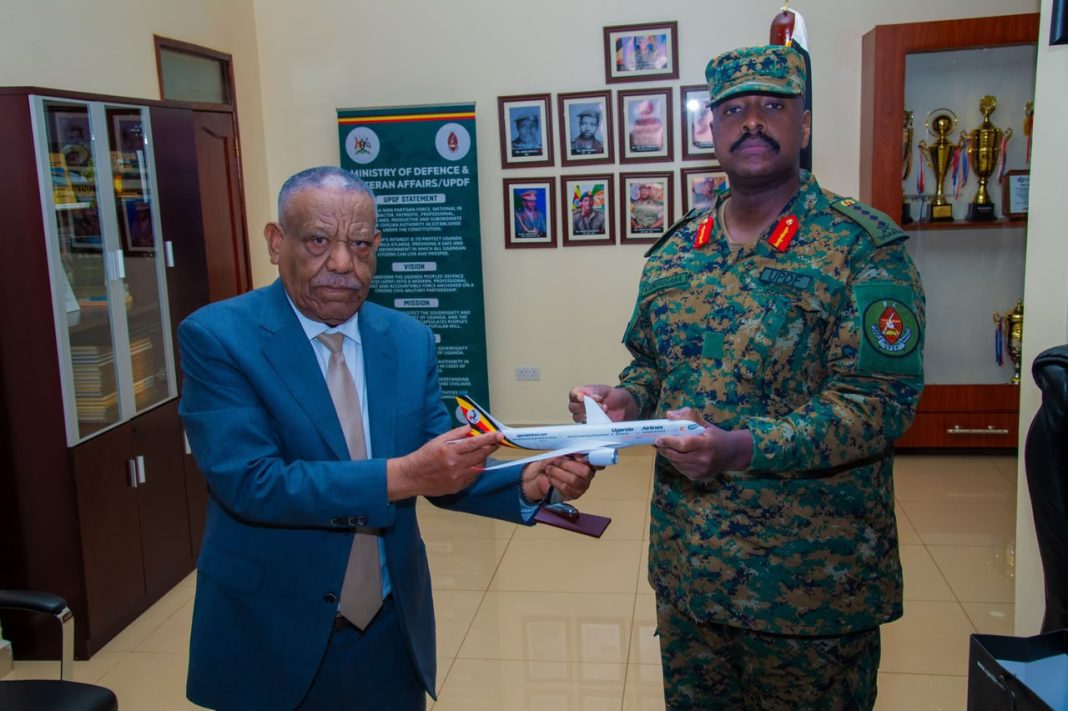

Uganda Airlines has presented its strategic growth plan to Chief of Defence Forces Gen. Muhoozi Kainerugaba, outlining measures aimed at strengthening the national carrier’s operations, expanding its international footprint and positioning it for long-term commercial growth.
The airline’s executive leadership team, led by Acting Chief Executive Officer Girma Wake, met Gen. Kainerugaba at the Special Forces Command Headquarters in Entebbe, where they briefed him on the carrier’s strategy amid ongoing structural changes within the airline.
The delegation included Chief Finance Officer Allan Joel Kyeyune, Acting Manager for Human Resource and Administration Anne Apio, and Acting Chief Commercial Officer Shakila Lamar Rahim.
The engagement comes as Uganda Airlines works to improve corporate governance, stabilise day-to-day operations and build a stronger commercial foundation for the national carrier.
Expanding Uganda’s global air links
According to the management team, one of the central priorities is to maximise the performance of the airline’s existing fleet while expanding its network from Entebbe International Airport.
The planned expansion targets key markets across Asia, Europe and the Middle East, alongside additional connections to major African regional hubs.
The strategy is intended to strengthen Uganda’s air connectivity and provide more direct links for passengers, businesses and traders travelling between Uganda and major international markets.
The airline also plans to establish domestic routes to serve growing internal travel demand and improve connectivity between different parts of the country.
Bringing more operations in-house
Beyond route expansion, Uganda Airlines management said it is pursuing measures to reduce operating costs and increase its technical and human-resource capacity.
Among the proposals is the gradual integration of aircraft maintenance and ground-handling services into the airline’s own operations.
The move is expected to give the carrier greater control over critical operational functions while reducing reliance on external service providers.
Management also highlighted the training and development of Ugandan aviation professionals as a key component of the strategy, with the aim of building a stronger pool of locally trained personnel capable of supporting the airline’s long-term expansion.
Government support seen as critical
The executives emphasised that government backing and cooperation from industry stakeholders will remain important as Uganda Airlines implements its growth strategy.
For a national carrier operating in a highly competitive global aviation industry, the leadership argued that sustained institutional support will be necessary to strengthen operations, develop human capital and expand the airline’s market reach.
Gen. Kainerugaba commended the management team for the progress made so far and pledged his support for the airline’s strategic direction.
He emphasised the importance of a strong national carrier to Uganda’s broader economic ambitions, particularly in facilitating trade, strengthening regional integration and improving international connectivity.
The engagement comes at a critical stage for Uganda Airlines, which is seeking to transition from a relatively young national carrier into a more commercially sustainable aviation business.
If successfully implemented, the strategy could see the airline play a larger role in connecting Uganda to global markets while supporting tourism, trade and business travel.
The immediate challenge, however, will be turning the expansion plans into commercially viable routes while maintaining operational efficiency, strong governance and prudent cost management.