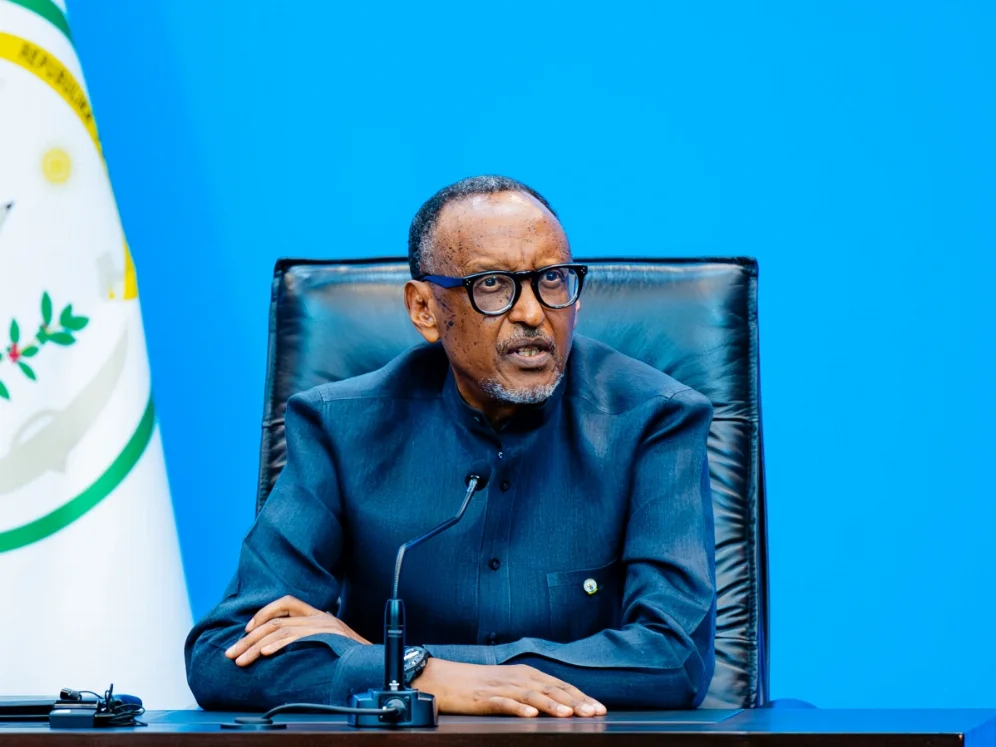

Rwandan President Paul Kagame has raised concerns over the slow implementation of the African Continental Free Trade Area (AfCFTA), warning that Africa risks failing to translate one of its most ambitious economic integration frameworks into meaningful gains in intra-African trade.
Speaking at a press conference on Monday, August 24, Kagame said his concern was not about the creation of AfCFTA, which he described as an important achievement, but about the pace at which African countries are turning the agreement into action.
“I am concerned, but I am also happy that this effort was ever put in place. The frustration is just about how fast and how well we can move forward,” Kagame said.
The president argued that establishing the continental free-trade framework was only the beginning of a much more difficult task: ensuring that countries actually implement the commitments they made.
“It was a good beginning of a hard task that we had to carry out. But doing it brings a lot more than creating a concept around it, and that is where we have fallen short as a continent. We are not moving at the right pace,” he said.
From agreement to implementation
The AfCFTA agreement was adopted and signed by 44 African countries during the 10th Extraordinary African Union Summit held in Kigali in March 2018. It entered into force in 2019, with trading under the agreement beginning in January 2021.
The agreement seeks to establish a single continental market for goods and services, progressively eliminate tariffs and reduce non-tariff barriers while creating larger markets for African producers and businesses.
Kagame said the slow progress should force governments to reconsider the reasons behind the creation of AfCFTA and whether countries remain committed to its original objectives.
“We need to look back and ask why we created it in the first place. If we fully understand the benefits, how can we falter along the way in doing what we are supposed to do?” he said.
Barriers continue to hold back African trade
Despite the agreement’s entry into force, implementation across the continent remains uneven. Businesses continue to face non-tariff barriers, regulatory differences, infrastructure constraints and limited productive capacity, all of which can make cross-border trade more difficult and expensive.
Kagame said African countries need to understand why some members have been unable or unwilling to fully participate in the implementation process rather than allowing frustration to deepen.
“It requires us to continue nurturing each other and find out the reasons some people have for not fully contributing and working as they should. That can cause frustration,” he said.
His comments highlight a broader challenge facing African economic integration: the gap between continental policy ambitions and implementation at national and regional levels.
Africa’s opportunity
AfCFTA is designed to increase trade among African countries, expand markets for African companies and strengthen the continent’s ability to produce and consume more of its own goods and services.
For Kagame, the agreement remains a critical instrument for bringing African economies closer together, despite the difficulties involved in implementing it.
“I am happy that the step towards free trade was put in place to unite Africa and bring us together, creating a framework through which we can realise broader trade and trade with each other guided by AfCFTA,” he said.
He nevertheless cautioned against treating the challenges as a reason to abandon the project.
“Africans should be frustrated, maybe those who really put a lot of weight on all these efforts, but we cannot always just complain. We have to come together and do what we should do, because it is not as easy as just saying it,” Kagame said.
The remarks come as African governments continue efforts to move AfCFTA beyond its legal framework and toward a fully functioning continental market. The scale of that ambition means that progress will depend not only on tariff reductions, but also on infrastructure, regulatory harmonisation, productive capacity, logistics and the willingness of individual countries to implement continental commitments.
For Kagame, the central question is no longer whether Africa has created the framework for economic integration, but whether its governments can move quickly enough to make that framework work for African businesses and consumers.