
Uganda is moving to establish a credible and internationally recognised Halal certification ecosystem as the country seeks to unlock new export markets and improve the competitiveness of locally produced goods.
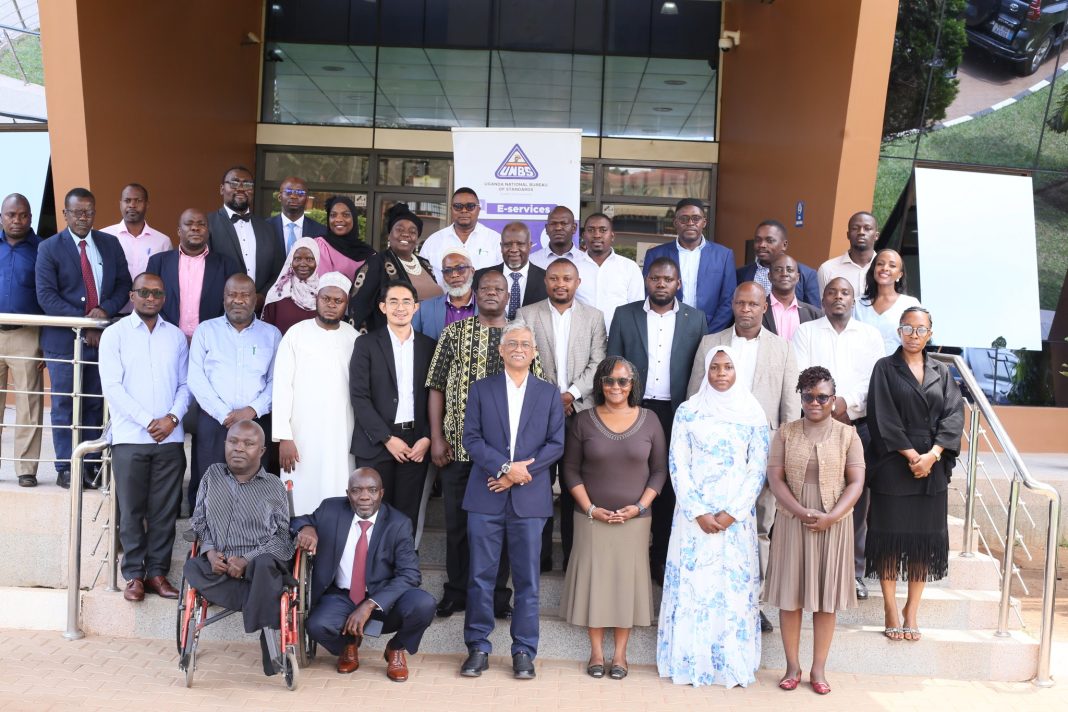
The Uganda National Bureau of Standards (UNBS) on Thursday convened key stakeholders for a national briefing on the Halal Certification Scheme and Ecosystem Assessment, an initiative designed to examine Uganda’s existing certification capacity and identify gaps that could limit access to international Halal markets.
The assessment is being undertaken in collaboration with Malaysia’s Halal Development Corporation (HDC), drawing on Malaysia’s experience in building one of the world’s most established Halal industry systems.
The initiative comes as Uganda seeks to move beyond producing commodities for export and capture more value from growing international demand for certified products.
UNBS said the assessment will examine existing institutions, standards, certification processes and other elements of Uganda’s Halal infrastructure, with the objective of strengthening the system and aligning it with international requirements.
Uganda is not starting from scratch. UNBS has already developed 17 Halal standards covering areas including food, cosmetics, pharmaceuticals and logistics. The Bureau has also adopted international OIC/SMIIC standards covering Halal food, certification bodies and accreditation bodies.
A more recent UNBS standard covers Halal supply-chain management for transportation, signalling an effort to extend Halal integrity beyond production to the movement of products through the supply chain.
The latest assessment is therefore expected to focus less on creating standards from the ground up and more on determining whether Uganda has the institutional capacity, recognition mechanisms and technical infrastructure needed to make those standards effective in international trade.
Malaysia offers a model
Malaysia’s experience illustrates the economic potential of a well-organised Halal ecosystem.
According to HDC, Malaysia’s Halal exports reached RM68.52 billion in 2025, up 10.9% from the previous year and accounting for about 4.3% of the country’s total exports. Food and beverages alone contributed RM36.86 billion.
For Uganda, the opportunity extends well beyond meat and other traditional Halal products.
The assessment is expected to examine opportunities across agriculture, food processing, manufacturing, cosmetics, pharmaceuticals and hospitality, sectors in which certification can become a tool for accessing markets where recognised Halal assurance is a commercial requirement.
UNBS has previously identified meat, dairy, coffee and processed foods among areas where Uganda could benefit from expanding into the global Halal market.
The Bureau has also said that a stronger certification framework could help Ugandan businesses access Muslim-majority markets while strengthening consumer confidence at home.
Building recognition, not just certification
The central challenge for Uganda is not simply putting a Halal label on products. For certification to support exports, it must be trusted and recognised by trading partners.
That requires competent certification bodies, credible accreditation, testing capacity, traceability and conformity with international standards.
Uganda has already taken steps in that direction. In 2021, UNBS signed an agreement with the Uganda Muslim Supreme Council to strengthen the implementation and enforcement of Halal standards, including plans related to Halal accreditation and testing infrastructure.
International cooperation is also expanding. In August 2026, the Standards and Metrology Institute for Islamic Countries (SMIIC) conducted capacity-building programmes for UNBS staff under a broader initiative to strengthen Uganda’s national Halal quality infrastructure and align it with OIC/SMIIC standards.
The collaboration with Malaysia’s HDC adds another layer of technical and commercial expertise to that process.
From certification to export strategy
The proposed ecosystem could ultimately make Halal certification part of Uganda’s broader export and industrialisation strategy.
For producers, internationally accepted certification could reduce barriers to entering new markets. For processors, it could create incentives to add value locally rather than exporting predominantly unprocessed agricultural commodities.
For government, the opportunity is to build an ecosystem in which standards, certification, testing, accreditation, production and trade promotion work together rather than operate as separate functions.
That is particularly important as competition for Halal markets intensifies. HDC says the global Halal economy is expanding across multiple sectors and estimates that the worldwide Halal market could reach around $10 trillion by 2030.
Uganda’s assessment will therefore be a test of whether the country can convert its existing standards and agricultural production base into a certification system that international buyers recognise and trust.
If successful, the initiative could position Halal certification not merely as a religious compliance mechanism, but as a market-access instrument for Ugandan businesses seeking higher-value global markets.