
The International Monetary Fund has urged governments to reduce debt, rebuild financial buffers and strengthen economic resilience as geopolitical conflicts, trade tensions and supply-chain disruptions threaten global stability.
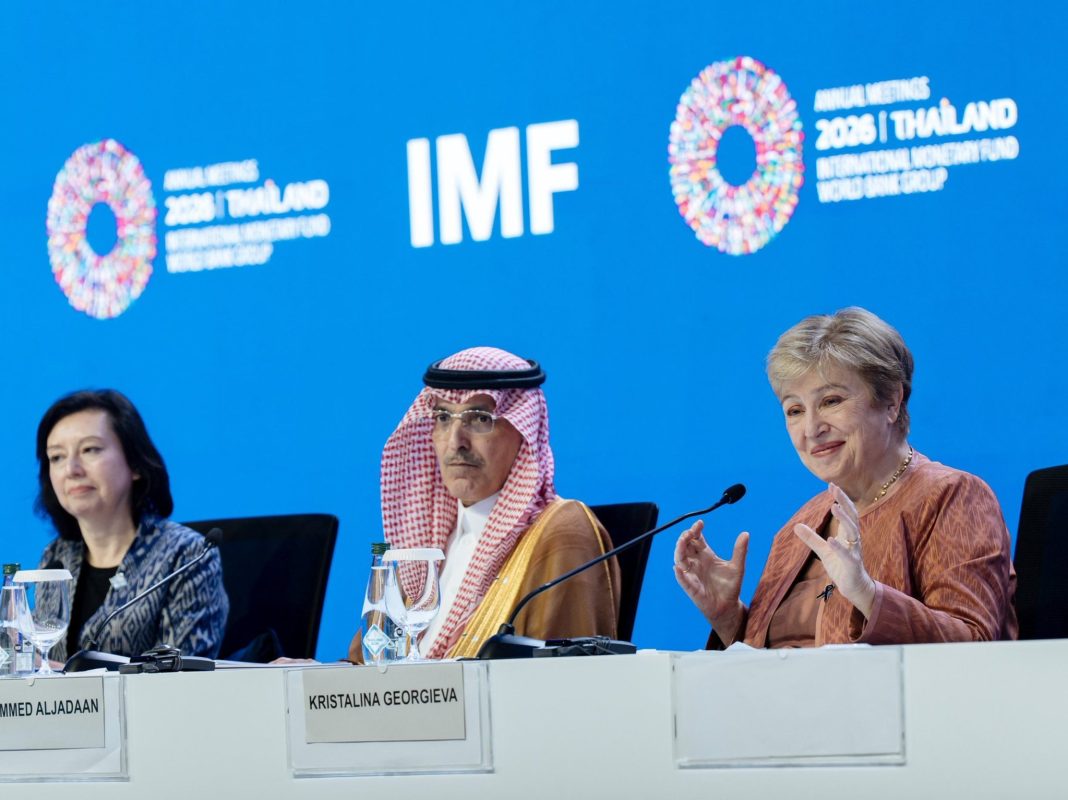
The warning came during the 54th meeting of the International Monetary and Financial Committee (IMFC), attended by Uganda’s Permanent Secretary and Secretary to the Treasury Ramathan Ggoobi and Bank of Uganda Governor Michael Atingi-Ego.
The committee advises the IMF Board of Governors on the management and supervision of the international monetary and financial system.
Mohammed Aljadaan, Saudi Arabia’s finance minister and chair of the meeting, said the global economy had weathered successive shocks better than expected, but warned that countries had less capacity to absorb further disruptions.
“Buffers have been eroded and resilience cannot be taken for granted,” Aljadaan said.
Wars and conflicts continued to exact a heavy humanitarian toll and impose significant economic costs, while trade tensions and supply-chain disruptions were increasing uncertainty and price pressures, he said.
Aljadaan called for sound and consistent macroeconomic policies and stronger multilateral cooperation to promote economic and financial stability. He added that central banks remained committed to maintaining price stability within their respective mandates.
IMF Managing Director Kristalina Georgieva said the global economy remained resilient, but its ability to withstand further shocks was weakening.
She urged governments to rebuild financial buffers, reduce debt, strengthen cybersecurity, adopt artificial intelligence and address emerging economic vulnerabilities through necessary reforms.
The committee also stressed the need for governments to address fiscal vulnerabilities urgently and advance fiscal consolidation, supported by credible medium-term frameworks to ensure sustainable public finances and debt levels.
Fiscal consolidation involves measures to bring government spending, revenue and borrowing onto a more sustainable path.
The meeting’s recommendations come amid persistent geopolitical uncertainty and concerns about the capacity of governments to manage future economic shocks while maintaining financial stability.
Aljadaan’s term as chair of the committee was also extended by one year.