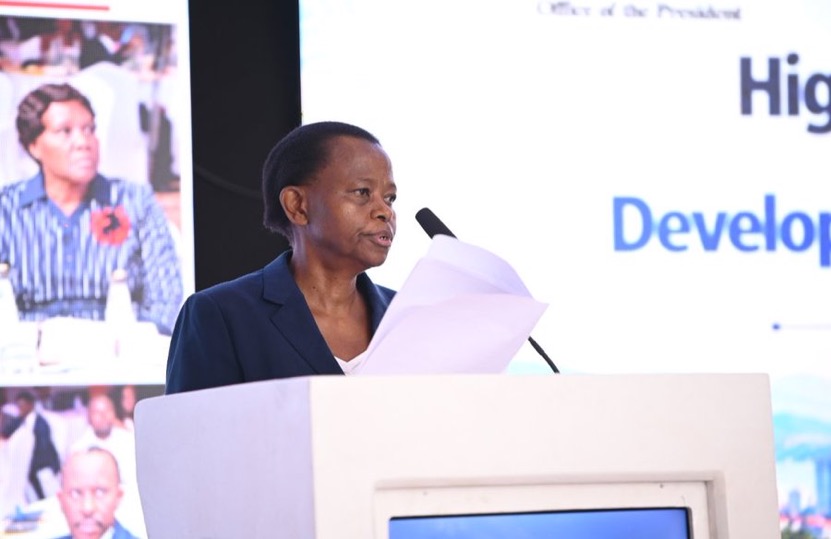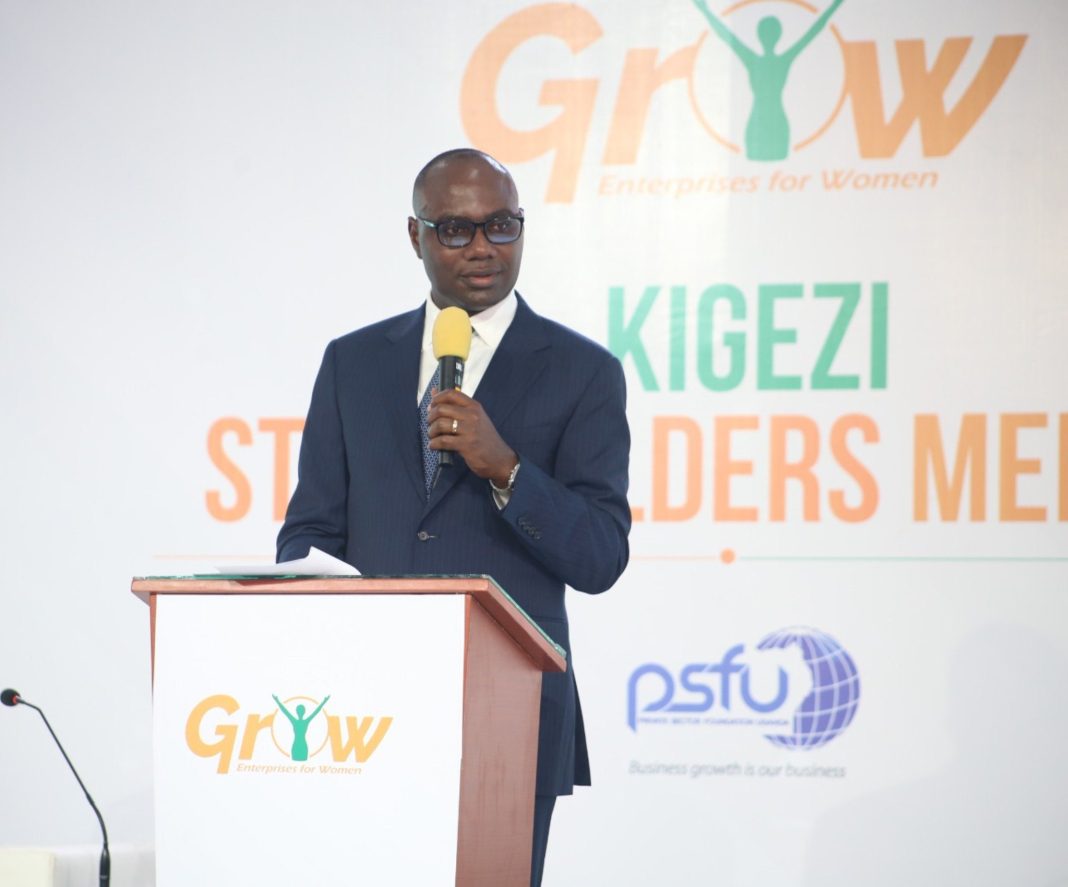

The Minister of Finance, Planning and Economic Development has urged women entrepreneurs in Uganda’s Kigezi sub-region to take advantage of affordable government-backed financing, digital technologies and business networks to expand their enterprises and create jobs.
The minister said women-owned businesses have a significant role to play in Uganda’s economic transformation if they can improve productivity, formalise their operations and gain access to larger markets.
The remarks were made while officiating at the Kigezi Regional Business Forum under the Generating Growth Opportunities and Productivity for Women Enterprises (GROW) Project at UNITE Kabale Campus in Kabale Municipality.
The forum, organised by the Ministry of Gender, Labour and Social Development in partnership with the Private Sector Foundation Uganda (PSFU), brought together more than 500 participants, including women entrepreneurs, local government leaders, Members of Parliament, financial institutions, private-sector players and development partners.
GROW project offers financing of up to Shs200 million
The minister highlighted the $217 million GROW Project, supported by the World Bank and other development partners, as one of the government programmes designed to expand women’s access to finance and support enterprise growth.
Under the programme, women entrepreneurs can access financing ranging from Shs2 million to Shs200 million at interest rates of not more than 10% a year.
The minister encouraged beneficiaries to use the financing to increase production, adopt modern technologies, undertake value addition and strengthen their financial management systems.
Women entrepreneurs were also urged to keep proper financial records, formalise their businesses and build networks that can connect them to larger domestic, regional and international markets.
Women entrepreneurs linked to Uganda’s $500 billion ambition
The minister said the growth of women-led enterprises is closely linked to the government’s broader economic transformation agenda, particularly the Tenfold Growth Strategy.
The strategy is anchored on four priority areas—agro-industrialisation, tourism, minerals including oil and gas, and science, technology and innovation (ATMS)—with the government targeting an economy worth $500 billion by 2040.
The minister stressed that achieving the target will require higher productivity, accountability and stronger partnerships between government and the private sector.
“Affordable financing alone is not enough,” the minister said in the message, emphasising the need for entrepreneurs to combine access to capital with technology, productivity improvements, financial discipline and market access.
The minister further called on local government leaders and other stakeholders to strengthen partnerships and provide infrastructure, services and a business environment that enables women-owned enterprises to grow.
Kigezi businesses showcase products
The regional forum also provided a platform for women entrepreneurs to share their experiences under the GROW Project and engage with financial institutions, government agencies and other stakeholders.
An exhibition featuring products and services from 30 women-led businesses was held alongside the forum, providing entrepreneurs with opportunities for visibility, networking and potential business linkages.
The minister said such platforms are important in connecting small businesses to markets, financing opportunities and partnerships that can support their transition from small enterprises into more competitive businesses.
The call comes as Uganda seeks to expand private-sector activity, increase household incomes and create more employment opportunities through entrepreneurship and productive investment.