
The funding will support education, water and sanitation infrastructure in Namayingo, Kwania and Amolatar between 2026 and 2028
The Government of Iceland has approved an $8 million grant to Uganda to finance education, water and sanitation infrastructure in three districts as the two countries resume development cooperation.
The grant will support projects in Namayingo, Kwania and Amolatar between 2026 and 2028, with a particular focus on the construction of schools and improving access to water and sanitation.
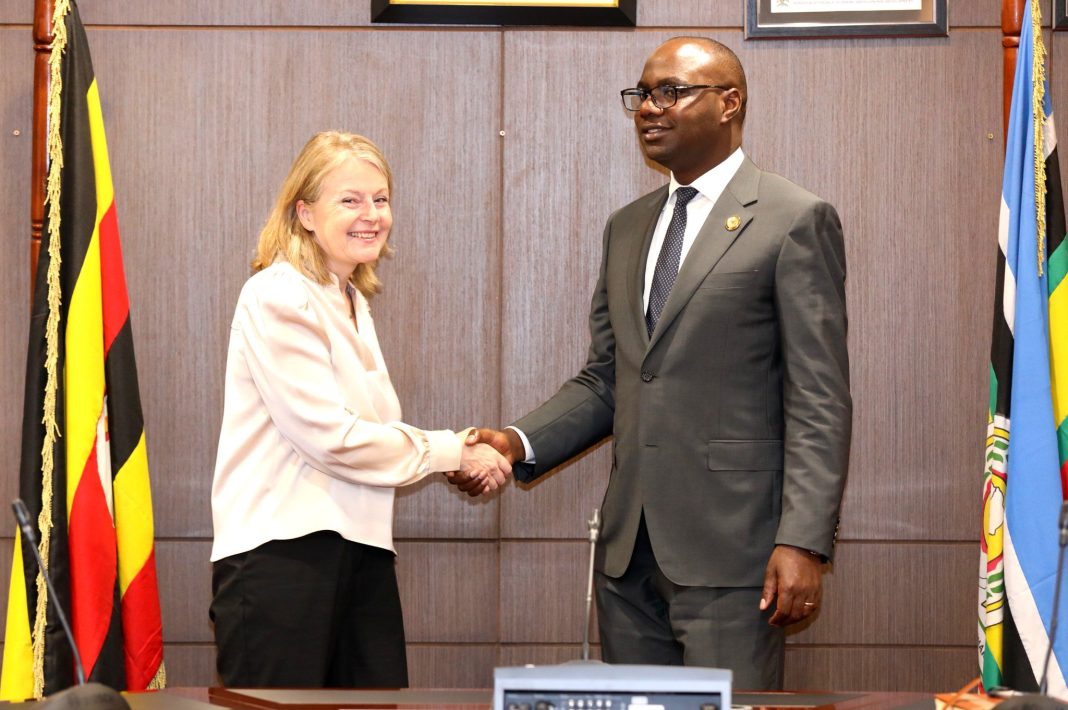
Iceland’s Head of Mission to Uganda, Katrín Einarsdóttir, announced the funding during a meeting with Finance Minister Henry Musasizi at the Ministry of Finance, Planning and Economic Development in Kampala.
The resumption marks a renewed phase of cooperation between Uganda and Iceland, which has previously supported development programmes in Kalangala, Buikwe and Namayingo.
Musasizi welcomed Einarsdóttir to Uganda and thanked the Icelandic government for its longstanding support, saying the new partnership could be aligned with Uganda’s longer-term economic transformation plans.
Uganda, he said, has set out its development ambitions through the government’s Tenfold Growth Strategy, which seeks to expand the economy substantially over the next 15 years.
He urged Iceland to support sectors identified by Uganda as key drivers of economic growth, grouped under ATMS — agro-industrialisation, tourism, minerals, oil and gas, and science, technology and innovation, alongside their supporting sectors.
“We want you to attract foreign direct investments and tourists, support value addition and innovations. Promote Uganda as the best investment destination,” Musasizi said.
Focus on education and future generations
Einarsdóttir, who was accompanied by her deputy and other Icelandic officials, said Iceland was prepared to continue supporting Uganda, particularly through investments in education.
She said the objective was not only to finance infrastructure but also to contribute to opportunities for future generations.
The $8 million programme is expected to address some of the infrastructure needs affecting schools and access to essential services in the three beneficiary districts.
However, Einarsdóttir stressed that financial oversight and the quality of programmes would be critical to the success of the renewed cooperation.
She said Icelandic taxpayers needed assurance that development assistance was being used responsibly and that funded programmes delivered measurable results.
The emphasis on accountability reflects the growing importance donors place on transparent management of development finance, particularly as governments seek to demonstrate that grants are translating into tangible improvements for communities.
Cooperation shifts towards Uganda’s growth agenda
The renewed partnership comes as Uganda seeks to move development assistance beyond traditional social-sector support and attract greater investment into productive sectors.
For Uganda, the Icelandic funding provides immediate infrastructure support in districts where access to education, clean water and sanitation remains central to improving living standards.
For Iceland, the partnership offers an avenue to continue development cooperation while supporting Uganda’s broader economic and human-capital ambitions.
The two governments are expected to work through agreed programmes and oversight mechanisms during the 2026–2028 implementation period.
The success of the grant will ultimately depend on whether the planned projects are completed on time, meet required quality standards and deliver sustained benefits to communities in Namayingo, Kwania and Amolatar.