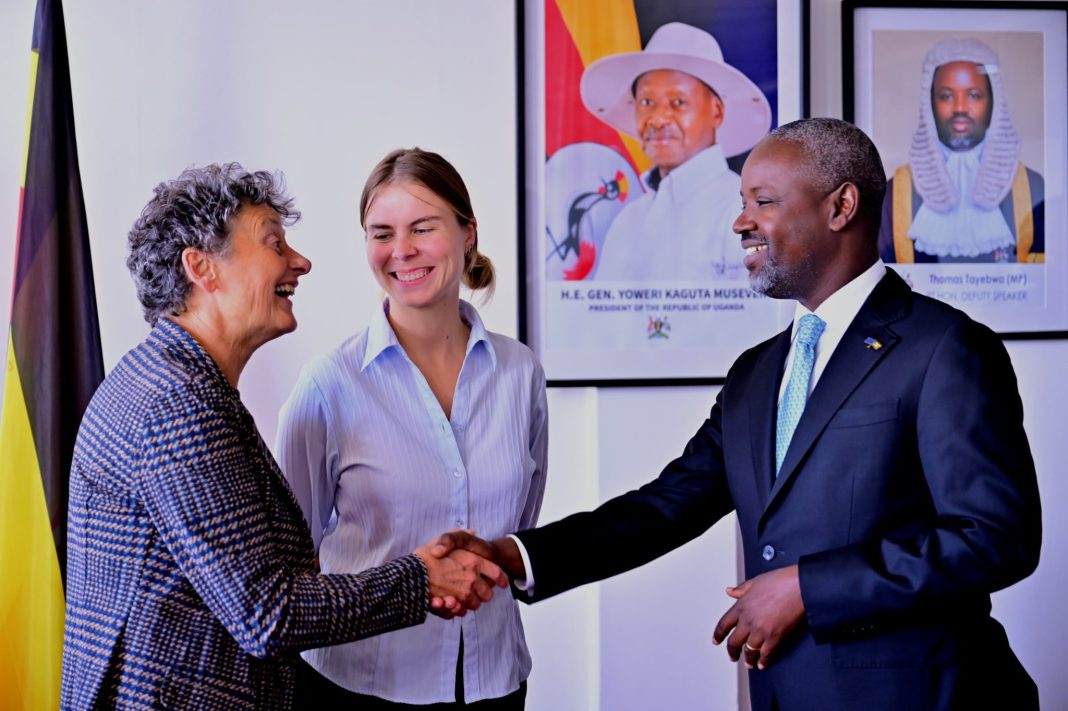

Deputy Speaker of Parliament Thomas Tayebwa has urged the European Union to deepen its partnership with Uganda on refugee and immigration management as the country grapples with a widening gap between humanitarian needs and available funding.
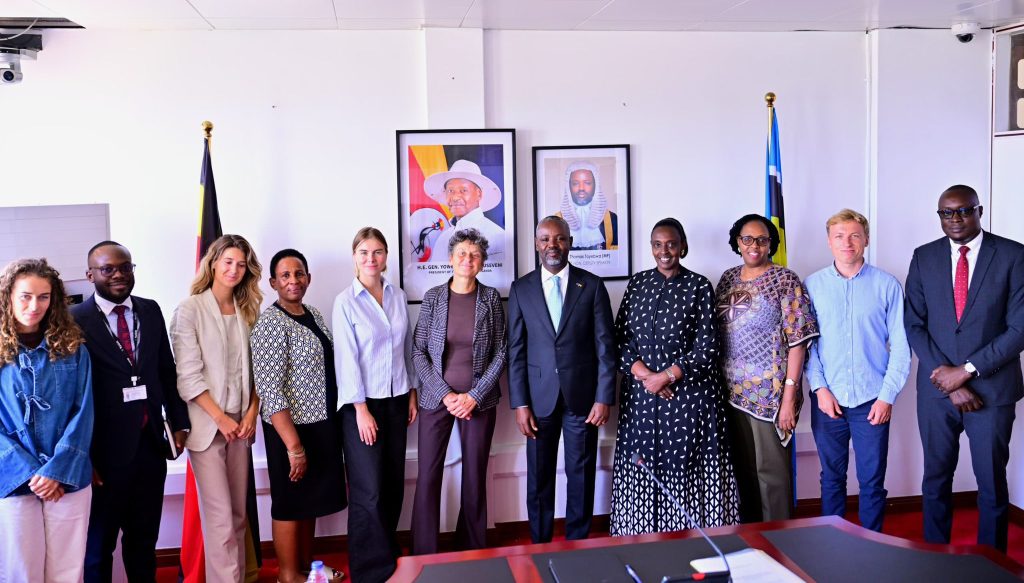
Tayebwa made the call during a meeting at Parliament with European Parliament members Anna Strolenberg and Tineke Strik, who are visiting Uganda to better understand the country’s refugee policies and explore areas for stronger EU-Uganda cooperation.
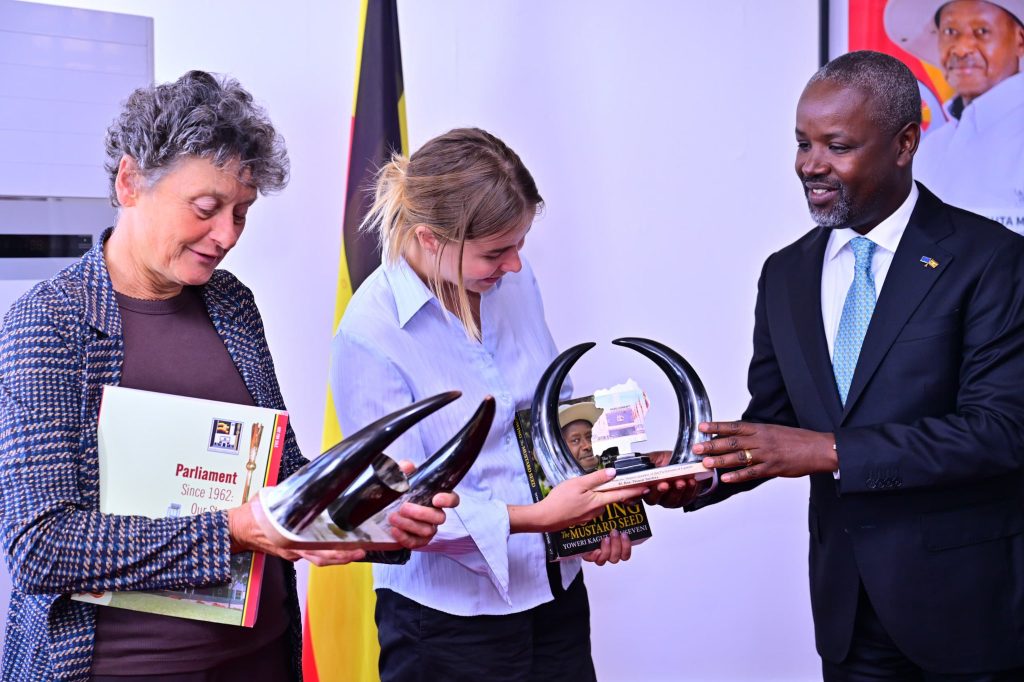
The meeting was also attended by MPs Robina Rwakoojo and Beatrice Rwakimari, alongside officials from the Refugees Department in the Office of the Prime Minister.
According to Tayebwa, Uganda’s longstanding policy of welcoming refugees has come under increasing financial pressure as humanitarian funding declines.
He said Uganda currently hosts more than two million refugees, most of them women and children, describing the population as particularly vulnerable and in need of sustained support.
“Uganda’s doors are always open to refugees because of our commitment to humanity and our culture of never turning anyone away,” Tayebwa said.
Uganda faces major refugee funding shortfall
Tayebwa told the European lawmakers that funding shortages are making it increasingly difficult for Uganda and its humanitarian partners to provide essential services to refugees.
Uganda’s 2026 refugee response plan requires about $850 million, according to UNHCR data.
Tayebwa said Uganda had received only about 12 percent of the required funding this year.
He warned that inadequate resources for food and other basic needs do not affect refugees alone, but also increase pressure on public services in host communities, particularly health and education.
The funding challenge comes as Uganda continues to operate one of Africa’s largest refugee responses. Recent UNHCR reporting continues to track humanitarian needs across protection, shelter and other sectors of the refugee response.
Tayebwa links refugee influxes to regional conflicts
The Deputy Speaker also argued that humanitarian assistance alone cannot resolve the refugee crisis, pointing to armed conflicts and instability in neighbouring countries as the principal drivers of displacement into Uganda.
He called on the EU to play a stronger role in supporting efforts to address conflicts that continue to generate new refugee movements.
“The root causes of refugee movements are conflicts in neighbouring countries,” Tayebwa said, according to his account of the meeting.
His remarks place Uganda’s refugee policy within a broader regional security and diplomatic context, where conflict, displacement and humanitarian financing remain closely connected.
EU lawmakers study Uganda’s refugee model
Strolenberg and Strik, both members of the European Parliament’s Greens/European Free Alliance group, have responsibilities related to migration, asylum and fundamental rights at the European Parliament. Strolenberg is also a shadow rapporteur on EU support for asylum, migration and integration for the 2028–2034 period.
The European Parliament is currently dealing with several migration-related issues, including implementation of the EU Pact on Migration and Asylum and future EU support for asylum, migration and integration.
Tayebwa said the two lawmakers appreciated Uganda’s role in receiving and hosting refugees and expressed optimism that the engagement would lead to stronger cooperation.
For Kampala, the discussions offer an opportunity to press for greater international support at a time when the cost of maintaining refugee services is rising while humanitarian financing remains insufficient.
Tayebwa said Parliament values its relationship with the European Parliament, particularly through the EU-OACPS Joint Parliamentary Assembly, and indicated that Uganda wants to use that relationship to strengthen cooperation on refugee management.
The meeting therefore placed two issues at the centre of Uganda-EU engagement: how to sustain support for the millions of refugees already in Uganda, and how to address the conflicts that continue to drive people across the country’s borders.