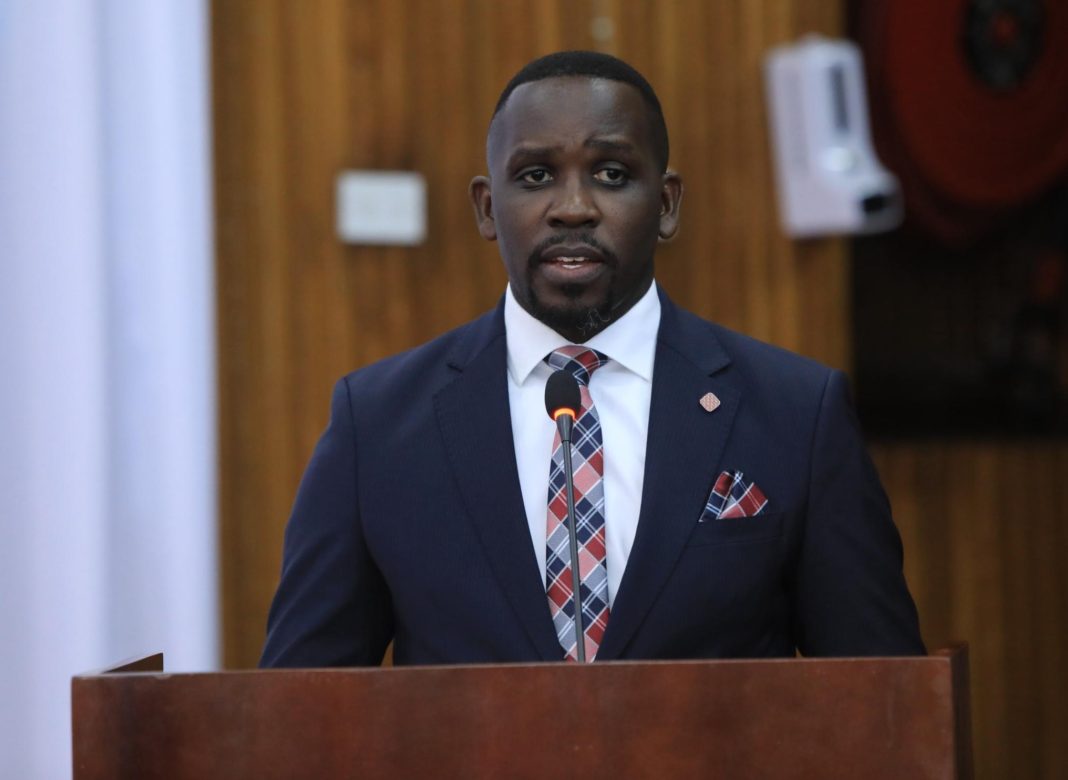

Leader of the Opposition in Parliament Joel Ssenyonyi has renewed scrutiny of the government’s handling of prime public land in Kampala, recalling how Uganda Broadcasting Corporation (UBC) facilities and Shimoni Demonstration School were removed to make way for hotels that were supposed to accommodate delegates to the 2007 Commonwealth Heads of Government Meeting (CHOGM).
Speaking in Parliament, Ssenyonyi, the Nakawa West MP, said he was working at UBC in 2006 when staff were moved from the broadcaster’s premises in Nakasero after government indicated that a CHOGM hotel would be built on the site.
“In 2006, I was working with UBC TV, and we were removed from our premises, prime area in Nakasero, 15 acres,” Ssenyonyi said.
He said a similar process affected Shimoni Demonstration School and Shimoni Core Primary Teachers College, which occupied another large piece of prime land in central Kampala.
According to Ssenyonyi, the institutions were demolished and their occupants relocated on the understanding that the land would be developed into a hotel for CHOGM delegates.
“CHOGM came, CHOGM went, years passed, and there was no hotel in any of those premises,” he said.
Shimoni land became a long-running controversy
Historical records support Ssenyonyi’s account that Shimoni was demolished in anticipation of a major hotel development linked to CHOGM.
In 2006, the government handed about 15 acres of the Shimoni site to Saudi businessman Prince Alwaleed bin Talal for a planned five-star hotel. Contemporary reports said the school had thousands of pupils and was expected to relocate to make way for the development.
The land later became the subject of controversy over its ownership and development. A 2019 investigation by Daily Monitor reported that the 14.5-acre property changed hands several times in 2005 and 2006 before being allocated for the proposed hotel project. The planned development was valued at about $65 million and was intended to be ready for CHOGM in 2007.
However, the hotel did not materialise in time for the summit. By May 2008, construction had reportedly restarted after a 17-month delay, with Roko Construction contracted to develop the site.
The planned project was subsequently associated with the development of what became Kingdom Kampala.
UBC relocation also tied to CHOGM preparations
Ssenyonyi’s personal recollection adds another dimension to the controversy, particularly concerning the former UBC premises in Nakasero.
Parliamentary records show that Ssenyonyi has previously told legislators that shortly after joining UBC in 2006, the broadcaster was relocated from Nakasero to Nile Avenue because government, together with an investor, intended to establish a CHOGM hotel on the site.
The 2007 summit itself eventually took place in Kampala from November 23 to 25, with the opening ceremony at Serena International Conference Centre and the retreat at Munyonyo Commonwealth Resort.
Several hotel projects were rushed or delayed in the run-up to the summit. Contemporary reporting, for example, noted concerns about unfinished hotel facilities and delays in completing accommodation that had been earmarked for CHOGM.
The unresolved question of public land
Ssenyonyi’s intervention places the issue within a broader question about whether public institutions and valuable government land were sacrificed for development promises that were not fulfilled as initially presented.
The Shimoni case has previously attracted parliamentary scrutiny. In 2016, Parliament directed government to provide a report on the land after opposition legislators raised concerns over its ownership and development.
The relocation also came with significant consequences for the affected educational institutions. Shimoni Core Primary Teachers College spent years operating from other facilities, while the demonstration school was relocated from its original site. Government later invested billions of shillings in rebuilding the institutions.
For Ssenyonyi, the history raises a basic question about what happened to the promises that justified removing public institutions from some of Kampala’s most valuable land.
His recollection comes as Parliament continues to debate the management, disposal and redevelopment of public assets, putting renewed focus on whether land allocated for major projects ultimately delivers the public benefits used to justify its transfer.