
As Tooro Kingdom prepares to bury thier fallen King Oyo Nyimba, a royal dispute over his successor threatens to turn a season of mourning into a struggle over custom, blood and the meaning of the throne.
There are moments when a kingdom is quiet enough to hear its own history.
In Tooro, the drums are beating for a king who has gone home to the ancestors.
But beneath the mourning songs, another sound is rising — the sound of a throne being contested.
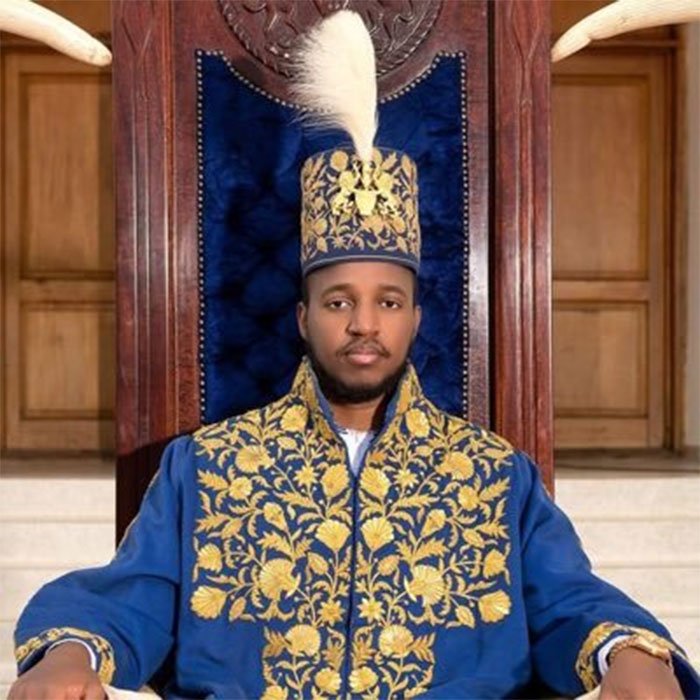
King Oyo Nyimba Kabamba Iguru Rukidi IV, who became king as a three-year-old child and grew into one of Africa’s most recognisable traditional rulers, died on August 27 in the United States, aged 34, while undergoing cancer treatment. He was the world’s youngest reigning monarch when he ascended the Tooro throne in 1995.
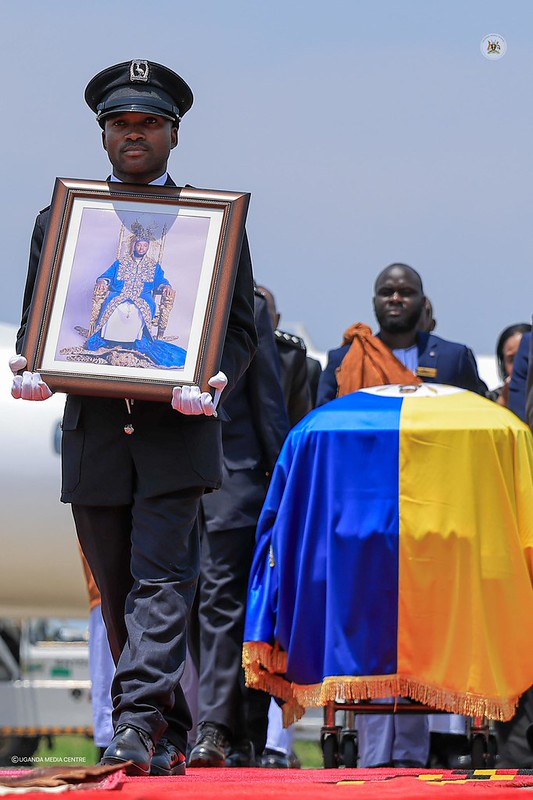
His body was returned to Uganda last week.
On Saturday, thousands are expected to gather at the Karambi Royal Tombs in Fort Portal to bury him.
But before the final handful of earth is placed upon the king’s grave, Tooro has been confronted with a question that has unsettled the palace:
Who comes after Oyo?
The answer, which many expected to emerge after mourning and customary consultations, has instead arrived in the middle of grief.
The Babiito royal clan announced Prince Edward Rukidi Kijanangoma, a 56-year-old television journalist and UBC news anchor, as the new Omukama.
Then the royal family said: Not so fast.
Oyo’s sister, Princess Ruth Komuntale, says her brother left a written will in 2022 naming his son as heir to the throne.
The family says the boy’s existence was known within the royal circle but had not been publicly disclosed.
The dispute has therefore become bigger than the identity of one prince.
It has become a collision between what a dying king wrote and what an ancient clan says tradition requires.
The son nobody had seen
For years, Oyo’s private life was largely kept away from the public gaze.
He never married publicly and had not previously presented a child to the kingdom as his heir.
Then, following his death, the kingdom’s Prime Minister, Calvin Armstrong Rwomiire, said Oyo had left behind a son who was his heir and whose identity would be revealed at the appropriate time.
That revelation changed the shape of the succession.
The late king’s family now says there is a document to support the claim.
According to the reported 2022 will, Oyo stated that if he died leaving behind a son lawfully recognised as his biological child, that son should inherit the Tooro throne. The document also reportedly contains alternative arrangements should the boy be unable to become king.
For the royal family, the matter appears straightforward.
The king named his heir.
But the Babiito see another problem.
A prince cannot simply arrive at the gates of the kingdom carrying a claim to the throne.
He must be known.
He must be presented.
He must pass through the rituals and recognition of the clan.
And that is where the ancient machinery of Tooro succession has collided with the modern language of wills, lawyers and biological inheritance.
The clan answers with another prince
On Wednesday, the Babiito succession committee announced Prince Edward Rukidi Kijanangoma as the successor.
He is not a stranger to the royal bloodline.
He is Oyo’s cousin and the son of Prince Christopher Paul Kijanangoma. He is also a grandson of former Tooro King George David Rukidi III.
But his most familiar face to ordinary Ugandans is not that of a prince.
It is that of a journalist.
For years, Kijanangoma has appeared on television, delivering the news to a nation.
Now he is the news.
The succession committee said it had undertaken consultations and due diligence before selecting him, asserting its customary authority to choose an Omukama from among the Babiito. Reuters reported that the committee’s decision immediately came under challenge from Oyo’s family.
There is something almost poetic about the turn of events.
A man who spent his career reading the affairs of the country from a newsroom desk now finds himself at the centre of one of the most consequential stories in his own kingdom.
But the crown comes with a complication.
Oyo’s family does not recognise his selection.
Princess Komuntale says the family was still discussing the late king’s will when the announcement was made.
She called the development “confusion and turmoil” at a time when the royal family should have been mourning.
Princess Elizabeth Bagaaya, the late king’s aunt, has backed Komuntale and urged people to listen to the royal family.
The Queen Mother’s plea
Then came the voice of Queen Best Kemigisa.
A mother’s voice.
A queen’s voice.
A voice asking the kingdom to wait.
She has alleged that royal guards were removed from the palace and soldiers deployed, restricting the movement of members of the royal family and their ability to receive visitors. She described the situation as akin to house arrest and appealed to President Yoweri Museveni and the military leadership to allow the family to mourn and bury Oyo in peace.
Her plea was simple:
Let the king be buried first.
Let the mourners cry.
Let the drums speak.
Let the soil receive its son.
There will be time for succession.
That appeal carries a particular weight in an African kingdom, where death is rarely treated as an event that belongs only to the dead.
The dead belong to the clan.
To the mothers.
To the fathers.
To the ancestors.
And to the generations yet unborn.
A king’s funeral is therefore never simply a funeral.
It is a conversation between the living and those who came before them.
The throne between custom and the will
Tooro’s succession system is not a copy of Britain’s.
There is no simple public line of succession in which the eldest child automatically inherits the crown.
The Omukama is chosen from the Babiito dynasty, making the royal clan central to the process.
That distinction has suddenly become critical.
Oyo’s family is looking at the succession through the eyes of the man who occupied the throne.
The Babiito are looking through the eyes of the institution that existed before him and will, in their view, exist after him.
Both sides claim tradition.
Both sides claim legitimacy.
And somewhere between them sits an unnamed child who, according to his late father’s will, may be the person around whom the future of Tooro turns.
The kingdom’s Prime Minister has urged calm, saying there must be time to examine the will, consider custom and applicable law, and determine succession through credible institutions rather than competing public announcements.
That may be the only road out.
Because a crown imposed by force of announcement may sit heavily on the head.
And a crown denied by custom may never sit securely at all.
A kingdom prepares to say goodbye
The irony of the moment is difficult to escape.
The kingdom is supposed to be saying goodbye to Oyo.
Instead, it is already arguing about who should follow him.
Government has taken charge of preparations for the funeral, with the burial scheduled for September 12 at the Karambi Royal Tombs. The body has lain in state at Karuzika Palace, where mourners and dignitaries have been paying their respects.
The date itself carries symbolism.
September 12 would have marked another anniversary of Oyo’s coronation.
The boy who became king before he was old enough to understand the weight of a crown will now be buried on the anniversary of the day that crown was placed upon his head.
It is the kind of symmetry that African history often produces without asking permission from anyone.
A child became king.
A man died king.
And now a kingdom must decide what happens to the crown.
The kingdom waits
Tooro has survived kings, colonialism, republicanism, the abolition of kingdoms and their restoration.
Its throne has outlived political systems.
Its traditions have crossed generations.
But the succession crisis now unfolding is a test of something more fundamental: whether an ancient institution can reconcile the authority of its customs with the wishes of a modern king recorded in a legal document.
There is no easy answer.
If Oyo’s son is indeed his lawful heir, the kingdom must determine how and when that claim can be recognised.
If the Babiito’s customary process requires formal presentation and verification before a prince can inherit, that tradition too cannot simply be wished away.
And until those questions are settled, the announcement of another king may not close the succession.
It may only have opened it.
On Saturday, the people of Tooro will gather in their thousands.
They will sing.
They will pray.
They will lower their eyes as the coffin of their king is carried to the royal tombs.
They will remember the little boy beneath the enormous crown.
They will remember the young man who grew into the throne.
And they will bury a king.
But when the final drumbeat fades and the mourners return home, Tooro will still have one question waiting in the silence:
Who will inherit Oyo’s crown — the prince chosen by the clan, or the son named by the king?
For now, the answer lies somewhere between the palace and the ancestors.