
The Uganda Revenue Authority (URA) has moved to allay public fears over the adoption of the National Identification Number (NIN) as the Tax Identification Number (TIN), saying the change is aimed at improving identification and government records rather than turning every Ugandan into a taxpayer.
Christine Mirembe, URA Assistant Commissioner for Client Services in charge of registrations, said possessing a TIN does not automatically make an individual liable to pay taxes.
“The answer is no. Not everyone is going to become a taxpayer. You need to be registered for taxes to be a taxpayer,” Mirembe said.
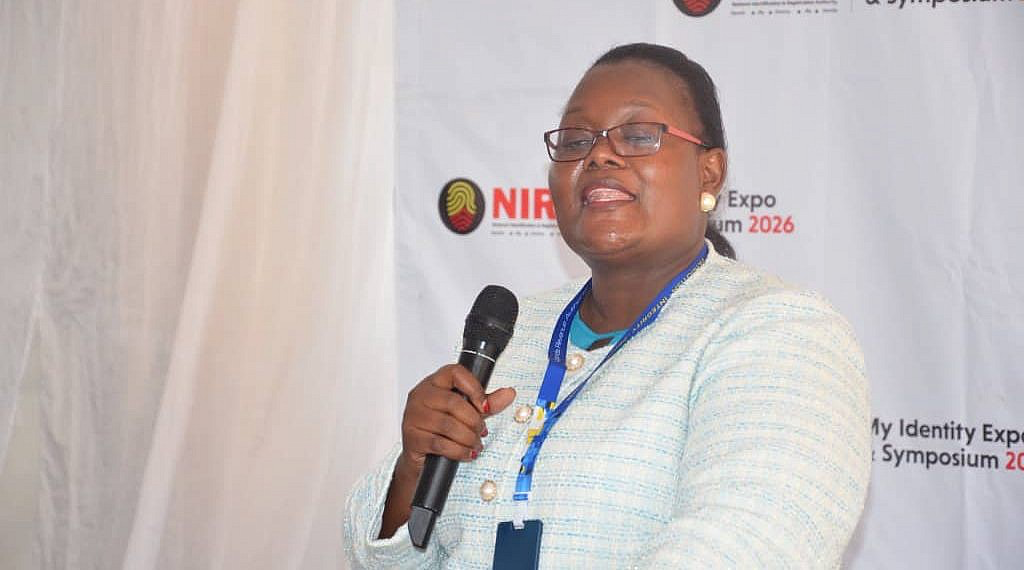
She was speaking at the launch of the National Identification and Registration Authority’s (NIRA) My Identity Expo and Symposium 2026, where she urged Ugandans to embrace national registration and provide accurate personal information.
The clarification comes amid concerns that using the NIN as the TIN could expose millions of Ugandans to tax obligations simply because they hold a national identification number.
Mirembe said the concern was one of the most common reactions following the announcement of the new arrangement.
“When this came out in the press, the most common concern was: Is everyone becoming a taxpayer?” she said.
Single identifier
Mirembe explained that the government is seeking to establish a single identifier that can be used across public institutions, reducing duplication and inconsistencies in government databases.
She said the existing system can force people who have no businesses or taxable income to obtain TINs simply because the number is required for certain transactions.
She cited the case of an elderly person who may have no business but is required to obtain a TIN when registering a motor vehicle in her name.
“She’s an old woman with no business, so you acquire a TIN. A TIN in full is a Taxpayer Identification Number. You get it when you’re going to pay taxes. Now, your mom needs a TIN to have the motor vehicle registered in her names. Trouble,” she said.
Similar difficulties can arise during land transactions, government compensation and other processes where individuals are required to obtain tax identification even when they are not engaged in taxable business.
Mirembe said linking the NIN and TIN would help eliminate such duplication by allowing government agencies to use one unique identifier for an individual.
“NIN becoming TIN is going to erase this. So for Ugandans who are scared, this is to our benefit,” she said.
URA wants active taxpayers
According to Mirembe, the integration will also help URA distinguish people who are genuinely engaged in taxable activities from those who hold TINs only because they needed them for administrative transactions.
She said fragmented government databases currently make it difficult for URA to determine whether a person holding a TIN is actively conducting business.
“Once we have this single line as a unique identifier, it will be very easy to know who is trading and who is not,” she said.
Mirembe said, for example, a person who did not conduct business during a particular year could face unnecessary complications because information held by government agencies is not adequately connected.
“If you didn’t acquire a trading licence, there’s no track. The bank says this person has nothing, no mobile money. Why would you pay what you’re not supposed to pay? Why would even URA trouble you?” she said.
She said improved data sharing would allow the tax authority to concentrate its resources on genuine and active taxpayers rather than people who appear in its records solely because they obtained TINs for other purposes.
“We want real taxpayers, not counting numbers which don’t exist,” Mirembe said.
Motorcycle owners
Mirembe also pointed to motorcycle ownership as an example of how administrative requirements can cause URA records to include people who may not necessarily be active taxpayers.
She said some people sell small pieces of land or use other means to acquire motorcycles, and because motorcycle registration may require a TIN, the owners can subsequently appear in URA’s taxpayer records.
“Imagine if all those boda bodas we have around are individually owned. Are those really taxpayers? Are they value taxpayers? Since they have TINs, when I go back to my register, I’ll count them as what we need to clean up as government,” she said.
She said a unified identification system would provide government with more accurate information for planning, taxation and service delivery.
“This partnership is to ease business,” she said, noting that government agencies currently maintain separate identification systems for services including tax registration and trading licences.
URA urges voluntary updates
Mirembe urged Ugandans to provide accurate information when updating their registration details, saying reliable population and taxpayer data was critical to effective government planning.
“We need to support government as Ugandans by giving the right information so the government can plan for us. We can only have it if we have a single identifier across board,” she said.
She also encouraged Ugandans who have not updated their URA registration information to do so voluntarily before the authority completes the rollover to the new system.
“For those who are worried about compulsorily becoming taxpayers, no. The process is already ongoing. We are encouraging Ugandans to voluntarily come and update their registration details,” she said.
Taxpayers can visit their nearest URA office or access their TIN accounts to begin updating their information, she said.
Mirembe warned that failing to update registration details could create administrative challenges once the new system is fully implemented, including for people who need tax compliance documentation for services such as visa applications.
“Once you don’t do this, you’ll be bothered because we won’t have you in our register,” she said.
Mirembe said the transition is backed by law and that URA would continue working with NIRA to strengthen identification and tax administration.
“The law is already in place. It was effective July 2025. We are not going back,” she said.
She urged Ugandans to regard national identification as part of their civic responsibility rather than as an automatic tax obligation.
“If you love your nation, identify yourself,” Mirembe said.