
Parliament’s Committee on Commissions, Statutory Authorities and State Enterprises (COSASE) has questioned the Bank of Uganda over safeguards for consumers using mobile money loans and other digital lending services, raising concerns about interest charges, dispute resolution and the use of guarantors.

The committee asked whether the central bank has clear consumer protection guidelines governing digital credit products such as mobile money advances, which have become increasingly accessible to Ugandans.
During a hearing with Bank of Uganda officials, MPs questioned whether consumers are adequately protected from potentially exploitative lending practices.
“I don’t know whether Bank of Uganda is aware or it has any guideline, consumer protection guideline, on anything related to this so-called Momo Pay, mobile Momo advance,” a committee member said.
The MP noted that many Ugandans are paying interest on mobile money advances and questioned what mechanisms are available to protect borrowers.
The committee also pressed the central bank on how customers can resolve disputes with financial service providers without having to pursue lengthy and costly court proceedings.
“If the regulator maybe had an in-house mechanism where they can handle some of these complaints… maybe some of these would be fast-tracked by the regulator than being looked at there,” the committee heard.
BoU flags guarantor concerns
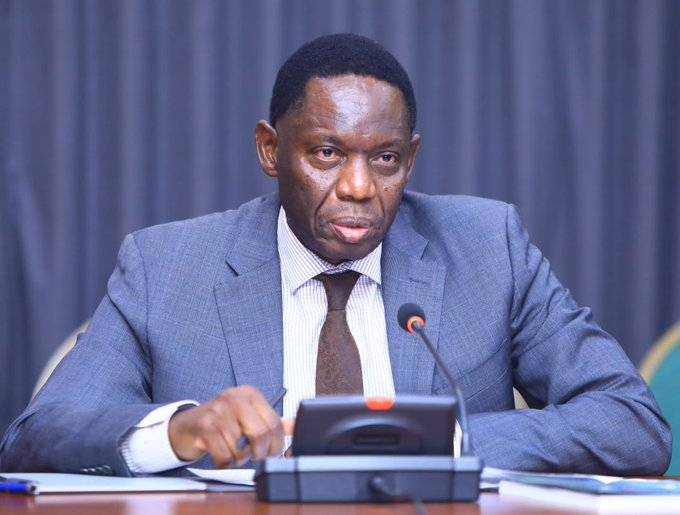
Bank of Uganda Governor Dr. Michael Atingi-Ego told the committee that one of the emerging concerns involves the use of guarantors by mobile money companies and online lenders.
He said some borrowers provide the details of another person as a guarantor without that person’s explicit consent.
“Unfortunately, I think there are no safeguards on requiring a consent from a guarantor,” Atingi-Ego said.
According to the governor, the problem becomes apparent when a borrower defaults and the lender attempts to recover the outstanding loan from the person listed as guarantor.
“They just fill your number, and upon failure to repay, these mobile money companies and online lenders proceed to recover from guarantors,” he said.
The guarantors, he added, may only discover that they have been listed when lenders begin attempts to recover the debt from them.
“The guarantors learn from the first time that they are actually guarantors when the companies are making attempts to recover from them.”
The concerns highlight the growing regulatory challenge posed by digital credit, where loans can be accessed through mobile phones with limited interaction between borrowers, lenders and regulators.
For COSASE, the questions go beyond access to credit to whether consumers understand the terms attached to digital loans, how interest and recovery practices are regulated, and whether people can challenge disputed claims without going to court.
The committee’s scrutiny places renewed focus on the consumer-protection framework surrounding Uganda’s rapidly expanding digital financial services sector, particularly as mobile-based lending becomes an increasingly common source of short-term credit.