
Government says the project will strengthen connectivity in Busoga, open an alternative transport corridor and generate economic returns above the cost of capital.
Uganda has asked Parliament to approve borrowing of up to €207.77 million (about Shs842.71 billion) from Citi Bank and other financial institutions to finance the upgrading of the 127-kilometre Jinja–Mbulamuti–Kamuli–Bukungu Road and 10 kilometres of roads in Jinja City.
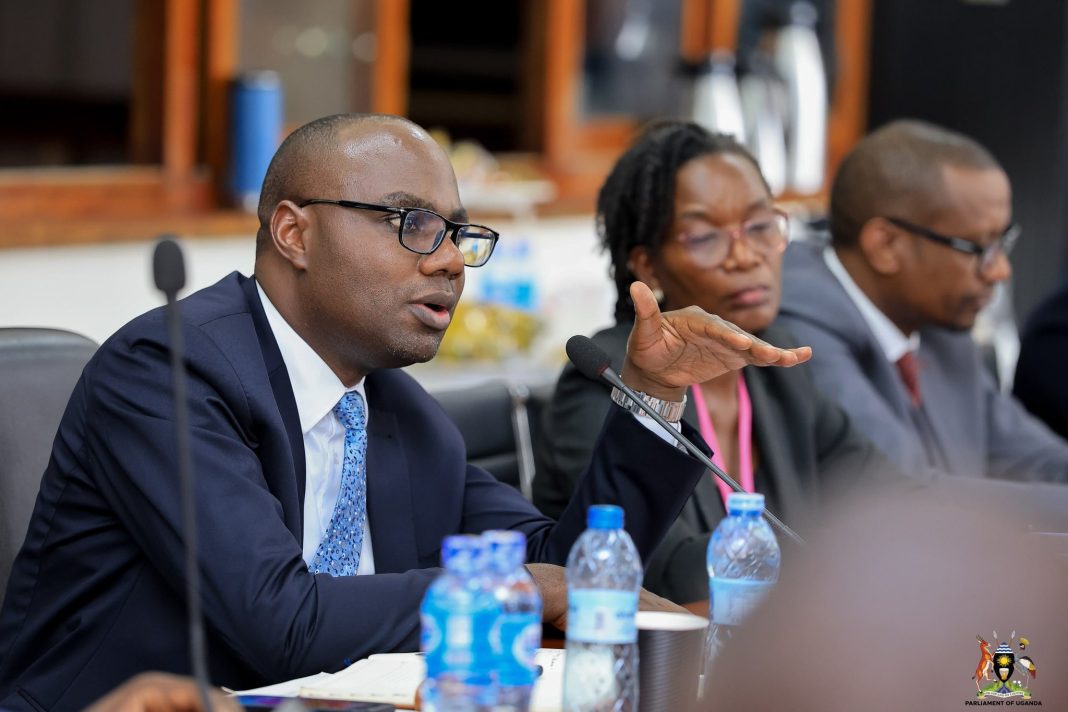
Finance Minister Henry Musasizi, accompanied by State Minister for Works and Transport Fred Byamukama, presented the financing proposal to Parliament’s Committee on National Economy on Wednesday, seeking approval for the government borrowing.
The proposed financing will cover road construction, land compensation and supervision, with the project expected to improve transport links across the Busoga sub-region and provide an alternative connection between northern and southern Uganda.
According to Musasizi, €179.26 million of the financing will be allocated to civil works and insurance, while €28.51 million will cover land acquisition and construction supervision.
The government says the investment is economically viable, with an Economic Internal Rate of Return (EIRR) of 16.7%, compared with an 11% economic opportunity cost of capital.
The spread between the projected economic return and the cost of capital is expected to strengthen the case for the investment, as the upgraded corridor could reduce transport bottlenecks, improve movement of goods and people and support economic activity in communities along the route.
The Jinja–Mbulamuti–Kamuli–Bukungu corridor is also strategically important for regional connectivity. Its upgrade is expected to strengthen access within Busoga while providing motorists and freight operators with an alternative transport route linking the northern and southern parts of the country.
Musasizi told lawmakers that the proposed borrowing has already been incorporated into Uganda’s debt sustainability analysis, the FY2026/27 fiscal framework and the government’s medium-term fiscal framework.
The inclusion is intended to ensure that the new borrowing is accounted for within the government’s broader debt and fiscal management plans.
The proposal comes as Uganda continues to expand public investment in transport infrastructure while balancing infrastructure financing needs against rising debt-servicing obligations.
For the government, the economic case for the road will ultimately depend on whether the investment delivers the expected gains in connectivity, trade and productivity while remaining within the country’s debt sustainability limits.