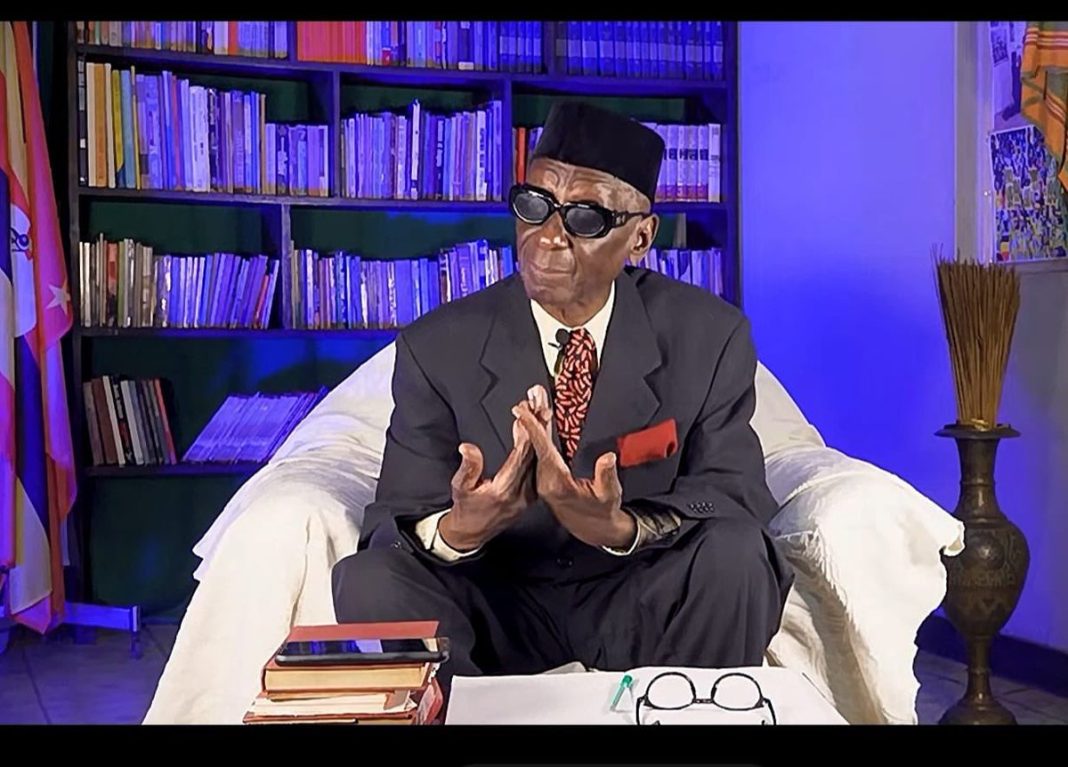

Celebrated Ugandan playwright, actor, director and theatre educator Alex Mukulu has died at the age of 72, bringing to an end the career of one of the country’s most influential figures in the performing arts.
Mukulu died on Saturday, according to people close to his family. Details surrounding his death were not immediately available, with further information expected from the family.
For more than four decades, Mukulu used the stage to examine Uganda’s political history, social change and the experiences of ordinary people, while also helping shape generations of actors, playwrights and theatre practitioners.
Born in 1954 in Misebe, Ssingo County, Buganda, Mukulu was the son of Paulo Kayizi Lugaizi and Victoria Ndagire, the daughter of Prince Yokana Kimbugwe of Lungujja.
His journey into the arts began during his school years. He attended Namilyango Primary School before joining Kololo Secondary School, where he became president of the school’s drama club.
Mukulu later left formal education after Senior Four and joined the Rwenzori Band, spending about three years pursuing music before returning to school.
He went on to study at Caltec Academy for his A-Level education before joining Makerere University, where he studied Music, Dance and Drama.
That training laid the foundation for a career that would make him one of the defining voices of Uganda’s theatre.
Among his best-known productions was 30 Years of Bananas, first staged in 1992 as Uganda marked three decades of independence.
The production used theatre to reflect on the country’s political, economic and social journey, turning Uganda’s history and contemporary realities into a form that could be confronted by audiences on stage.
Mukulu also produced works including Wounds of Africa, The Guest of Honour, Muzukulu wa Kabangala and Opera Bakisimba, further establishing his reputation as a playwright willing to explore difficult questions about society, identity, politics and history.
His work also reached an international audience.
In 2007, Mukulu performed Journey to Self-Realisation during the opening ceremony of the Commonwealth Heads of Government Meeting (CHOGM) in Kampala, placing Ugandan theatre at the centre of one of the country’s most significant international events.
His influence extended beyond his own performances and productions. Mukulu was also known for mentoring younger artists and promoting theatre as a platform for cultural expression, public reflection and education.
In 2024, he made a notable return to Uganda’s National Theatre after a 17-year absence. He performed in an adaptation of Shakespeare’s Romeo and Juliet, using the return not only to reconnect with audiences but also to mentor emerging actors.
That appearance underscored the enduring relationship between Mukulu and Uganda’s theatre community, where his work had influenced performers across generations.
For many Ugandan artists, Mukulu represented a generation of theatre practitioners who treated the stage as more than entertainment. His productions often provided a space for audiences to interrogate Uganda’s past and present while engaging with questions of politics, culture, identity and social change.
His death is therefore likely to prompt renewed reflection on the history of modern Ugandan theatre and the role played by pioneering practitioners in developing the country’s performing arts industry.
Mukulu leaves behind a body of work that spans music, theatre, acting, directing and drama education, as well as a generation of performers he helped mentor.
As Uganda’s arts community mourns his death, his productions — particularly 30 Years of Bananas and Wounds of Africa — remain part of the country’s theatrical record and a reminder of the power of the stage to document, question and interpret society.
Alex Mukulu’s career may have ended, but his influence on Uganda’s theatre is expected to endure through the artists he inspired and the stories he helped bring to the stage.