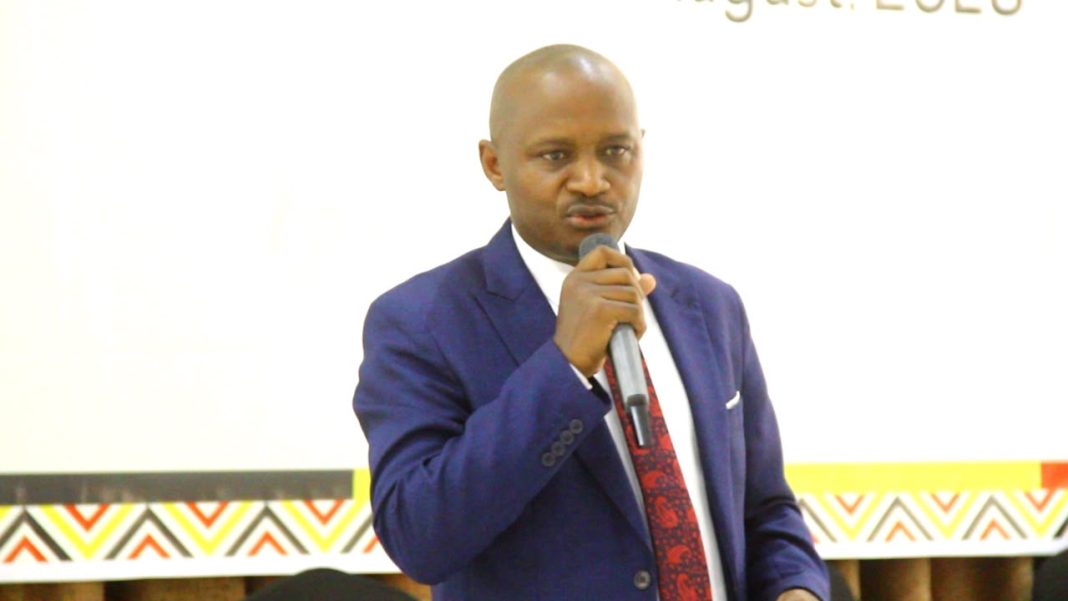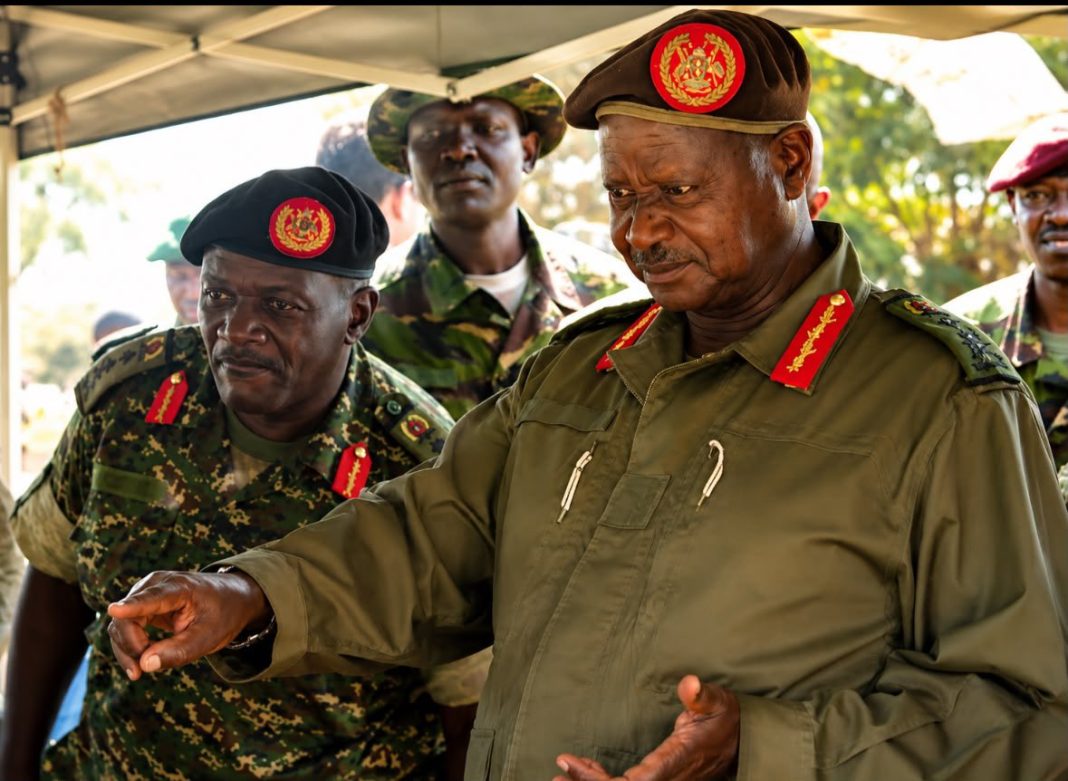

General Edward Katumba Wamala has singled out President Yoweri Kaguta Museveni as one of the most influential figures in his 47-year military career, describing the Ugandan leader’s early encouragement as a decision that ultimately shaped much of his life.
In a reflection marking the end of his military service, Katumba said he could not tell the story of his journey in uniform without acknowledging Museveni, who in 1979 was serving as Minister of Defence in the Uganda National Liberation Front (UNLF) government.
“At the time, he encouraged and inspired many of us to join the Army and serve our country,” Katumba said. “That decision has shaped the greater part of my life.”
Katumba’s comments offer a personal account of a relationship that has stretched across some of the most consequential chapters in Uganda’s post-independence history.
The general, who was born in 1956, began his military career in 1979 and was commissioned after completing officer training in Tanzania. Over the following decades, he rose through the ranks and served in senior positions in both the military and police. He later became Commander of the UPDF Land Forces, Inspector General of Police and, from 2013 to 2017, Chief of Defence Forces.
His career also extended beyond the military. He served in government as Minister of State for Works before becoming Minister of Works and Transport, and was appointed Minister of Public Service in the new Cabinet announced in May 2026.
But in looking back at his years in uniform, Katumba placed particular emphasis on Museveni’s role as a mentor and commander.
“Serving under him as my Commander-in-Chief has left an indelible mark on my life,” he said, adding that he remained “deeply grateful” for the trust, mentorship and opportunity he had been given.
The acknowledgement is significant because Katumba’s military career spans several different phases of Uganda’s political and security history. His rise through the ranks saw him occupy some of the country’s most senior security positions, including leadership of the land forces and the police before his appointment as CDF.
As commander of the land forces, Katumba was involved in Uganda’s regional security engagements and represented the UPDF in international military forums. In 2011, for example, he visited the United States Army Africa headquarters, where he discussed security challenges in East Africa and regional economic issues.
His tenure as CDF from 2013 to 2017 marked the culmination of his rise within the armed forces. He was subsequently moved into civilian government, where his experience in security and administration continued to shape his public career.
For Katumba, however, the end of military service is not simply a personal retirement. It is an opportunity to acknowledge the people who influenced the journey.
“As I close this chapter of my military career, I recognize the leaders and comrades who shaped the journey,” he said.
“Museveni is undoubtedly one of the most significant.”
Katumba’s reflection comes against the backdrop of his formal transition away from military service after 47 years. In an earlier statement marking the completion of his service on July 31, he described the journey as one undertaken with dedication, commitment and love for Uganda.
His career has made him one of the more recognisable figures to emerge from Uganda’s security establishment, combining a long military record with senior roles in policing and civilian government.
His decision to publicly credit Museveni also places the President at the centre of Katumba’s own account of his professional life — not merely as his commander in later years, but as a political figure whose encouragement in 1979 helped set him on the path to a lifetime of public service.
For a soldier whose career began in one of Uganda’s most unsettled periods and extended into the country’s modern state institutions, the reflection is, ultimately, one of gratitude.
After 47 years in uniform, Katumba is closing the military chapter with a clear acknowledgement of those he believes shaped it — and at the top of that list, he says, is Museveni.