
Uganda’s commercial sex industry appears to be becoming increasingly visible in urban centers. This is raising renewed concerns among residents, health officials and HIV prevention advocates about the country’s ability to contain new infections.
In Kampala City, commercial sex is no longer confined to the traditional street corners and entertainment districts, where it had long been visible. Residents describe an expanding network operating through bars, lodges, rented rooms and other businesses. The social media and mobile phones have made it easier for sex workers and potential clients to find one another.
The development is unfolding against the backdrop of Uganda’s continuing HIV burden. Preliminary results from the 2025 Uganda Population-based HIV Impact Assessment, released by the Ministry of Health this month, estimate that about 1.5 million Ugandans aged 15 and above are living with HIV. Adult HIV prevalence stands at 5.9%, with women recording a higher prevalence of 7.3% compared with 4.1% among men.
Among young people aged 15-24, prevalence is estimated at 1.5%, although the rate among those aged 20-24 is considerably higher than among teenagers aged 15-19. The final assessment is expected to provide more detailed information on new infections and the factors driving them.
But for communities living alongside Kampala’s expanding night-life economy, the question already being asked: What is driving the growth of commercial sex, and what does it mean for Uganda’s HIV response?
Trade that has moved beyond the Street
Commercial sex remains illegal in Uganda under the Penal Code Act. Section 128 provides for a sentence of up to seven years; imprisonment for a person convicted of practicing or engaging in prostitution, while other provisions address soliciting; living on prostitution earnings and operating premises for prostitution.
Yet criminalization has not eliminated the trade. Instead, the business has adapted. In parts of Kampala, residents say commercial sex can be found alongside legitimate businesses, particularly around night-life and entertainment areas.
In Bwaise, Kawempe Division, residents have previously complained about commercial activities taking place in buildings that also accommodate bars, lodges and other businesses. In Makindye, residents point to areas around Ewakiwa where commercial sex is reported to continue late into the night.
At Kabalagala and Kikuba Mutwe, residents have questioned whether some businesses receiving trading licenses are adequately inspected after opening.
The allegations require case-by-case investigation, but the broader complaint is familiar: authorities often appear to intervene after an activity has become established rather than preventing it from taking root.
Kampala After Dark
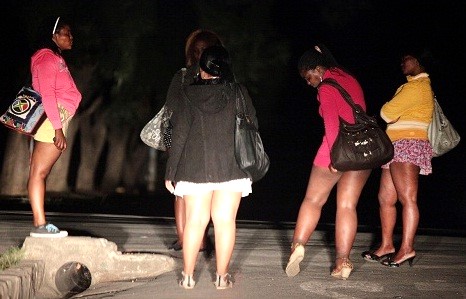
In Nateete, residents say commercial sex becomes increasingly visible after nightfall, particularly around busy transport and trading areas. Similar complaints have been made in parts of Kampala Central, where some streets that are busy during the day, take on a markedly different character at night.
William Street, Shimon Road and other parts of the city center have long been associated with night-life, bars and informal commercial activity. In Nakawa, particularly around the Industrial Area, residents say commercial sex can begin early in the evening.
The same pattern is reported in several other urban centers across Uganda.
What is changing is not necessarily the existence of prostitution itself, but its visibility, organization and methods of recruitment.
The social media changes the equation. The smart phone has transformed the way commercial sex is organized. Sex workers no longer have to depend entirely on stand-by roadsides or outside bars waiting for clients. Social media and messaging platforms provide a more discreet way to advertise, negotiate and arrange meetings.
A source familiar with Uganda’s HIV prevention work, who spoke on condition of anonymity, said the media environment had also changed dramatically. In the past, the source said, it was difficult for sex workers to obtain mainstream media attention, or publicly to discuss their experiences. Today, anyone with a smart phone can create content, attract followers and promote a personal brand. That has created a complicated situation for health authorities.
Social media can be used to spread HIV prevention information, but it can also make it easier for sex networks to operate beyond traditional surveillance and community structures.
Poverty and the Search for Survival
Behind the visible commercial sex economy, is a less visible economic story.
Uganda has a young population, while formal employment opportunities remain insufficient for everyone entering the labour market. For young people, who migrate from rural areas to Kampala expecting to find work, the reality can be harsh.
Rent is high. Food is expensive. Jobs are often temporary or poorly paid.
For some vulnerable women and men, transactional sex can become an easier source of income. That does not mean poverty automatically turns people into sex workers. But economic insecurity can narrow the choices available to people who have few other means of survival.
The growth of informal employment, rising urban living costs and unemployment among young people, therefore, deserve to be considered alongside the country’s debate about commercial sex.
Street-child Problem
Another concern is the growing number of children and young people living, or working on the streets. Some vulnerable children eventually become exposed to criminal networks, exploitation, substance abuse and sexual violence.
But children should not be labeled as sex workers simply because they are living on the streets. Their vulnerability is primarily a child-protection issue.
Uganda’s anti-trafficking law recognizes sexual exploitation as a form of trafficking and provides particular protection for children subjected to exploitation.
The presence of vulnerable children in Kampala therefore raises a broader question: How effective are the country’s systems for preventing vulnerable young people from being exploited?
HIV Question
The connection between commercial sex and HIV is real, but it must be discussed carefully. HIV is not transmitted because someone is a sex worker. It is transmitted through exposure to infected bodily fluids, and the risk is affected by factors including condom use, viral suppression, testing and treatment.
Uganda’s HIV epidemic is also driven by a range of sexual and social factors, including multiple sexual partnerships, inconsistent condom use and relationships in which one partner may not know their HIV status.
The latest national data show that women continue to carry a greater burden of HIV than men. That disparity is particularly important when discussing commercial sex because women involved in transactional sex can face additional challenges, including violence, coercion, economic dependence and difficulty negotiating condom use.
But clients are part of the equation, too. A prevention strategy that focuses only on people selling sex while ignoring those buying it will inevitably leave part of the sexual network untouched. Enforcement alone will not solve the problem Uganda’s decision to criminalize prostitution has created a difficult tension between law enforcement and public health.
Police have a duty to enforce the law where offences occur. But repeated arrests can also push commercial sex further underground, making it harder for health workers and outreach organizations to reach vulnerable people with testing, condoms, treatment and other services.
This is particularly important in the fight against HIV. A person, who fears arrest, or discrimination may be less willing to seek testing or health services.
That does not mean the law should simply be ignored. It means enforcement, public health and social policy need to work together. Where children are being exploited, where trafficking is occurring or where violence and coercion are involved, authorities have an even stronger obligation to intervene.
What is happening to the buyers? This is another part of the story that receives considerably less attention: the clients. Commercial sex survives because there is demand. Yet public debate often concentrates almost exclusively on women standing on streets or working in entertainment establishments.
The men, and other clients, who purchase sexual services, can be equally important to understanding the networks through which HIV and other sexually transmitted infections can spread.
If Uganda is serious about prevention, health campaigns must reach both sides of the transaction. Testing, treatment, condom use, HIV prevention and responsible sexual behaviour cannot be presented as issues belonging to sex workers alone.
Changing Urban Culture
Kampala’s transformation is also changing the environment in which commercial sex operates. The city has expanded rapidly, with new apartment blocks, shopping centers, bars, restaurants, clubs, lodges and informal settlements appearing alongside older neighbourhoods.
The boundary between residential, commercial and entertainment spaces has become increasingly blurred. Some businesses that appear legitimate during the day operate very differently after dark. That places a responsibility on city authorities to ensure that businesses are properly licensed and inspected and that complaints from residents are investigated.
It also raises questions about whether enforcement is consistent. Residents sometimes complain that authorities arrest street-based sex workers while leaving clients and businesses that facilitate the trade largely untouched. Such selective enforcement, if established, would do little to address the underlying problem.
Uganda cannot arrest its way out of the HIV problem without attention to all factors. It has made considerable progress against HIV over the past decades.
New infections have fallen substantially from their levels in the early years of the epidemic, -while access to antiretroviral treatment has expanded.
But the progress remains fragile. The latest national assessment shows that millions of Ugandans continue to live with HIV, while women remain disproportionately affected.