
The National Social Security Fund (NSSF) recorded its strongest financial performance on record in the financial year ended June 2026, with total revenue rising 85% year-on-year to Shs6.51 trillion, driven largely by gains from regional equities and higher investment income.
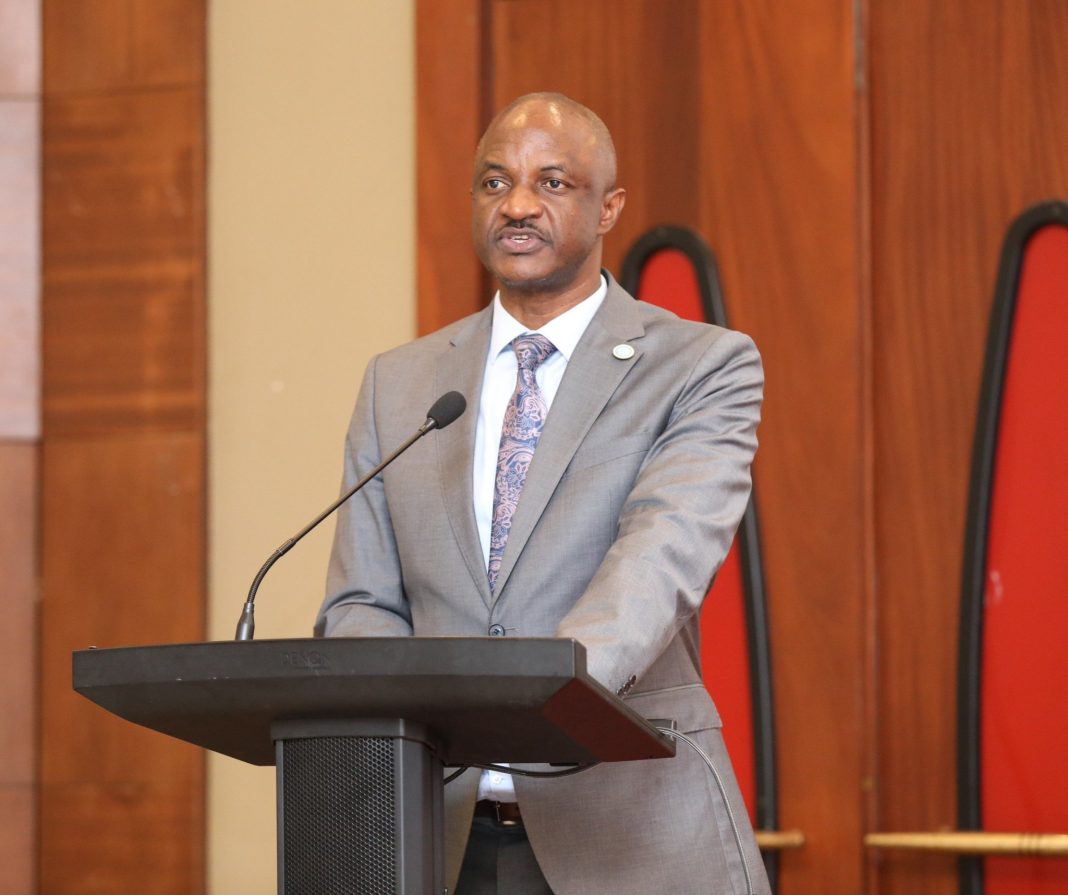
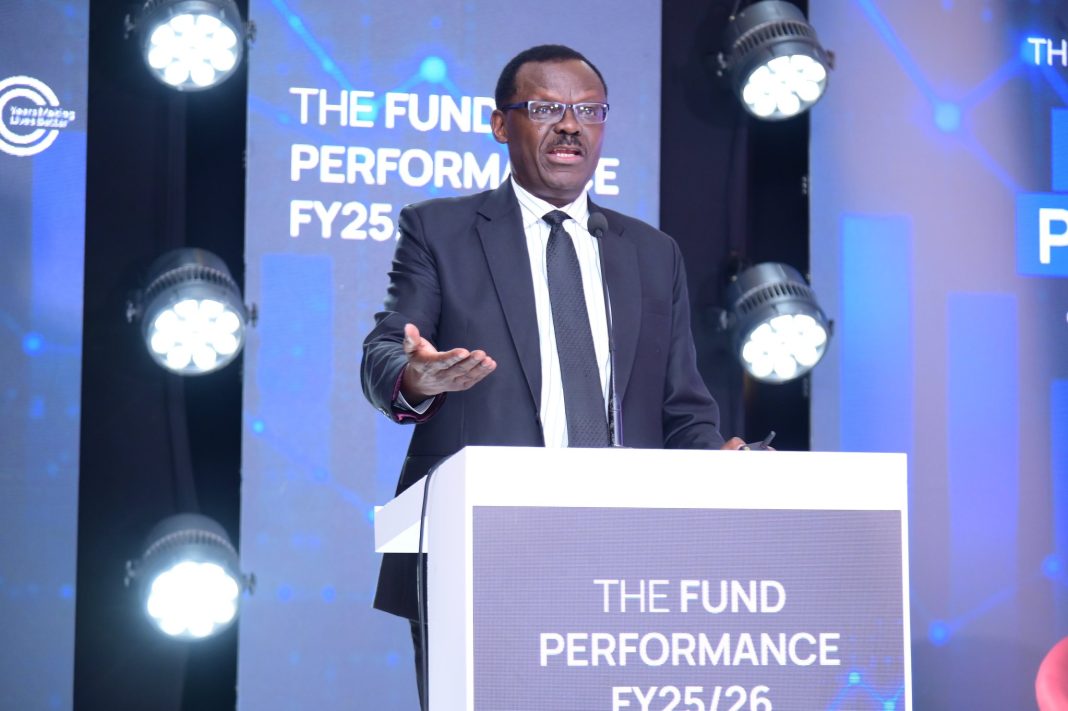
NSSF Managing Director Patrick Ayota announced the results at the Fund’s Annual Media Dialogue in Kampala, saying stronger returns across its investment portfolio had underpinned the record performance.
“We recorded our best performance for the Financial Year ended June 2026, driven by growth in interest income, higher dividend earnings and strong gains across regional equity markets,” Ayota said.
The performance marks a sharp acceleration from the previous financial year, when NSSF’s assets stood at about Shs26 trillion. The Fund has described itself as the largest social security fund in East Africa by value.
Equity gains drive investment income
The biggest increase came from regional equities, where gains jumped 587% to Shs2.62 trillion, from Shs381 billion a year earlier.
Interest income, the Fund’s largest recurring investment-income stream, increased 21% to Shs3.49 trillion, from Shs2.88 trillion.
Dividend income also rose sharply, increasing 55% to Shs369 billion, compared with Shs238.14 billion in the previous year.
Real estate income was the exception, falling 4% during the year, although the asset class still generated Shs16 billion.
Ayota attributed the performance to NSSF’s allocation of members’ savings to stable, long-term investments, alongside investments in high-quality listed companies that pay dividends and continued efforts to control operating costs.
NSSF has historically maintained a diversified investment portfolio, with interest income, property income, dividends and equity investments forming key components of its operating income.
Assets climb to Shs32.8 trillion
The Fund’s stronger investment returns were accompanied by continued growth in member savings.
Member contributions increased 13% to Shs2.42 trillion, from Shs2.13 trillion in FY2024/25.
The combined growth in contributions and investment income lifted NSSF’s Assets Under Management (AUM) by 26% to Shs32.8 trillion, from Shs26 trillion a year earlier.
Ayota said the expansion puts the Fund on a stronger path toward its longer-term target of reaching Shs80 trillion in assets by 2035.
“This consolidates our position as the largest social security fund in East Africa by value and provides a strong platform for growing the Fund to Shs80 trillion by 2035, in line with our Vision 2035 strategic objectives,” he said.
NSSF’s 2035 strategy includes expanding social-security coverage while significantly increasing the value of assets managed by the Fund. Its previous reporting showed assets had reached Shs26 trillion by June 2025, following years of sustained growth.
Voluntary savings gain momentum
The Fund is also expanding beyond mandatory workplace contributions through voluntary savings.
NSSF said more than 135,000 people had enrolled in its Smartlife product by June 2026, accumulating more than Shs180 billion less than two years after its launch.
Smartlife was introduced under regulations allowing NSSF to collect voluntary contributions, with the product designed to reach workers outside the traditional formal employment system.
The expansion is significant for a Fund whose traditional mandate has focused largely on private-sector employees not covered by the government pension scheme.
Costs fall as member payments increase
NSSF said its stronger financial results were accompanied by improvements in operational efficiency.
Administrative costs fell 4.5% to 0.84% of assets, from 0.88% a year earlier, while the cost-to-income ratio declined to 7.7% from 7.9%.
Ayota said the figures showed that the Fund was generating more value while keeping operating costs under control.
“For every shilling we spent, we made over 29 shillings for the member. We are not just preserving, but most importantly, we are creating value for the member,” he said.
At the same time, benefits paid to members increased 17% to Shs1.549 trillion, from Shs1.32 trillion in FY2024/25.
NSSF also reduced the average time taken to process member benefit payments from six days to 4.5 days.
The improvement comes as NSSF continues to position itself as a larger financial institution in Uganda’s domestic capital market, investing members’ savings while paying benefits and returns to contributors. The Fund’s audited 2025 accounts show that member contributions and accumulated member funds form the core of its financial structure.
NSSF’s growing financial footprint
The latest figures underscore the growing scale of NSSF as an institutional investor and a major pool of long-term domestic capital.
From Shs26 trillion in assets a year earlier to Shs32.8 trillion in June 2026, the Fund has added Shs6.8 trillion to assets in one financial year.
The challenge ahead will be sustaining investment returns as the asset base expands, while balancing investment risk, liquidity requirements and the obligation to deliver value to members.
For now, NSSF’s FY2025/26 results show that investment performance, rising contributions and tighter cost management combined to produce its largest annual financial expansion to date.