
President Yoweri Museveni has named Uganda’s crude oil “Pearl Sweet Petroleum”, giving the country’s petroleum a commercial identity as the country moves closer to first oil production in the Lake Albert Basin.
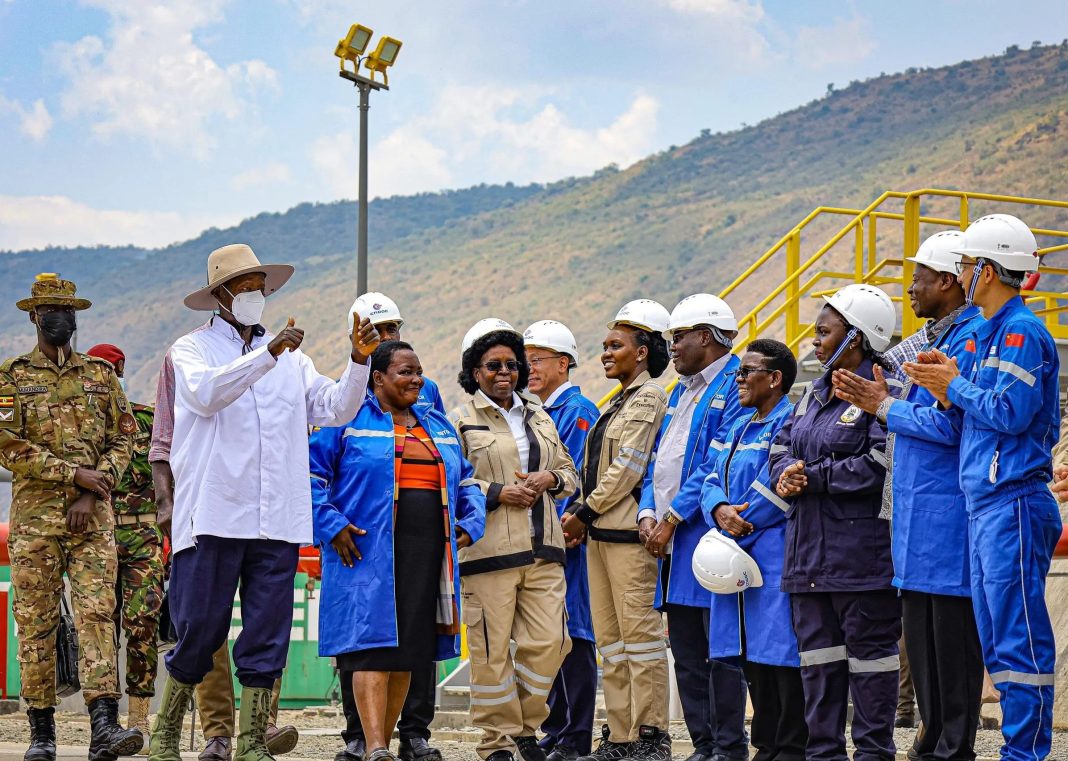
The President unveiled the name on Wednesday, September 2, during a ceremony at the Kingfisher Development Area in Kikuube District, where he also inspected progress towards commercial oil production.
Mr Museveni described the event as the “christening” of Uganda’s oil after years of exploration, investment and efforts to prepare Ugandans to participate in the petroleum industry.
“Whatever you sow is what you reap. Now we are here to christen our baby,” Mr Museveni said.
“These people have told me that we name it ‘Pearl Sweet Petroleum’.”
The President said he had initially questioned the inclusion of the word “sweet” in the name, before officials explained its meaning in petroleum terminology.
“I asked them, does the petroleum contain sugar? Batebe (Irene Batebe, the PS Ministry of Energy) taught me that we call it sweet because it does not contain sulphur, which is hard to extract,” he said.
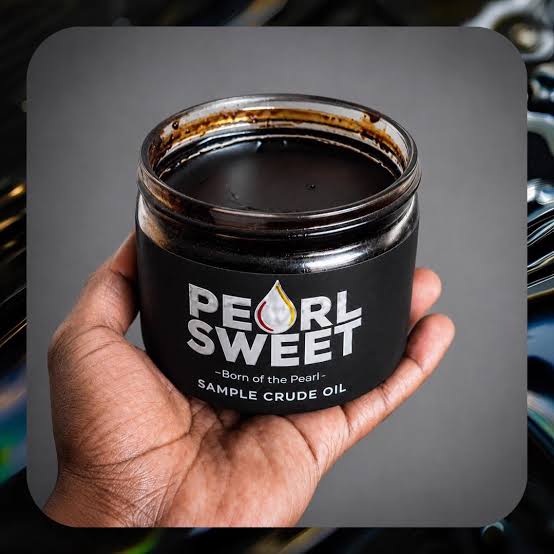
In the petroleum industry, crude oil with relatively low sulphur content is commonly classified as “sweet crude”. Uganda’s crude is also known for its waxy characteristics, which require special handling during transportation.
Mr Museveni expressed optimism that Uganda’s oil exploration story is far from over, saying the resources discovered in the Lake Albert Basin represent only a portion of the country’s potential.
He said about 6.5 billion barrels of oil had been estimated to be in place in the Lake Albert Basin, with the discoveries so far covering only part of the basin.
“This oil is just 40 per cent (of the 6.5 billion) here and at Tilenga of the Lake Albert Basin. We still have 60 per cent of this basin to explore,” he said.
The President also pointed to other areas that could hold petroleum resources, including the Karamoja, Lake Kyoga and Kiboga basins.
The remarks come as Uganda prepares to transition from an exploration and development phase to commercial production after nearly two decades since commercially viable oil deposits were confirmed.
The President also used the occasion to caution against using future oil revenues to finance consumption and imports.
Instead, he said the money generated from petroleum should be invested in infrastructure and other assets that can benefit future generations.
“The money we shall earn, please don’t expect to import more perfume, wines and cars. The money will be used to do durable things,” he said.
“To build hydropower stations, the railway and other durable things that will be there for our grandchildren and great-grandchildren.”
His comments reflect the government’s stated intention to use petroleum revenues to support long-term economic development rather than short-term consumption.
The naming ceremony comes as Uganda advances preparations to start commercial production from the Lake Albert Basin.
The Kingfisher Development Area, operated by CNOOC Uganda Limited, is one of the country’s two major upstream oil projects. The other is the Tilenga project, operated by TotalEnergies.
Kingfisher’s central processing facility is designed to handle approximately 40,000 barrels of crude oil per day, while combined peak production from Kingfisher and Tilenga is expected to reach about 230,000 barrels per day.
Once produced, Uganda’s crude will be transported from the Lake Albert oilfields to Tanzania’s Indian Ocean coast through the East African Crude Oil Pipeline (EACOP) for export.