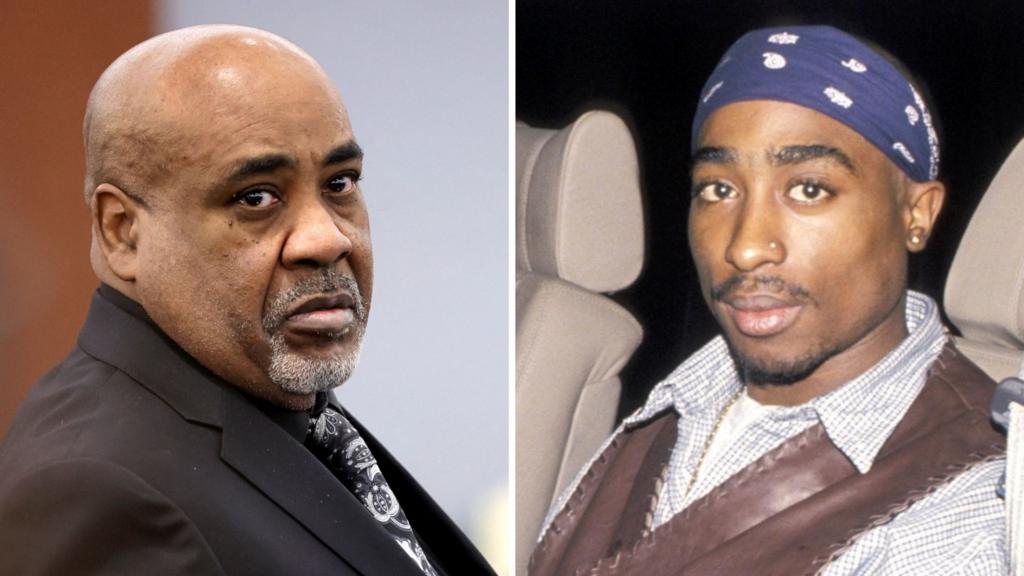

Former gang leader Duane “Keffe D” Davis has been found guilty of orchestrating the 1996 murder of American rapper Tupac Shakur, bringing a conviction in one of the most closely followed cold cases in music history.
A Las Vegas jury on Monday convicted the 63-year-old of one count of murder with a deadly weapon over the drive-by shooting that killed Shakur on September 7, 1996.
Davis, who was dressed in a black suit, remained largely impassive as the verdict was read in court. He later told the judge that he intended to appeal
Shakur’s relatives reacted emotionally, with some holding hands, embracing and crying as the verdict was announced. Fans gathered outside the court also celebrated the decision.
The rapper, who was 25 at the time of his death, was one of the most influential figures in hip-hop. He sold more than 75 million records worldwide and remained a major cultural figure decades after his death.
Prosecutors link Davis to shooting
Prosecutors argued that Davis was responsible for organising the attack even though he was not the person who pulled the trigger
They told the court that Davis, a former leader of the South Side Compton Crips street gang, ordered the shooting and provided the firearm used by his nephew, Orlando Anderson.
Anderson was among the people involved in a fight with Shakur and members of his entourage in Las Vegas earlier on the night of the shooting.
Prosecutors said the confrontation prompted Davis and others to plan a retaliatory attack.
Anderson, who denied involvement in Shakur’s killing, was himself killed in an unrelated shooting in 1998.
The shooting took place amid heightened tensions between rival factions of the US hip-hop scene and longstanding conflicts involving the Bloods and Crips street gangs.
Davis’ own statements central to case
A major part of the prosecution’s case was Davis’ own statements about his involvement
In a 2008 police interview connected to the investigation into the death of fellow rapper Christopher Wallace, better known as The Notorious B.I.G., Davis told investigators that he was inside the white Cadillac from which the shots were fired.
He maintained that he did not fire the weapon.
Davis later discussed his involvement in his 2019 memoir, *Compton Street Legend*, as well as in documentaries, podcasts and media interviews.
Prosecutors argued that those statements provided evidence that Davis knew about and participated in the planning of the killing.
During closing arguments, prosecutor Binu Palal told jurors that Davis had repeatedly presented himself as the person responsible for the attack.
“He’s the shot caller,” Mr Palal told the jury, arguing that Davis’ position as a gang leader made him responsible for the shooting even though he did not personally fire the weapon.
Davis’ defence team, however, argued that his accounts were unreliable.
His lawyer, Michael Sanft, told jurors that Davis had exaggerated or invented stories about his involvement to make money from his memoir and media appearances.
“There’s no proof,” Mr Sanft argued.
The jury rejected the defence and returned a guilty verdict within hours of receiving the case.
Nearly three decades without a conviction
Shakur’s murder remained unsolved for nearly 30 years, becoming one of the most prominent cold cases in the United States and generating numerous theories about who was responsible.
Davis’ eventual arrest and prosecution followed years of public comments about his alleged involvement.
His previous agreement with authorities that had protected him from criminal charges was also central to the case. Prosecutors were eventually allowed to use his 2008 police interview as evidence after a court determined that his subsequent public disclosures had affected the protection he had been granted.
Clark County District Attorney Steven Wolfson said Davis faces a minimum of 40 years in prison. Prosecutors have decided not to pursue additional gang-related sentencing enhancements, partly because of Davis’ age.
Speaking at a news conference a day after the verdict, Mr Wolfson said Davis’ intention to appeal was expected.
“I don’t know a defendant convicted of murder who doesn’t plan to appeal,” he said, adding that prosecutors remained confident in the strength of their case.
The conviction closes a major chapter in the long-running investigation into Shakur’s death, although the circumstances surrounding the killing and the wider conflicts that surrounded the rapper continue to attract public interest nearly three decades later.