
The Government is considering plans to establish a new capital city in Nakasongola as part of a long-term strategy to address Kampala’s growing congestion and urban planning challenges.
The proposal was highlighted by Margaret Muhanga Mugisa, Minister of State for Lands, Housing and Urban Development in charge of Urban Development, while appearing before a parliamentary committee on urban development. Government records confirm Muhanga Mugisa’s current portfolio in the Ministry of Lands, Housing and Urban Development.
Muhanga said relocating key capital functions away from Kampala could provide government with an opportunity to develop a modern city from the ground up, rather than attempting to retrofit infrastructure into an increasingly congested urban environment.
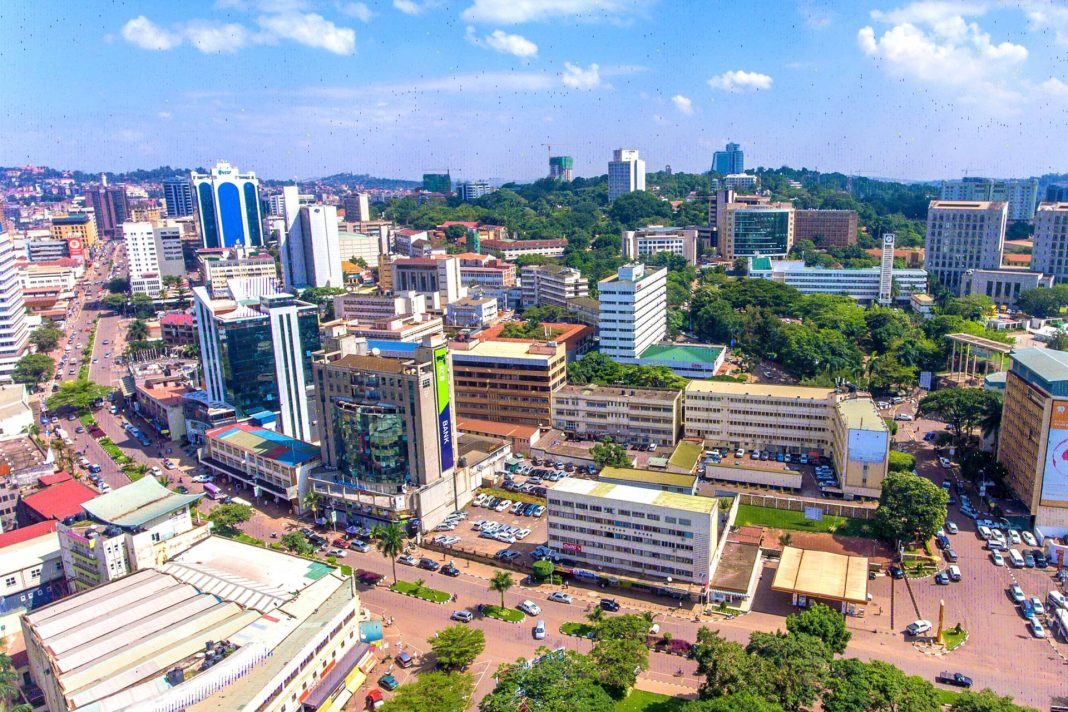
She pointed to Kampala’s persistent traffic congestion, inadequate drainage, unplanned settlements and pressure on existing infrastructure as some of the challenges limiting the city’s ability to accommodate future growth.
According to the minister, Nakasongola, located in central Uganda, presents an opportunity because of its relatively large expanses of available land that could support planned urban development.
The proposed city could be designed around modern urban planning principles, with space for government offices, residential areas, commercial centres, transport infrastructure and high-rise developments.
Muhanga’s proposal is not entirely new. In July 2026, she publicly argued that Uganda should consider relocating its capital from Kampala to ease congestion and promote more balanced regional development.
Learning from Uganda’s urban history
The proposal also raises questions about how Uganda’s major cities were originally planned.
During the colonial period, urban centres were developed with different economic and administrative functions. Jinja, for example, grew into a major industrial centre, while Entebbe became an important administrative and aviation hub.
Kampala, meanwhile, developed into the country’s principal commercial and political centre following independence.
However, decades of population growth and expansion have placed enormous pressure on the capital. Commercial activity, government institutions, residential settlements and transport networks have increasingly converged within a relatively constrained urban area.
The result has been a city where major infrastructure projects often have to work around an already established urban landscape.
A chance to plan from scratch
Muhanga’s argument is that a new capital would give planners a rare opportunity to design an urban centre before large-scale development takes place.
Rather than dealing with congestion after it occurs, planners could reserve land for roads, drainage systems, public transport, government institutions, utilities, residential neighbourhoods and commercial districts from the beginning.
The approach could also allow Uganda to separate some of its political and administrative functions from Kampala’s commercial role.
However, establishing a new capital would be a major undertaking requiring substantial financial resources, detailed feasibility studies, land planning, environmental assessments and a clear legal and administrative framework.
It would also require the Government to determine which institutions would relocate and how the transition would be financed without undermining investment in Kampala and other existing cities.
A retired official from the Ministry of Lands, Housing and Urban Development, who spoke on condition of anonymity, said Uganda’s urban planning challenges are partly linked to successive administrations adopting different approaches without sufficiently building on earlier planning frameworks.
The official argued that any new capital project would therefore need a long-term master plan protected from short-term political changes.
Kampala’s future
The proposal does not necessarily mean Kampala would cease to exist as Uganda’s largest commercial centre. Instead, it could evolve into a primarily commercial and financial city while a purpose-built urban centre takes on more administrative functions.
Uganda’s Ministry of Lands, Housing and Urban Development is responsible for national policy direction and coordination on urban development, including promoting orderly and planned urban growth.
The Government’s new cabinet, sworn in during 2026, lists Judith Nabakooba as Minister for Lands, Housing and Urban Development, with Persis Princess Namuganza responsible for Housing, Margaret Muhanga Mugisa for Urban Development and Harriet Ntabazi for Lands.
For now, the proposed Nakasongola capital remains a policy proposal rather than an established city. Its realization would depend on further government planning, feasibility studies and decisions on financing, land acquisition, infrastructure and the eventual relocation of national institutions.
If pursued, however, the proposal could mark one of the most significant shifts in Uganda’s urban development strategy since independence.