
When Aliko Dangote began building his giant refinery on the outskirts of Lagos, the project was initially expected to cost about $9 billion. By the time construction was nearing completion, the estimated cost had risen to roughly $19 billion, turning the project into one of Africa’s largest private industrial investments.
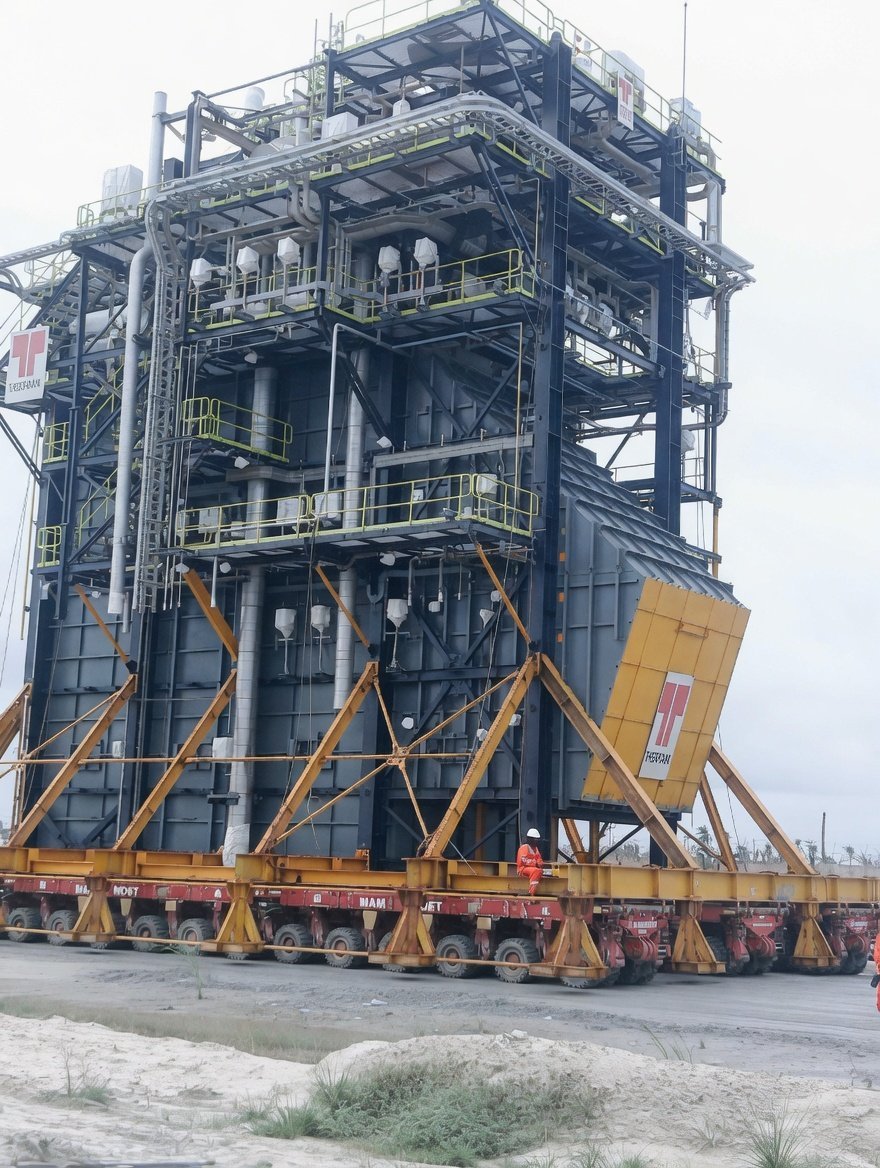
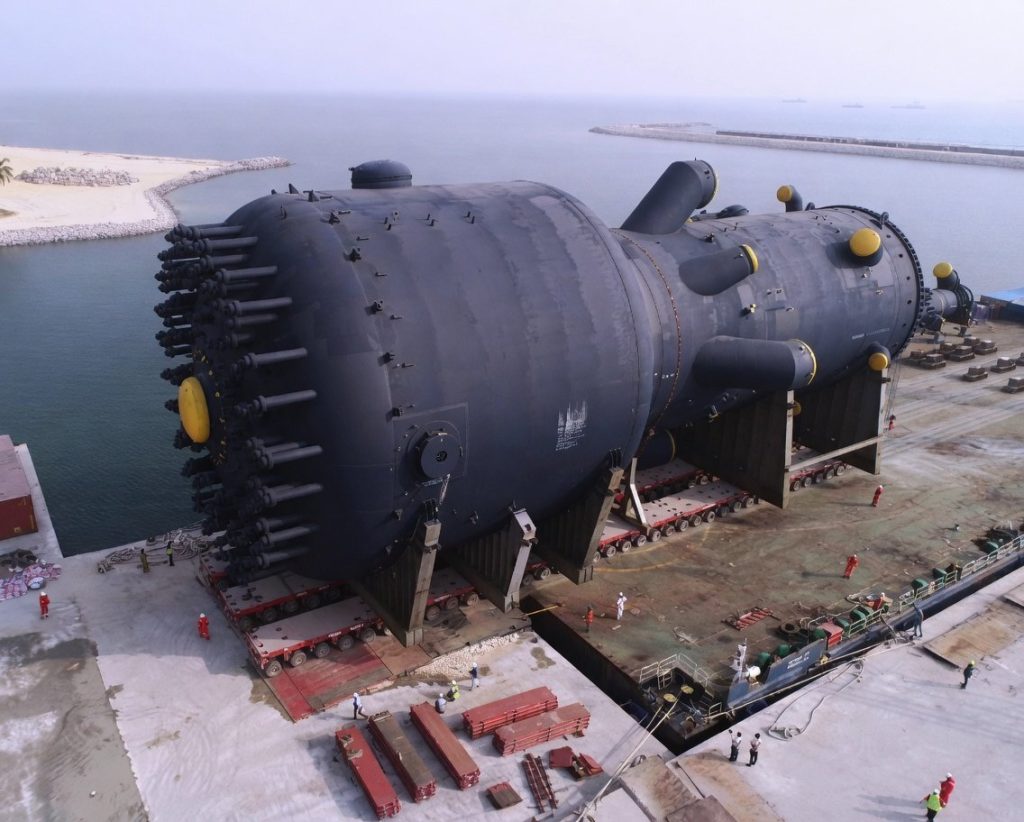
The scale of the bet is visible in the machinery that dominates the Lekki site: enormous reactors, processing units, storage facilities, pipelines and marine infrastructure assembled to create a refinery capable of processing 650,000 barrels of crude oil a day.
Commissioned in May 2023, the Dangote Petroleum Refinery began producing diesel and aviation fuel in January 2024 before adding gasoline production later that year. Its original 650,000-barrel-a-day design made it the world’s largest single-train refinery.
From crude exporter to refined-fuel supplier
For decades, Nigeria exported large volumes of crude while importing much of the petroleum products consumed at home. The contradiction was particularly costly because the country is one of Africa’s major oil producers but had struggled with ageing and poorly performing state-owned refineries.
Dangote’s project was designed to change that equation by processing crude locally and supplying gasoline, diesel and aviation fuel to the Nigerian market while exporting surplus production.
The refinery’s impact is already visible. The Economist Intelligence Unit said in 2026 that the plant’s operational ramp-up had significantly reduced Nigeria’s dependence on imported refined products, with the refinery supplying nearly 80% of domestic petrol demand in April 2026.
The facility has also moved beyond Nigeria. Dangote says its refined products have been exported to markets including Ghana, Cameroon, Angola and South Africa, while jet fuel has reached European markets.
A megaproject built around infrastructure
The refinery is more than a processing plant.
Its industrial complex incorporates storage, pipelines, power generation, marine facilities and a deepwater jetty designed to handle large vessels. The integrated infrastructure allows crude to enter the complex and refined products to move toward domestic and international markets.
That infrastructure was necessary because the project was being built in an environment where large-scale industrial logistics remain difficult.
The project also faced years of delays and rising costs. Reuters reported in 2021 that the expected cost had climbed to $19 billion from earlier estimates of $12 billion to $14 billion, citing delays including the impact of COVID-19 and difficulties obtaining materials.
The financial risk
The refinery’s economics were tested before the first barrel of commercial production was sold.
At one stage, the project carried billions of dollars in debt, while Nigeria’s crude production problems created another challenge: securing enough competitively priced crude for the plant.
That issue has not disappeared. Reuters reported in August 2026 that roughly 30% to 40% of the refinery’s crude was being imported, highlighting the continuing challenge of obtaining sufficient Nigerian crude at competitive prices.
That makes the refinery’s future performance dependent not only on its technical capacity but also on crude supply, logistics, domestic fuel demand and international refining margins.
From Nigerian project to regional energy hub
The refinery’s influence is increasingly extending beyond Nigeria.
Its ability to produce fuels to international specifications has allowed it to compete in overseas markets. Dangote says its products are produced to Euro V standards, while its current operations include gasoline, diesel and jet fuel.
The company is now pursuing an even larger ambition. The refinery has recently demonstrated production above its original 650,000-barrel-per-day design capacity, and Dangote plans to expand the facility toward 1.4 million barrels per day.
That expansion would fundamentally alter the scale of the project and potentially increase its role as a supplier to African and global fuel markets.
A bet on African industrial capacity
The significance of the refinery therefore goes beyond its physical size.
It represents an attempt to move more of the oil value chain—from crude extraction to refining and petrochemicals—closer to where the resources are produced and consumed.
For Nigeria, the immediate economic stakes include reduced fuel-import requirements, potential foreign-exchange savings and increased exports of refined products. For West Africa, the refinery provides a large new source of petroleum products at a time when several countries remain dependent on imports.
But the $19 billion investment is not without continuing risks. Crude supply constraints, financing costs, currency movements and volatile global fuel markets will determine how efficiently the enormous facility can translate capacity into sustained returns.
For Dangote, however, the central wager remains clear: Africa does not have to remain merely a supplier of raw commodities. It can build the industrial infrastructure to process them at home and compete in global markets.