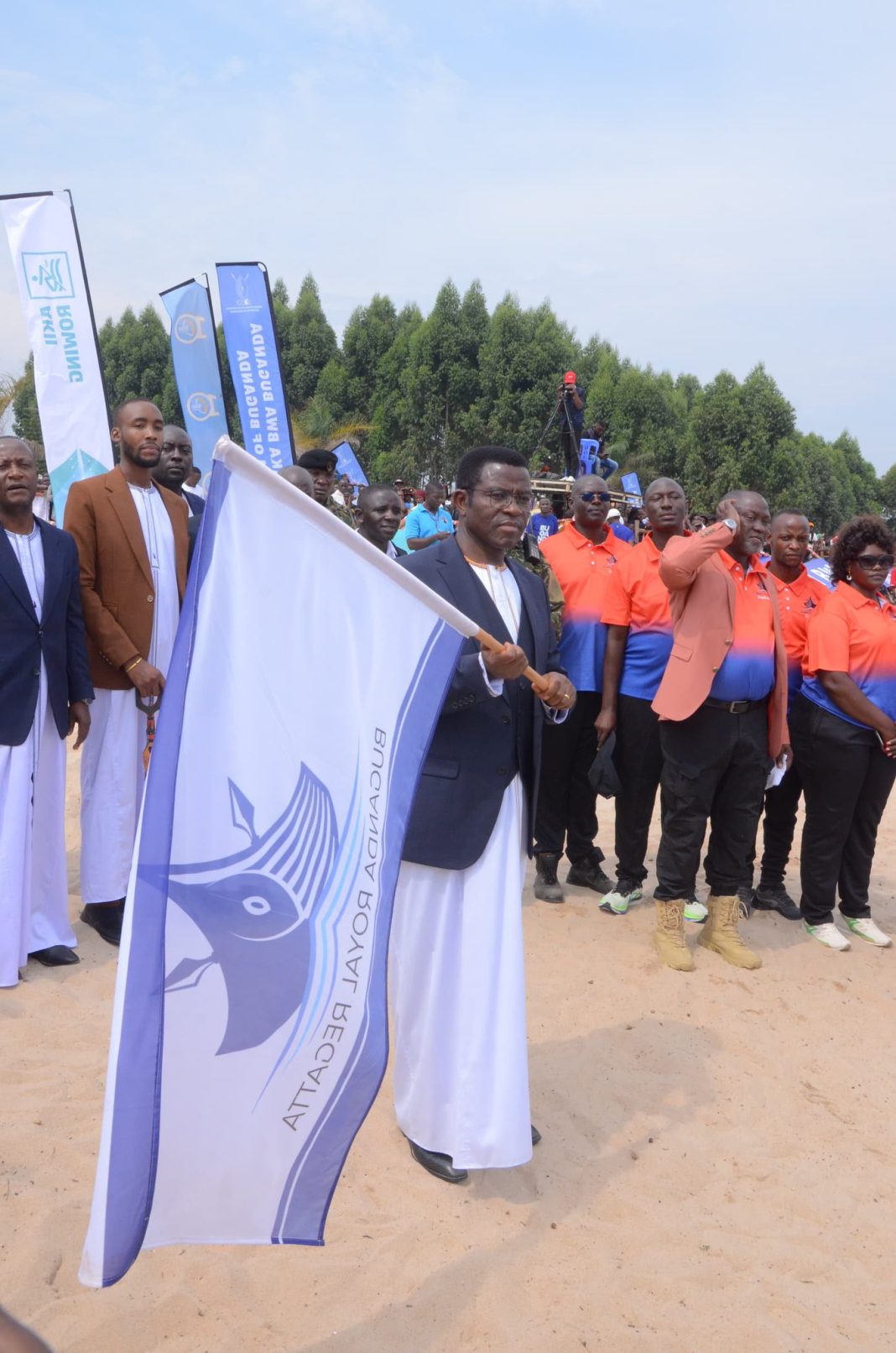

Buganda Kingdom has revived its traditional boat races, known as Amaato ga Kabaka—the Kabaka’s boats—as part of celebrations marking the 33rd anniversary of the coronation of Kabaka Ronald Muwenda Mutebi II.
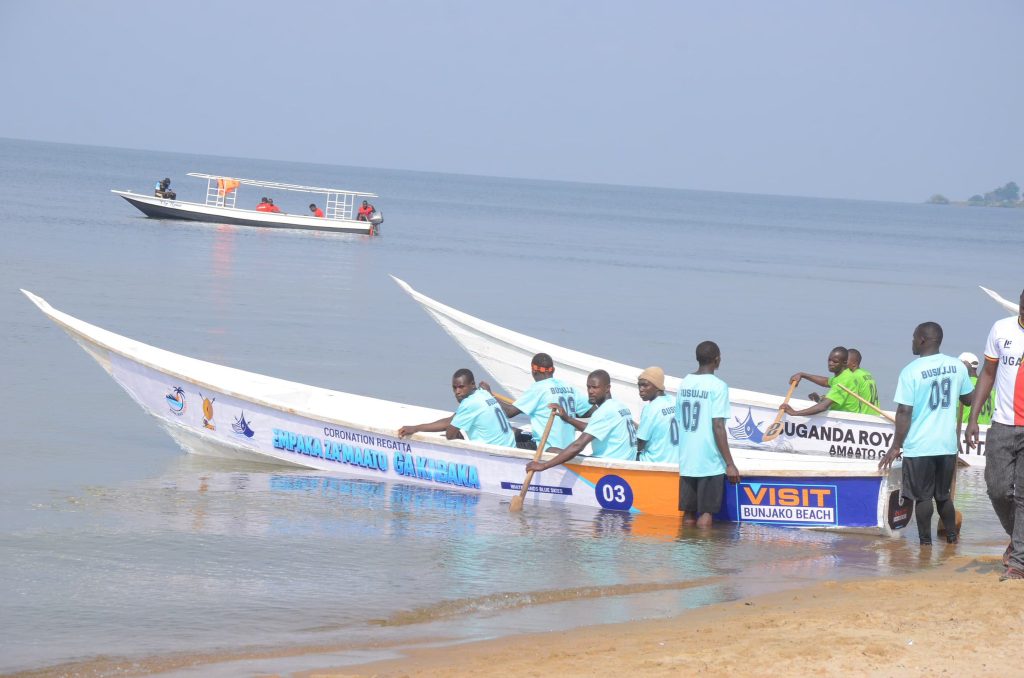
The regatta, organised by the Buganda Kingdom’s Ministry of Youth, Sports and Talent Development, was held at Bunjako White Beach in Mawokota County, drawing participants from counties across the kingdom and turning the shores of Lake Victoria into a showcase of Buganda’s maritime heritage.
The event was presided over by the Katikkiro of Buganda, Charles Peter Mayiga, who described water sports as an important part of the kingdom’s history and cultural identity.
“Water sports are very old here in Buganda. They are not something new,” Mayiga said, recalling Buganda’s historic relationship with Lake Victoria, locally known as Nalubaale.
According to Mayiga, the kingdom’s traditional connection to the lake stretches back centuries. He said Kabaka Muteesa I maintained a large fleet of boats, which were used to transport fighters across the lake.
“Kabaka Muteesa I had more than 10,000 boats carrying fighters on Lake Nalubaale,” he said.
The Katikkiro also pointed to the recreational role of the lake in the reign of Kabaka Mwanga II, saying the monarch would sail to the islands of Bulingogwa to relax, where boat races were organised as part of the entertainment.
The revival of the races, he said, therefore goes beyond sporting competition, offering an opportunity to reconnect modern generations with a largely forgotten aspect of Buganda’s royal heritage.
“Organising water sports is a great opportunity,” Mayiga said, noting that such activities could benefit competitors as well as communities involved in businesses around the lake.
Reviving a royal tradition
The traditional boats, Amaato ga Kabaka, hold a distinctive place in Buganda’s history. They were associated with the Kabaka’s court and were historically used to transport the monarch, royal officials and forces across Lake Victoria and between the numerous islands connected to the kingdom.
Beyond their practical use, the boats represent traditional knowledge in boat construction, Buganda’s historic maritime strength and the kingdom’s enduring cultural relationship with the lake.
Their revival through organised races provides a platform for preserving that knowledge while introducing younger generations to a sporting tradition rooted in the kingdom’s royal history.
Buganda’s Minister of Sports, Robert Serwanga, thanked participants and supporters from across the kingdom, saying the competition would now become an annual event.
“I greatly thank the people of the Kabaka who have come from different counties and dedicated themselves to supporting us so that we can promote this sport,” Serwanga said.
“We shall hold one competition every year because this is a powerful sport here in Buganda.”
Serwanga said the boats used in the competition were traditionally made from mkebu wood, a durable timber known for its resistance to rotting and traditionally found in areas around the lake.
The choice of traditional materials added another layer of cultural significance to the competition, linking the sporting event with indigenous knowledge and craftsmanship.
Youth at the centre of heritage revival
In a message delivered by Omutaka Nnamwama Augustine Kizito Mutumba, chairperson of the Council of Clan Heads in Buganda, Omutaka Gabunga Mubiru Zziikwa, head of the Mmamba Clan, commended the youth for their commitment to the kingdom.
He urged them to maintain their interest in Buganda’s traditions and play an active role in safeguarding its cultural heritage.
The emphasis on young people reflects a broader challenge facing traditional cultural practices: ensuring that knowledge associated with crafts, sports and ceremonies is passed from one generation to another rather than becoming confined to historical accounts.
For Buganda, the boat races offer a practical way of making that heritage part of contemporary community life.
From heritage to economic opportunity
The organisers also see potential beyond culture and sport.
Engineer Ben Misagga, chairperson of the organising committee, thanked the kingdom for entrusting his team with the competition and argued that the races could become an economic platform for communities around the lake.
He said the event should not be viewed merely as entertainment, but as an opportunity to generate income for individuals, communities and the kingdom through activities associated with water-based tourism and recreation.
The prospect is particularly significant for communities whose livelihoods are already linked to Lake Victoria, where fishing, transport, hospitality and other businesses form an important part of local economies.
Mawokota takes the crown
Mawokota emerged as the overall winner of the competition, taking several prizes, while Buweekula finished second. Other participating counties followed in the final standings.
The competition combined sport, history and cultural expression, transforming the traditional boats from symbols of Buganda’s past into vessels for a new generation.
The revival of Amaato ga Kabaka thus represents more than the return of an old sporting tradition. It is an attempt by Buganda to keep its maritime heritage alive, strengthen youth participation in cultural activities and explore new economic possibilities around one of the kingdom’s most enduring geographical features—Lake Victoria.