
Shall We Tell the President?
Mr President, shall we tell you?
Now, 40 years after your Government came to power, Uganda is confronted with a social problem that can no longer be treated as an unfortunate feature of urban life: the growing number of children living and working on the streets.
When the National Resistance Movement (NRM) came to power, Uganda was emerging from years of political instability and armed conflict. Kampala and other urban centers carried the scars of a country that had endured prolonged insecurity. Families had been displaced, communities had been broken apart and thousands of children had grown up amid uncertainty.
That historical explanation, however, cannot adequately explain the street-child problem we see today.
The conflict associated with Joseph Kony and the Lord’s Resistance Army (LRA), was largely removed from Northern Uganda after the collapse of the Juba peace process and the LRA’s withdrawal from Uganda in 2006. Yet, almost two decades later, children continue to arrive on the streets of Kampala and other urban centers.
So, the question must be asked: what is pushing Uganda’s children onto the streets today?
And, more importantly, what happens to a country when a generation of children grows up without stable homes, education, protection or meaningful economic opportunities?
The numbers should concern us. The scale of the problem is difficult to establish precisely, and that, in itself, is part of the problem.
A 2017 enumeration undertaken by the Ministry of Gender, Labour and Social Development and Retrak estimated that more than 15,000 children were living and working on the streets of Kampala, Jinja, Iganga and Mbale. A 2024 review of the same evidence noted that Kampala alone accounted for about 4,071 of those children.
More recently, a Parliamentary budget committee report cited an estimate of approximately 25,000 street children in the Kampala metropolitan area, warning that the growing population could contribute to rising urban crime.
But perhaps the most worrying matter is not the statistic itself. It is that: the Government does not appear to have a sufficient solution also presented by an unreliable database.
In 2023, Parliament questioned officials from the Ministry of Gender over the proliferation of street children and raised concerns about the ministry’s failure to maintain an adequate database. The Auditor General had found that, although the ministry estimated about 1,000 children in one programme, only 292 could be accounted for.
If we cannot accurately count vulnerable children, how can we effectively plan for them?
These children are victims before they are a security concern. This is where the national conversation must be handled carefully. Street-connected children should not automatically be described as criminals, troublemakers or future insurgents. Most are children who have been pushed into circumstances they did not create.
Research and field reports point to poverty, family breakdown, domestic violence, neglect and trafficking among the factors driving children onto the streets. A 2024 investigation by one of the dailies found that children from Karamoja, particularly Napak, feature prominently among those brought to Kampala, with some being trafficked or sent with the consent of struggling families.
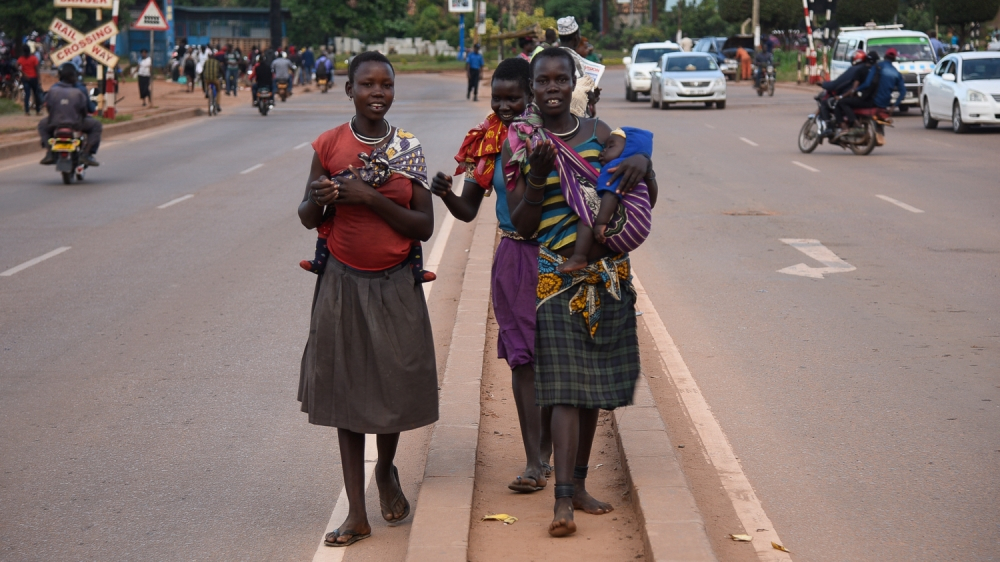
UNICEF has similarly reported that children from Napak, and the wider Karamoja region, have repeatedly been found among those rescued from Kampala streets, with trafficking and the search for livelihoods identified as important factors. During one operation associated with the Non-Aligned Movement conferences, about 1,000 children were rounded up, 900 of whom were reportedly from Napak.
This means the problem cannot be solved simply by removing children from Kampala’s streets and transporting them elsewhere. If the poverty, family breakdown, trafficking and lack of opportunity that pushed them onto the streets remain untouched, the streets will simply produce another generation of vulnerable children.
Mr. President: where does national security enter the picture? This is where I believe the security establishment needs to look beyond the immediate humanitarian crisis.
A child who spends years on the street without education, stable family support or economic opportunity is being denied the foundations needed to become a productive citizen. That child eventually becomes a young adult. And if thousands of young people enter adulthood having experienced exclusion, poverty, violence and institutional neglect, the consequences can extend far beyond child welfare.
That does not mean street children are destined to become insurgents. Rather, a large population of socially-excluded and economically marginalized young people creates conditions in which criminal networks, political opportunists, traffickers and other organized actors can potentially recruit and manipulate vulnerable people.
Uganda’s history should teach us that national security is not created only by soldiers, police officers and intelligence agencies. Security begins much earlier in the family, in schools, in communities and in the economic opportunities available to young people.
A country that allows a large population of children to grow up disconnected from these institutions risks paying a much higher price later. The exploitation of children is an even bigger concern.
There is another uncomfortable dimension that deserves greater investigation.
Some children on the streets are not there entirely by choice. There is evidence of organized exploitation and trafficking, including children being brought from poor communities to urban areas to beg.
In April 2025, the Kampala City Central Authority (KCCA) reported rescuing 157 children and arresting 18 adults in an operation targeting alleged exploitation of children for street begging. KCCA said many of the children had been trafficked from Eastern Uganda, while others came from different parts of the country.
This should force the Government to ask a different question: Who benefits from keeping children on the streets?
If children are being transported from rural districts into Kampala to generate income through begging, then Uganda is not dealing merely with homelessness. It is dealing with a child-protection, trafficking and organized exploitation problem.
KCCA’s Child Protection Ordinance already prohibits practices that encourage children to remain on the streets and provides mechanisms for protecting vulnerable children. The challenge is enforcement and, more importantly, addressing the conditions that make exploitation profitable.
And then there is the question of evictions. I raise another issue: the use of vulnerable people, including children, during disputes over land and property.
Uganda’s land conflicts can become extremely bitter. In May 2026, land-related complaints dominated discussions at the Wakiso High Court Open Day, with Court officials reporting 5,473 cases registered by the circuit, of which 4,151 remained pending.
Children can become particularly vulnerable during such disputes. There have already been documented cases in which children have been caught in the middle of eviction and land conflicts. In Lira, for example, a mother and her six children were at the center of a disputed land eviction; while in Luwero four schoolchildren became embroiled in a land dispute that reached the High Court.
Therefore, the concern raised in this column deserves investigation: are vulnerable people sometimes being mobilized or placed at the center of confrontations during evictions and land disputes?
That allegation should not simply be repeated as fact without evidence. It should instead be investigated by the Police, Courts, Local Governments and child-protection agencies. If children are being deliberately used as human shields, political tools or instruments of confrontation during property disputes, that would constitute a serious abuse of their vulnerability.
Mr. President, this requires a national response. The temptation will always be to conduct another street operation, round -up children, put them on trucks and transport them back to their districts.
We have done this before. KCCA and its partners have repeatedly undertaken operations to remove children from Kampala streets for rehabilitation and re-integration. But the recurrence of the problem tells us something important:
Removal is not the same as resolution.
Government needs a permanent national programme that identifies every street-connected child, establishes where they came from, traces their families where appropriate, investigates trafficking networks and ensures that children return to safe homes and schools.
It also requires investment in the communities from which these children originate.
If a family in Karamoja is so economically desperate that sending a child to Kampala appears to be the only available option, then the solution cannot be limited to Kampala. It must include livelihoods, education, food security, social protection and stronger local child-protection systems.
Mr. President: look at this as a 10-year national-security question Uganda has spent decades investing in conventional security; that is necessary. But there is another form of security that deserves equal attention: human security. A child who is protected today is less likely to become a vulnerable adult tomorrow.
A child who remains in school has a better chance of entering the economy.
A child whose family receives support during a crisis is less likely to be pushed onto the streets.
And a child who grows up believing that the State sees, protects and values them is more likely to see the State as an institution worth defending.
Uganda should therefore stop asking only how to remove street children from Kampala. We should be asking how to remove the conditions that produce street children in the first place.
Because today’s street child is not Uganda’s enemy. Today’s street child is Uganda’s responsibility. And if we fail that responsibility for long enough, the consequences may eventually become much larger than a child-welfare crisis.
Shall we tell the President, before it becomes too late?