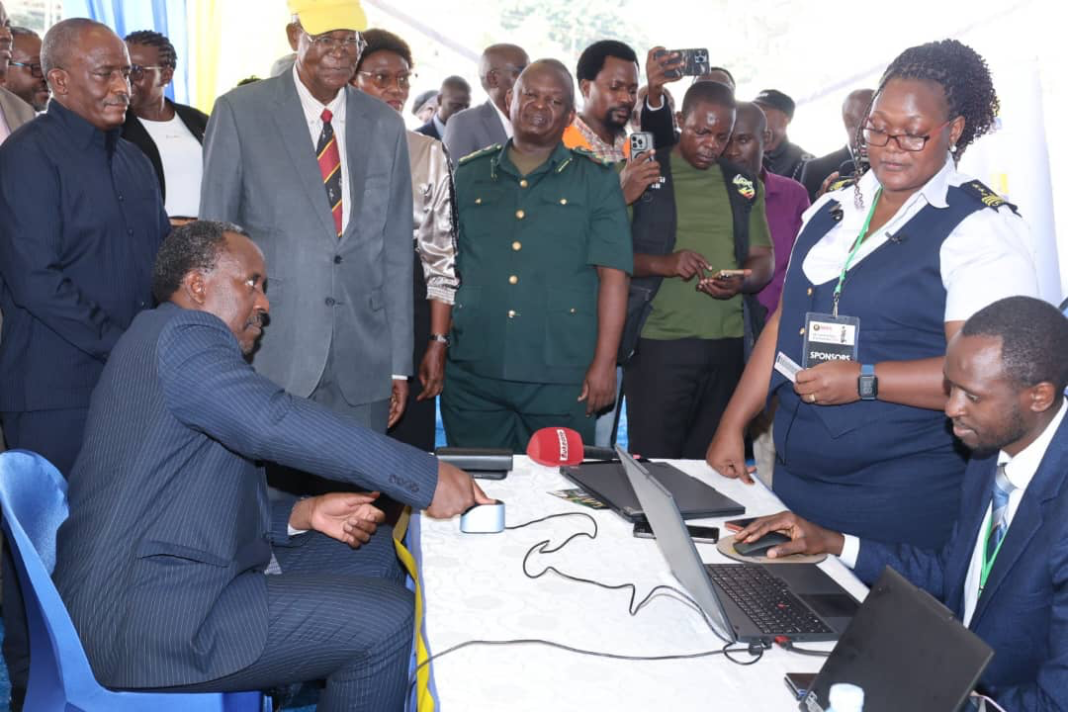

The tax authority says linking taxpayer records to NIRA’s national identification database will curb identity misuse, strengthen verification and improve revenue collection.
The Uganda Revenue Authority (URA) is moving to link taxpayer records to the National Identification and Registration Authority (NIRA) database, a reform Commissioner General John Musinguzi Rujoki says will improve taxpayer identification and help curb tax fraud.
Musinguzi said the transition from Tax Identification Numbers (TINs) to National Identification Numbers (NINs) will allow URA to accurately match taxpayers with their identities and reduce cases of people using other individuals’ tax details.
He was speaking on Tuesday at the opening of NIRA’s three-day My Identity Expo and Symposium 2026, where Internal Affairs Minister Ephraim Kamuntu launched the TIN-to-NIN transition.
Musinguzi said NIRA’s national identification register provides a broader and more reliable foundation for government planning and service delivery.
“This National Identification register is the base where we build our country. If this base is accurate and reliable, it helps government to plan better for services and development for its people basing on a better foundation,” Musinguzi said.
Tackling misuse of taxpayers’ TINs
Musinguzi said the integration will address cases in which taxpayers’ TINs are allegedly used by clearing agents to import goods without their knowledge.
He said such misuse can leave innocent taxpayers facing questions from URA over transactions they did not initiate.
“Most challenges have been faced because some clearing agents have been using people’s TINs to bring in their products without your notice, which makes URA follow you,” he said.
The commissioner general also said the current system can allow individuals to create multiple tax identities using other people’s details.
“With the current system, someone can open up 10 TINs using other people’s numbers. This will launch us into a new phase that will help us collect taxes properly,” he said.
Biometric verification planned
Musinguzi said the new system will eventually introduce biometric verification, enabling URA to directly match a taxpayer with their tax profile.
“We shall call you to put your thumb on the scanner to confirm you and your tax profile and nobody will ever use your TIN again,” he said.
The system is expected to make taxpayer identification more secure by linking an individual’s tax records to a single national identity.
NIRA database has 36 million records
According to Musinguzi, NIRA has about 36 million people in its database, compared with approximately five million taxpayers registered by URA.
“NIRA’s register has 36 million in their database, for us as URA we have only 5 million. Their data is bigger than ours. By combining, we shall be helping each other,” he said.
The integration will also enable the two agencies to share information, including identifying people who may need national identification documents and individuals who have not yet obtained TINs.
URA plans to roll out the transition on a large scale, with the exercise expected to take about one year as the authority updates its taxpayer register.
Push for higher domestic revenue
The reform comes as Uganda seeks to increase domestic revenue mobilisation.
Musinguzi said Uganda’s tax-to-GDP ratio remains around 14 percent, below the level he said is needed to support the country’s development ambitions.
“We’ve been collecting very little tax all along, 14% of our GDP. That percentage can’t grow the country,” he said.
He added that President Yoweri Museveni has tasked URA with increasing the tax-to-GDP ratio to 20 percent by 2030.
Kamuntu said linking taxation to a single national identity would make it more difficult for individuals to conceal their identities from tax authorities.
“Tax is the base of the country’s economic growth, so this reform whereby someone cannot hide since the ID is one, it is going to help URA so much to ease their work of collecting taxes,” he said.
The My Identity Expo and Symposium 2026 is running for three days, with NIRA showcasing the role of national identification in improving access to public and private services.
The TIN-to-NIN transition is part of a wider government effort to integrate national databases and strengthen identity verification across public services.