
Uganda and China are exploring new opportunities to expand trade, investment and agricultural cooperation, with Finance Minister Henry Musasizi calling for stronger Chinese support for Uganda’s industrialisation and climate-resilience efforts.
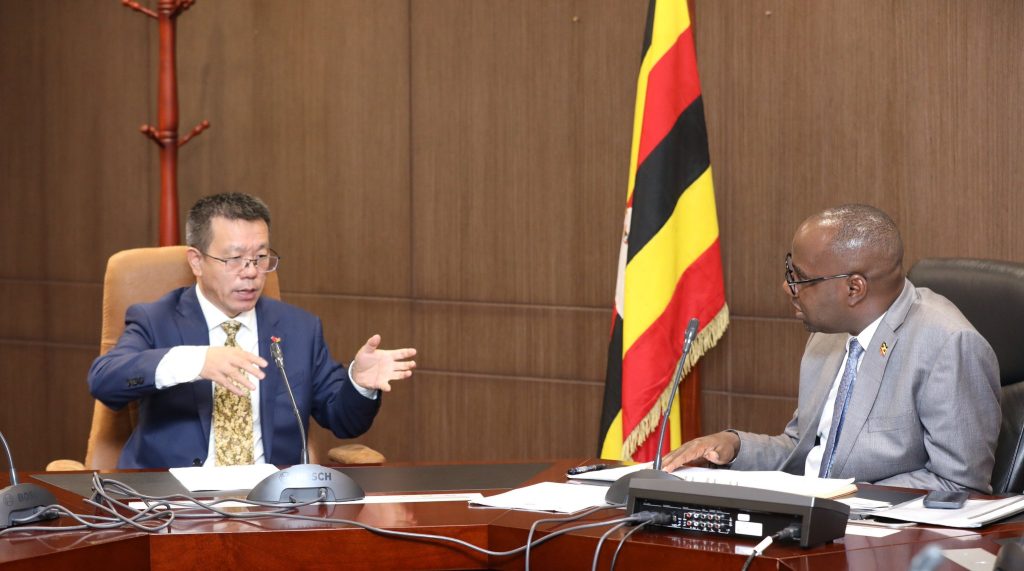
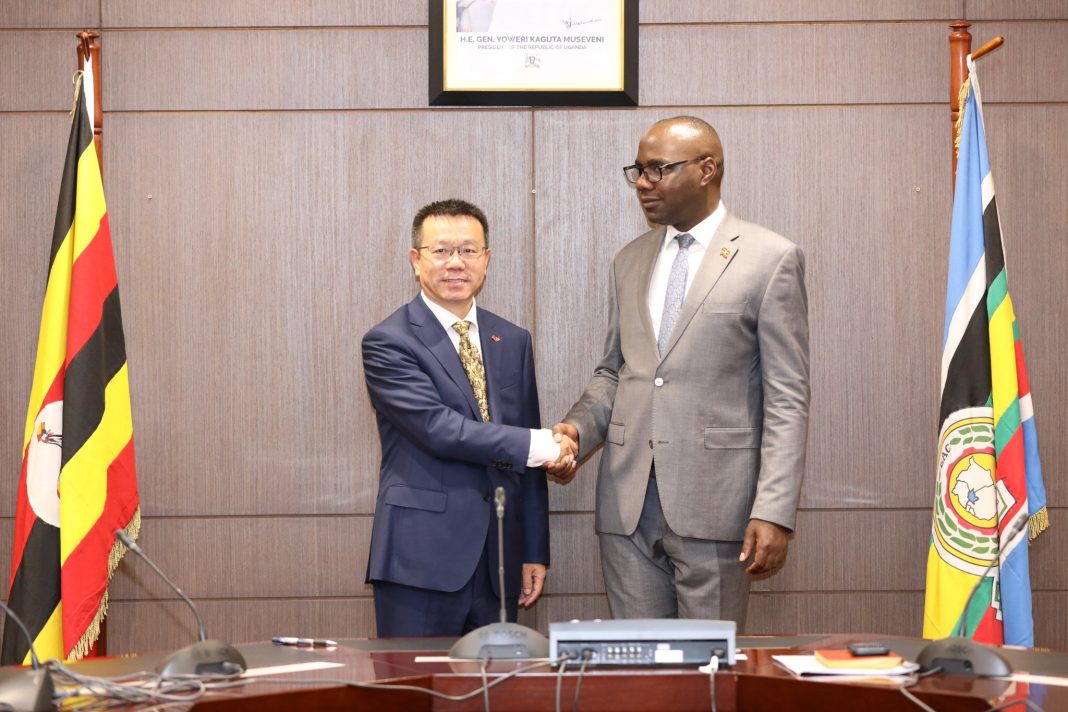
Musasizi held talks with Chinese Ambassador to Uganda Wu Guangrong at the Ministry of Finance, Planning and Economic Development, where the two sides discussed trade, investment and measures to strengthen bilateral economic relations.
The meeting comes as Uganda seeks to take greater advantage of China’s expanded tariff-free market access for African exports. China began implementing 100% tariff-free treatment for products from African countries with which it has diplomatic relations from May 1, 2026.
Uganda seeks Chinese investment in agro-industrialisation
Musasizi thanked China for attracting Chinese investors to Uganda and supporting the country’s economic development priorities.
He said Chinese cooperation could play an important role in Uganda’s Tenfold Growth Strategy, particularly through support for the country’s Agro-Industrialisation, Tourism, Minerals and Manufacturing (ATMS) priorities and their associated enablers.
The minister also welcomed the proposal to establish the China-Uganda Agricultural Cooperation Industrial Park in Luweero, saying the project could strengthen commercial agriculture, agro-processing, technology transfer and export-oriented manufacturing.
The proposed industrial park builds on an existing China-Uganda agricultural cooperation initiative in Luweero, which Ugandan and Chinese officials have identified as a platform for commercial farming, agro-processing and industrial development.
Musasizi also asked China to support financing for irrigation as Uganda seeks to reduce the vulnerability of agriculture to increasingly unpredictable weather patterns and climate change.
Zero-tariff access creates export opportunity
Ambassador Wu said China was encouraging capable and reputable Chinese companies to invest and do business in Uganda, while highlighting the growing contribution of Chinese enterprises to the Buy Uganda, Build Uganda (BUBU) initiative.
He also urged Uganda to make greater use of China’s zero-tariff policy by increasing the volume and range of goods it exports to the Chinese market.
The opportunity comes against a sharp rise in bilateral trade. China-Uganda trade reached $2.1 billion in 2025, a 43.5% increase from the previous year, according to figures cited by Chinese officials. Uganda’s coffee exports to China alone reached $62 million in 2025.
Uganda has already begun expanding its agricultural exports. In May, 104 tonnes of canned pineapples from Luweero were shipped to China in the first recorded export of processed pineapples under the expanded zero-tariff arrangement.
Ugandan dried chilli was also exported to China for the first time in January, while sorghum, chia seeds, avocados, pineapples, mangoes and bananas are among products being considered for greater market access.
Focus shifts from trade to value addition
The discussions point to a broader shift in Uganda-China economic relations—from simply attracting imports and investment toward expanding Ugandan production, processing and exports.
Uganda’s Ministry of Trade has previously highlighted the imbalance in bilateral trade, with Chinese exports to Uganda historically far exceeding Uganda’s exports to China. The government has therefore promoted value addition and greater utilisation of preferential market access as ways of increasing Ugandan exports.
Ambassador Wu said China was also ready to encourage investment and industrial cooperation that supports local production and value addition. Chinese officials have similarly called for stronger Ugandan exports and business matchmaking to take advantage of the tariff-free arrangement.
Musasizi further acknowledged Chinese support to Uganda’s health sector and infrastructure, as well as relief assistance to communities in the Karamoja sub-region affected by drought.
The latest discussions add to a series of high-level Uganda-China engagements in recent months, as both governments seek to translate their longstanding diplomatic relationship into greater trade, investment and industrial cooperation.