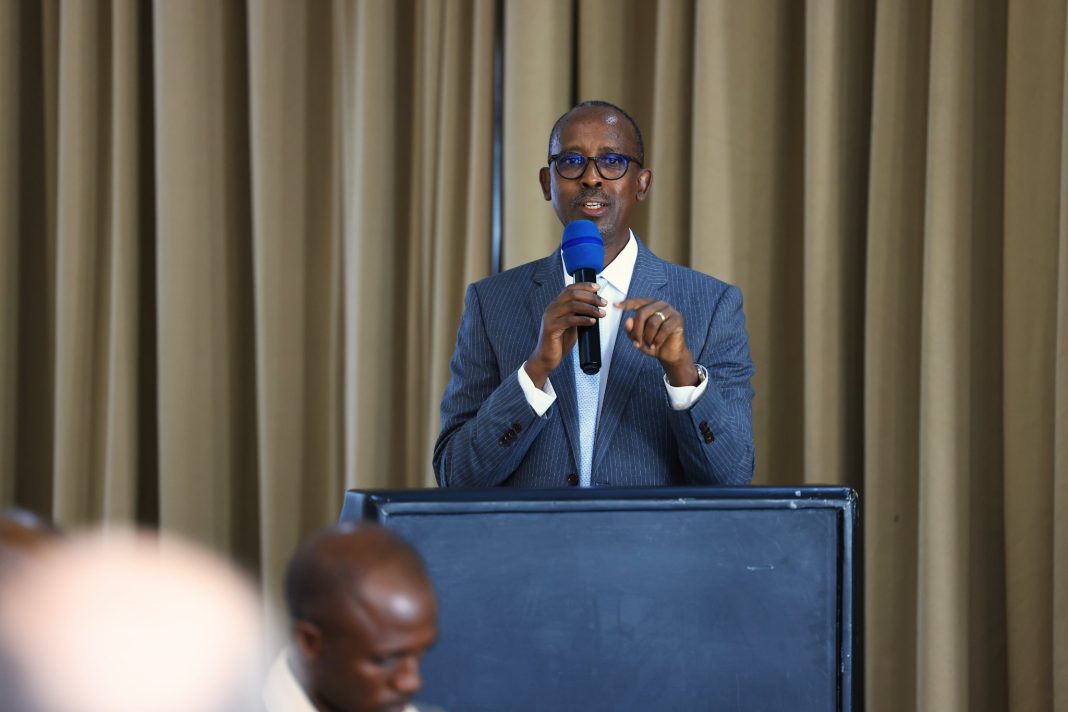

Presidential Advisory Committee on Export and Industrial Development (PACEID) Chairman Odrek Rwabogo says President Yoweri Museveni did not order or have prior knowledge of the arrest of his senior aide, Matthew Bagonza, as questions continue to surround the circumstances of the detention.
The development comes amid an escalating public dispute involving PACEID and Chief of Defence Forces Gen. Muhoozi Kainerugaba, who on Wednesday confirmed that Bagonza had been arrested.
Muhoozi identified Bagonza in a post on X and said he was “learning Kiswahili,” but did not publicly disclose the specific offence for which the PACEID official had been detained.
The confirmation followed reports that security personnel had taken Bagonza into custody from his home in Entebbe on Tuesday, shortly after Muhoozi publicly accused PACEID of being an “illegal organisation” and threatened arrests over alleged corruption.
Rwabogo, however, said the arrest did not come from Museveni.
He said he was informed at about 10:30 p.m. that Bagonza had been arrested while accompanying international visitors who had spent the week with PACEID.
Rwabogo said he contacted several security agencies, including police, the Directorate of Intelligence and Security and the Special Forces Command, but initially could not establish where Bagonza had been taken.
“I drove to Entebbe and met the President. The President told me that he was not aware and had given no order for the arrest of this staff,” Rwabogo said.
According to Rwabogo, Museveni told him he would seek information about the circumstances surrounding the arrest.
Rwabogo: Constitution must come first
Rwabogo said the case should not be decided by political disagreements or public accusations but through Uganda’s constitutional and legal framework.
“This Constitution was done meticulously, consultatively, young, old, social groups, so that we can have a new contract that the people of Uganda use to address difficult situations,” he said.
“So my advice is: let’s stick to the Constitution, even as hard as it is.”
He argued that institutions must ensure their conduct matches the law.
“Our behavior needs to match what the law and the text says,” Rwabogo said, warning that violations of the rules that bind public institutions ultimately affect the wider country.
He said the same standard should apply even to people whose opinions are unpopular or opposed by those in authority.
“Whether it is PACEID staff or any other person, including the ones who hold differing opinions one doesn’t like, they deserve to be treated in equal manner with equal dignity,” he said.
Rwabogo said such conduct is important not only for the individual involved but also for Uganda’s institutional future.
He compared adherence to public rules with discipline on the road, arguing that widespread disregard for rules makes the entire system unsafe even for people who follow them.
“If there is indiscipline on the road, even the disciplined ones can’t drive,” he said.
Constitution provides arrest safeguards
Uganda’s Constitution requires an arrested person to be informed immediately of the reason for the arrest and of their right to a lawyer. It also requires an arrested person to be brought before a court as soon as possible and, in any event, no later than 48 hours after arrest if not earlier released.
The Constitution further provides that a person charged with a criminal offence is presumed innocent until proven guilty or until they plead guilty.
Rwabogo said PACEID would therefore provide legal support to Bagonza and allow any allegations against him to be addressed through the courts.
“Our lawyers are here this morning to prepare for whatever the charges will be and to try and locate which court, which police station he may be brought to,” he said.
After initially failing to establish Bagonza’s whereabouts, Rwabogo said he visited his family and met his mother, wife, son, siblings and other relatives.
He said he prayed with the family and assured them that efforts were underway to establish where Bagonza was being held and ensure his safe return.
“My priority now in the last 12, 48 hours has been to work around the clock to help him out, find where he is and make sure that he is safe and returns in a good mode,” he said.
Rwabogo also appealed to Bagonza’s friends and colleagues to keep him and his family in their prayers.
Rwabogo said Bagonza has worked with him since 2010, after participating in a youth training programme organised at Makerere University following unrest in Kayunga in 2009.
He described Bagonza as “competent, honest, independent-minded” and said he was unaware of any conduct that would explain the arrest.
“I don’t know anything really as a charge to get him into trouble, but we will find out,” Rwabogo said.
The arrest has added a new dimension to the public dispute surrounding PACEID. Muhoozi has accused the organisation of being illegal and threatened arrests of officials allegedly involved in corruption, although reporting available on Wednesday had not established a court or government decision formally dissolving PACEID.
Rwabogo said wrongdoing should be investigated and punished where established, but insisted that the process matters.
“Wrong should be dealt with certainly. If there is corruption or injustice, it should be dealt with. But the manner in which we do it should give confidence to investors, confidence to young people, and respect of the dignity of the person,” he said.
For Rwabogo, the immediate priorities remain clear: establish Bagonza’s whereabouts, ensure his safety, provide him with legal representation and allow any allegations against him to be tested through the courts.