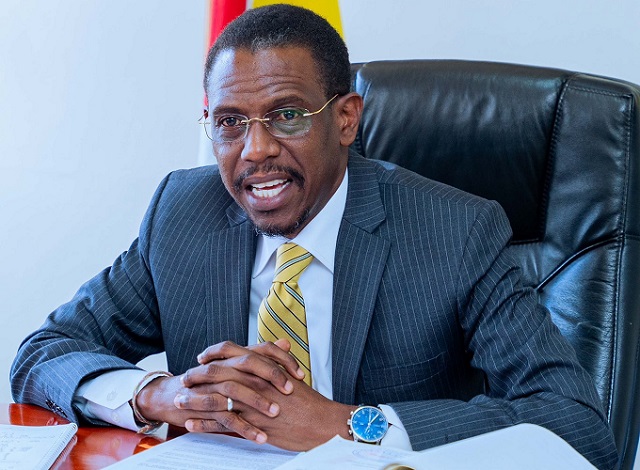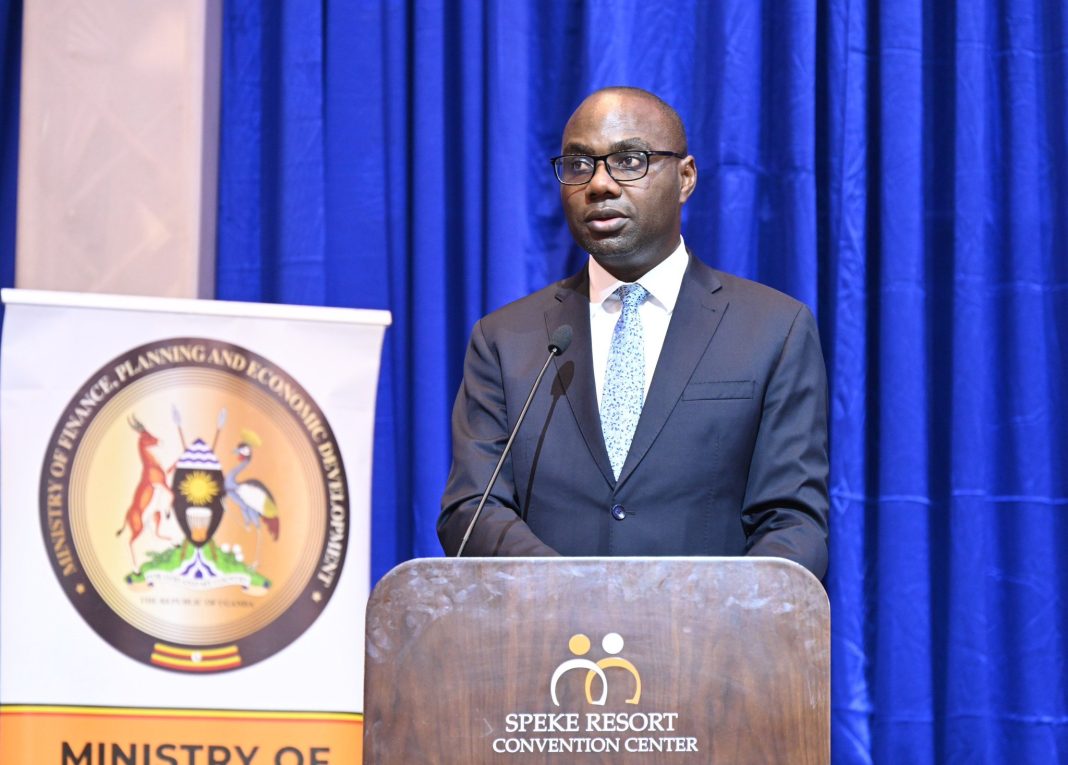

Finance Minister Henry Musasizi has called for closer coordination among government planners, accountants and procurement officers, saying their integration is critical to improving budget execution and delivering measurable results to Ugandans.
Closing the annual meeting of Heads of Planning, Accounts and Procurement Units at Speke Resort Munyonyo, Musasizi said the three functions must work as a single system to strengthen government planning, budgeting, implementation, reporting, accountability and service delivery.
He said Uganda’s ambition to build a US$500 billion economy by 2040 under the Tenfold Growth Strategy would require tighter budget discipline, stronger domestic revenue mobilisation and more effective implementation of government programmes.
“The Tenfold Growth Strategy requires disciplined budget execution, stronger domestic revenue mobilisation, implementation of the presidential wealth creation agenda, prudent oil governance and adherence to the budget discipline and accountability charter,” Musasizi said.
The minister urged government institutions to move away from expenditure-driven budgeting towards a results-focused approach in which public spending is assessed by the tangible value it creates for citizens.
He challenged planners, accountants and procurement officers to abandon institutional silos and operate as one team in supporting the delivery of the government’s ATMS and Enablers, while maintaining high standards of integrity and accountability.
Musasizi also called for the professionalisation, standardisation and regulation of planning and procurement functions, alongside stronger budget controls, supervision and monitoring.
He said these reforms should ultimately ensure that government resources translate into visible improvements in public services and economic opportunities.
Earlier, Acting Director of Budget Hannington Ashaba described the three functions as a “triad” and the engine room of effective budget execution.
Ashaba said realistic, evidence-based planning must be matched with timely and value-for-money procurement, financial discipline, effective cash-flow management and timely payment of suppliers and service providers.
He urged the three units to break institutional silos and align their operations with the Fourth National Development Plan (NDP IV) and the Tenfold Growth Strategy.
The meeting also identified several challenges undermining effective public spending, including weak coordination, inadequate budgets, procurement delays and poor cash-flow management.
Participants further cited irregular finance committee meetings, diversion of funds, incorrect classification of government assets and inadequate maintenance of public assets as obstacles to efficient service delivery.
A key recommendation from the meeting was the adoption of more integrated government planning, with plans cascading from grassroots structures through government departments to Cabinet and Parliament.
The approach would require departments and agencies to coordinate their plans, strengthen alignment with national priorities and accelerate implementation.
For Musasizi, the effectiveness of Uganda’s ambitious growth agenda will ultimately depend not only on the size of government budgets, but on how well public institutions plan, procure, spend and account for every shilling.
The meeting therefore underscored a shift from simply measuring how much government spends to measuring what Ugandans receive in return for that spending.